Background
Venezuela's government freed dozens of political prisoners over the past several days, the latest release in a nine-month-long, US-pressured process that began after President Nicolás Maduro's removal from power and has become the central bellwether of whether the country's post-Maduro transition will produce genuine democratic change or merely a slower-moving version of the same authoritarian machinery. The current phase traces back to January 3, 2026, when United States military action in Venezuela resulted in the capture of Maduro and his wife, Cilia Flores, ending his long hold on power. Vice President Delcy Rodríguez, a longtime Maduro loyalist and former foreign minister, assumed the role of acting president in the aftermath and has since positioned herself as the government's chief interlocutor with Washington, a relationship Trump has described in strikingly warm terms, saying of Rodríguez's government that “they've been great... Everything we've wanted, they've given us.”

Rodríguez announced Venezuela's first post-Maduro prisoner release on January 8, freeing nine people including activist Rocío San Miguel, who had been detained since February 2024. What followed was a monthslong, halting process marked by persistent and often large discrepancies between the government's own release figures and the counts kept by independent human-rights monitors, chiefly the watchdog group Foro Penal. Venezuelan officials claimed 116 prisoners released by January 12, for instance, while Foro Penal could confirm only 41; by January 14 the government claimed 406 released against Foro Penal's verified count of 68. Those gaps narrowed somewhat but never closed entirely as the year went on. A National Assembly amnesty law, covering political cases dating back to the start of Hugo Chávez's presidency in 1999, passed in two votes in February; an earlier draft had promised the return of seized assets and the cancellation of Interpol warrants for exiled opposition figures, but those provisions were stripped from the final version. By early March, the government said 621 prisoners had been released since January 8, while Foro Penal separately documented 526 people still behind bars, including 173 military personnel and 49 foreign nationals. Even as releases continued, the United Nations' fact-finding mission on Venezuela documented 87 new politically motivated arrests between January and mid-March, a pattern human-rights groups have called a “revolving door,” in which the government frees some detainees while quietly detaining others.
Key Developments
The latest round of releases, reported over the weekend of September 26–28, followed a second round of US-backed negotiations between Rodríguez's government and Venezuelan opposition figures and, more immediately, a meeting between Rodríguez and Trump on the sidelines of the United Nations General Assembly in New York earlier in the week. Rights groups reported at least 39 people freed, according to Al Jazeera's tally; the organization Justicia, Encuentro y Perdón separately reported 29 people released, 12 of whom appeared on its own political-prisoner list, while the group Clippve said seven political prisoners were released from a facility near Caracas. Those figures illustrate the same measurement problem that has dogged the process since January: multiple monitoring groups, tracking overlapping but not identical rosters, rarely agree on precise totals, and the government itself continues to deny that it holds political prisoners at all, a claim human-rights organizations dispute directly.
Among those released were eight women who had been accused of “narco-terrorism” in connection with a 2021 case, and six people accused of collaborating with the United States in a 2020 attempt to overthrow Maduro. One named case that drew particular attention was that of Wilder Vásquez, a university student who had been imprisoned over an alleged role in a 2018 assassination plot against Maduro; Vásquez has maintained his innocence throughout, and by the time of his release his original sentence had already expired back in 2023, underscoring rights advocates' longstanding complaints that Venezuela's judicial system has been used to hold dissidents well past any legitimate legal basis for their detention.

Secretary of State Marco Rubio has claimed that more than 1,000 Venezuelans have been released since Maduro's removal in January, a figure that — consistent with the pattern all year — independent monitors have not been able to independently confirm at that scale. The rights group Justicia, Encuentro y Perdón said in a statement that it “will remain vigilant and continue to demand full freedom for all those who are still waiting,” putting the number of Venezuelans it still classifies as political prisoners at 344, down from 391 in August but still a substantial population held despite nine months of periodic releases.
At the United Nations podium earlier in the week, Rodríguez told the General Assembly that Venezuela “has begun a process of democratic transformation” and insisted “there will be elections in Venezuela,” even as she once again declined to commit to any specific date, a pattern consistent with her remarks in a private pull-aside with Trump and senior US officials, including Secretary of State Rubio, Treasury Secretary Scott Bessent, Chief of Staff Susie Wiles and envoy Steve Witkoff, at which Trump reportedly told her “you have to have elections at the end of the day.” Reporting on that conversation described a tentative three-step process — first reconstituting the Supreme Court, then the national electoral council, and only then setting an actual election date — with competing internal timelines pointing to as early as 2027 or as late as 2028. Complicating the political picture further, Rodríguez's own six-month mandate as acting president has technically expired, a legal ambiguity that has done little to slow the pace of her diplomacy with Washington but raises separate questions about the formal legitimacy of the government now negotiating the country's democratic future.
Reactions
Opposition leader María Corina Machado, the figure most identified internationally with Venezuela's pro-democracy movement and a Nobel Peace Prize laureate, has been sharply skeptical of the entire release process, having characterized earlier rounds of the amnesty program as measures “not taken voluntarily, but rather in response to pressure from the US government” rather than a genuine gesture of reconciliation. Several of Machado's close allies have been released over the course of the year, including opposition figure Juan Pablo Guanipa, though in one previous case a released ally was re-detained within hours under circumstances that were never fully explained by authorities, reinforcing opposition suspicion that the government uses releases as a negotiating chip rather than as an unconditional commitment to ending political imprisonment. Machado has also made several unsuccessful attempts to return to Venezuela from exile in Panama over the year, each blocked by the government.
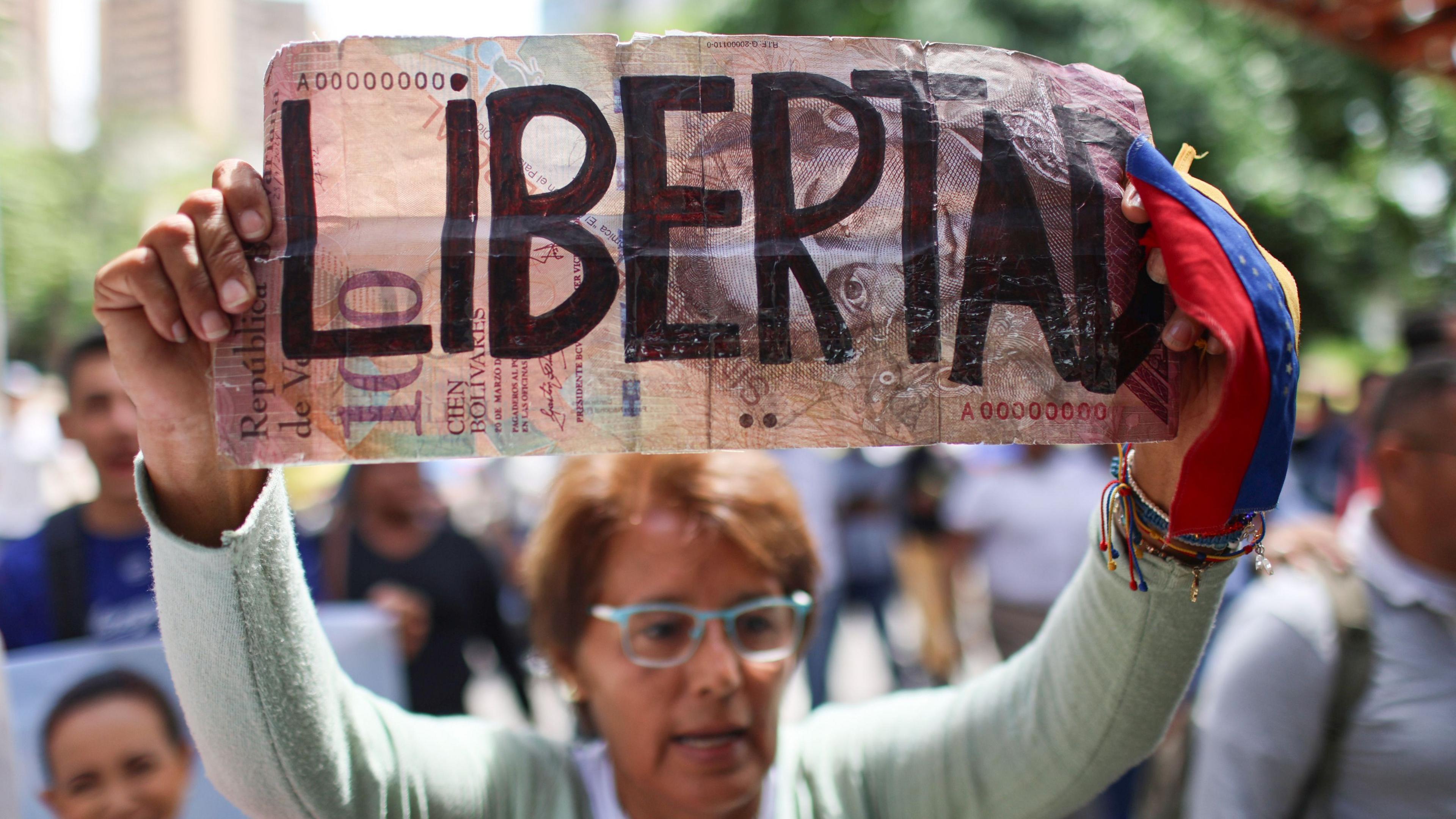
Family members of detainees have continued to stage protests outside the U.S. embassy in Caracas and outside the El Rodeo I prison complex, demanding faster and fuller accounting of who remains in custody. The U.N. Human Rights Council has separately criticized the conditions attached to many releases — freed prisoners are typically barred from speaking publicly and must appear before judges every 30 days — arguing the restrictions fall short of Venezuela's obligations under international human-rights law. Discrepancies between the government's figures and independent counts have themselves become a recurring source of friction between Caracas and outside monitors, with rights groups arguing that Venezuela has an incentive to inflate release numbers to satisfy Washington while minimizing acknowledgment of new arrests.

What's Next
The core unresolved question — when, or whether, Venezuela will actually hold the competitive elections that Rodríguez has repeatedly promised but never scheduled — remains open, with the reported three-step institutional sequence suggesting real elections, if they happen at all, may still be a year or more away. In the meantime, the prisoner-release process is likely to continue in the same halting, disputed fashion that has characterized it since January: periodic announcements of batches freed, followed by independent monitors publishing lower confirmed counts, followed by rights groups warning that new arrests are offsetting at least some of the releases.
For the Trump administration, continued releases provide a tangible, easily message-able sign of progress from a relationship it has invested significant diplomatic capital in since removing Maduro, even as the lack of a firm election date, the unresolved legal status of Rodríguez's own mandate, and Machado's continued exile all point to a transition that remains, nine months on, very much incomplete. Watch for whether the next round of US-backed talks produces any firmer commitment on a Supreme Court or electoral-council timeline, and whether Machado is able to return to Venezuela — a step that would mark a far more concrete signal of democratic opening than any further batch of prisoner releases.
Published By | News Editor