Paris, France
Handbag collaborations tend to follow a formula by now: pair a heritage house with a buzzy name, slap a recognizable motif across the classic silhouette, sell out in a week, repeat next season. Longchamp's new Winter 2026 capsule collection, in stores since August 4, is a deliberate departure from that script. Instead of a streetwear designer or a celebrity muse, the maison behind the ubiquitous Le Pliage tote turned to Caroline Hélain, a Brussels-based textile artist whose medium is freehand-cut fabric, and asked her to turn its bags into landscapes.
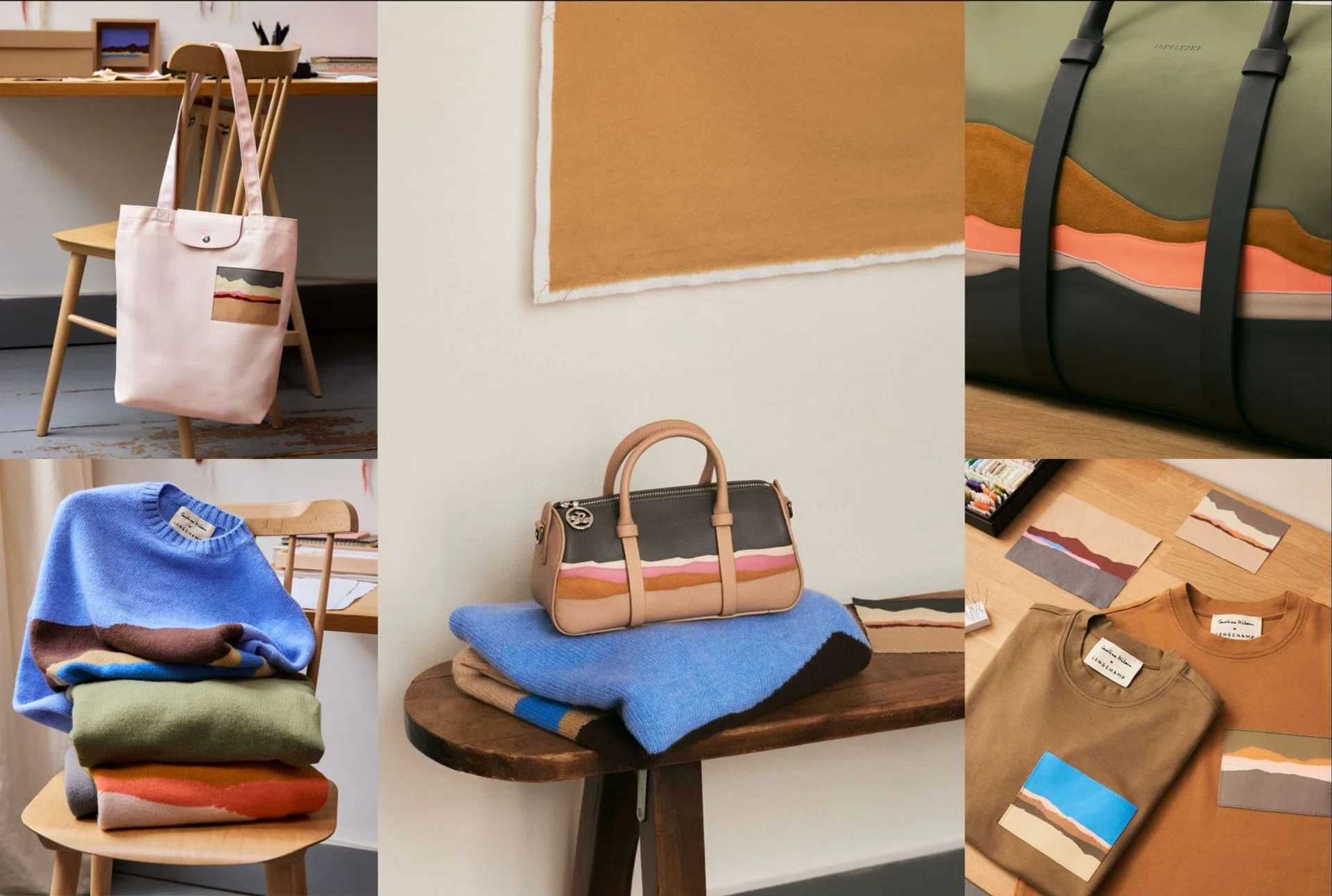
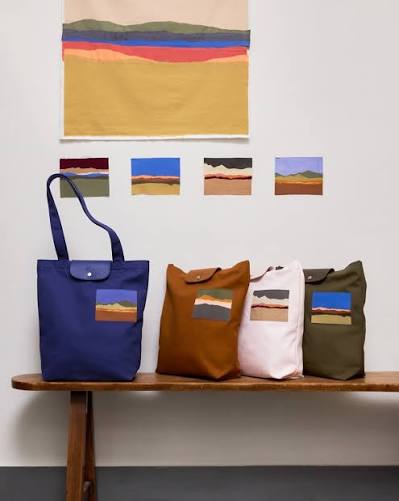
The result is nine "exclusive landscapes" — Longchamp's own term for the compositions — reproduced across the house's most recognizable products: the Daylong mini bag and weekender, knitwear, a sleeveless calfskin top, silk scarves, cashmere squares, graphic T-shirts, and the brand's signature Le Pliage canvas totes. It is, notably, the first time Longchamp has built an entire capsule collection around a single visual artist's practice rather than a co-designer, and the choice says something about where luxury accessories are trying to position themselves as shoppers grow fatigued with logo-driven collaborations.
Who Is Caroline Hélain?
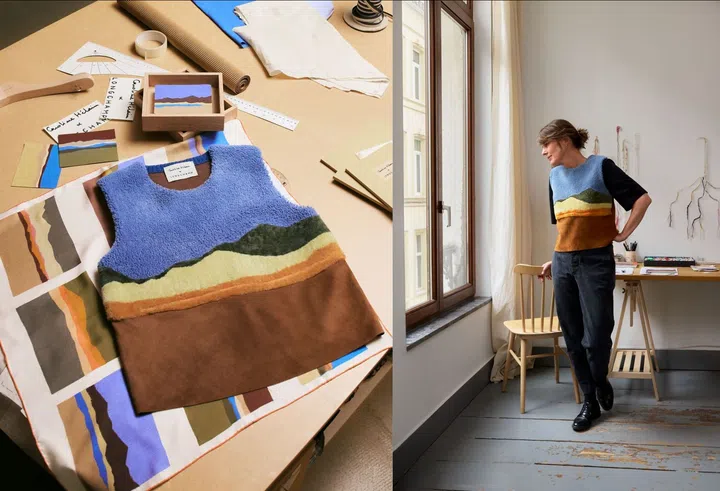
Hélain is not a fashion designer by training, which is precisely the point. Her practice centers on what she describes as a close observation of landscape, memory, and material — abstract compositions built from freehand-cut fabric that she assembles into scenes evoking horizons, dunes, and shifting light rather than literal places. Her work exists in the space between textile art and painting: pieces that read, from a distance, like impressionist landscapes, but which reveal themselves up close as intricate patchworks of cut and layered cloth.
For Longchamp, translating that practice into leather goods required real technical ambition. The house's artisans used intricate leather marquetry — a technique more commonly associated with fine furniture-making than handbag production — to recreate Hélain's delicate landscapes across the Daylong mini bag and weekender, piecing together different leather tones and textures to approximate the layered, hand-cut quality of her original fabric work. Knit dresses and sweaters became a different kind of canvas entirely, translating Hélain's colour compositions into yarn, while a sleeveless calfskin top finished with bouclé wool was designed specifically to evoke what the brand calls "a dreamy horizon of sand and sky."
The palette running through the whole collection favors earthy, muted tones — Olive, Thistle, Caramel, and Ballet recur across the silk scarves, cashmere squares, T-shirts, and canvas totes — a deliberate move away from the brighter, louder colourways that have defined recent Longchamp seasons and toward something closer to the natural material palette Hélain typically works in.
Why This Collaboration, Why Now
The luxury accessories market has spent the past several years leaning heavily on logo mania and celebrity-fronted drops, a strategy that reliably generates hype cycles but has also drawn increasing criticism for prioritizing recognizability over craft. Longchamp's bet with Hélain runs in the opposite direction: there is no oversized logo here, no viral catchphrase, nothing engineered for a single Instagram moment. Instead, the pitch is craftsmanship and narrative — the idea that a handbag can function as a piece of wearable art with a genuine creative point of view behind it, made by hands rather than assembled around a marketing calendar.
That positioning matters for a house like Longchamp, which built its reputation on the accessible, endlessly practical Le Pliage — the nylon fold-up tote that became a genuine cultural default rather than a status symbol. Pairing that democratic reputation with a fine-art collaboration is a way of signaling upward mobility without abandoning the brand's core identity: the capsule still includes canvas totes at recognizably Longchamp price points alongside more elevated leather pieces, meaning the "art collection" isn't gated off from the shoppers who made the brand what it is in the first place.
It also reflects a broader trend across fashion this season toward texture and tactility over pure branding — a shift dovetailing with Pantone's 2026 Color of the Year, Cloud Dancer, a soft milky white chosen specifically to foreground texture and transparency rather than saturated colour. Hélain's earthy, layered compositions fit comfortably within that same design conversation, even if the connection to Pantone's pick wasn't explicit in Longchamp's own messaging.
What This Means for You
If you've felt collaboration fatigue creeping in — another logo tee, another sneaker colourway, another celebrity capsule that vanishes from cultural memory within a month — the Longchamp x Caroline Hélain collection is a useful reminder that the collaboration format still has room for genuine craft experimentation. You don't need to buy a marquetry-leather weekender to appreciate what's happening here: the more accessible pieces, the graphic T-shirts and canvas totes, offer a lower-cost entry point into the same design language, and are worth a look if you're drawn to pieces that feel more like small art objects than logo vehicles.
For anyone building a capsule wardrobe around texture and neutral, earthy tones this fall — a trend line running through several houses' collections this season, not just Longchamp's — this collaboration is a useful reference point regardless of budget: layered materials, muted palettes, and pieces that reward a second look rather than an instant, at-a-glance read.
Conclusion
Fashion collaborations rise and fall on a simple test: do they still feel interesting once the hype cycle passes? Longchamp's bet on Caroline Hélain is a wager that craftsmanship and a genuine artistic point of view age better than a viral logo — a quietly confident move from a house that has spent a century proving accessibility and quality aren't mutually exclusive. Nine landscapes, translated across leather, wool, and canvas, now available to judge for yourself.
Published By | Features Editor