Written By | International News Agencies
A retaliatory expulsion on October 1 shows how far Hungary's relationship with the Kremlin has fallen since Viktor Orbán lost power, even as Budapest says it wants no escalation.
World Politics
Overview
On Thursday, October 1, 2026, Russia's Foreign Ministry announced that it was expelling Hungarian diplomats, ordering staff at Hungary's embassy in Moscow and at its consulates in St. Petersburg and Kazan to leave the country within two weeks. Moscow described the move as retaliation for Hungary's decision, on September 8, to remove ten members of Russia's diplomatic mission from Budapest. The Russian side called the original Hungarian action "groundless" and "openly unfriendly," and it summoned Hungary's chargé d'affaires in Moscow, Gábor Gergics, to deliver what it termed a decisive protest.
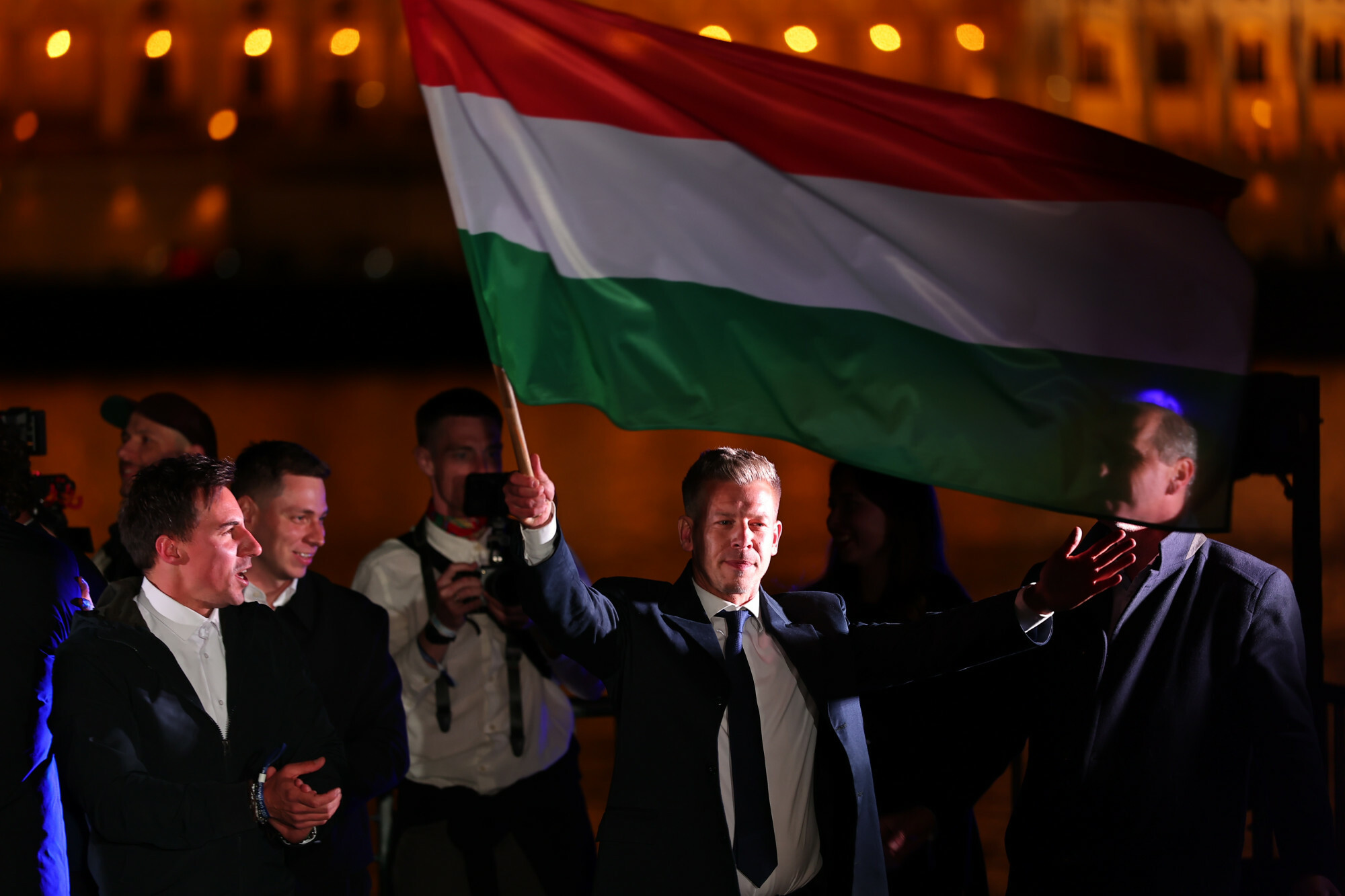
On its face, this is a routine piece of diplomatic choreography: one capital expels envoys, the other answers in kind. What gives the episode weight is who is on each side of it. For sixteen years, Hungary under Viktor Orbán was the European Union member state that Moscow could most reliably count on to soften, delay or veto European measures aimed at Russia. That era ended with an April 2026 election, and the government that replaced it is now trading expulsions with the Kremlin. The exchange is among the clearest signals yet that the political realignment in Budapest has real consequences for relations with Russia, even if the new prime minister has been cautious in other areas.
Background: The End of the Orbán Era
Viktor Orbán governed Hungary for sixteen years and cultivated closer ties with Vladimir Putin than any other leader inside the EU. After Russia's full-scale invasion of Ukraine in 2022, Budapest repeatedly resisted or diluted European initiatives, and, according to reporting by Euronews, it declined to expel Russian diplomats even as many other European capitals did so. Hungary also became the focal point of disputes over Russian oil and over EU financing for Ukraine, including a standoff earlier this year over a 90-billion-euro EU loan that was unblocked in April after oil flows through the Druzhba pipeline resumed.
Orbán's Fidesz party lost the April 2026 parliamentary election to the opposition Tisza party led by Péter Magyar. Sources differ slightly on the timing of the handover: some describe Magyar as taking office "this year following April elections," while the Moscow Times places his arrival in office in May. Either way, the new government moved relatively quickly to reorient Hungary's declared posture. According to Euronews, guidance issued in August to Hungary's delegates at the United Nations formally described Russia as a threat to both Hungary and the "global order" while affirming support for Ukrainian sovereignty. That is a striking departure from the language of the previous government, and it set the stage for the diplomatic confrontation that followed.
The expulsions did not come out of nowhere. Reporting indicates that the September removal of ten Russian staff followed a quieter episode in May, when Hungary removed a single Russian diplomat. The September action was far larger and was publicly announced. Foreign Minister Anita Orbán said the individuals had engaged in activities "unacceptable for diplomats under the Vienna Convention." Budapest has avoided saying outright that the ten were spies, and the official language, "activities incompatible with their status," is the standard diplomatic formula that usually signals espionage or similar conduct without naming it.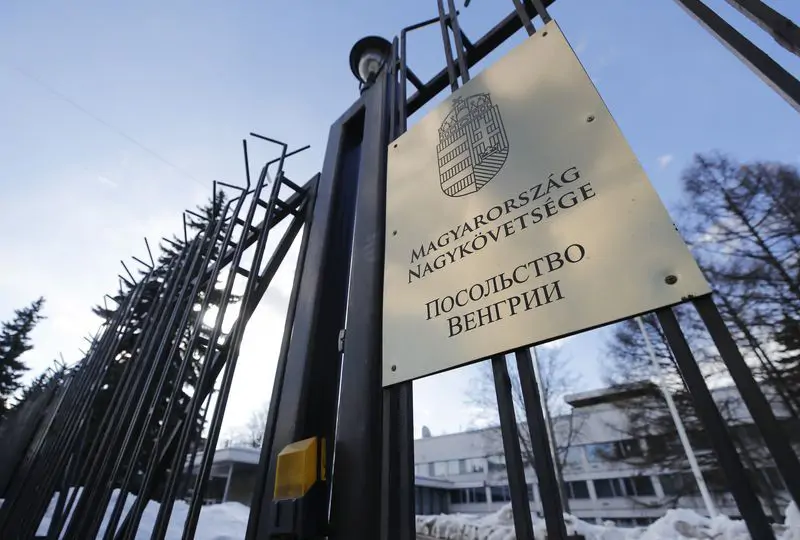
Key Developments
The sequence is simple. On September 8, Hungary expelled ten Russian diplomats on national security grounds. Russian officials immediately promised a response. Spokesperson Maria Zakharova had warned of a "harsh and painful" reply, language that led some observers to expect economic or energy-related pressure. For several weeks, nothing visible happened. Then, on October 1, Moscow announced the reciprocal expulsions, naming the embassy and the two consulates in St. Petersburg and Kazan as the affected posts and giving the diplomats two weeks to depart.
Notably, the Russian Foreign Ministry did not say how many Hungarian diplomats were affected. That is why accounts differ in how precisely they describe the scale: the Moscow Times and the Hungarian outlets all report an unspecified number, and no independent figure had emerged as of this writing. The two-week deadline is consistent with ordinary practice. What is more telling than the numbers is the restraint. As analysis in the Hungarian Conservative pointed out, Moscow's response stopped at diplomatic expulsions and did not extend to the economic measures that Russian lawmakers had floated in the weeks beforehand. The Kremlin never formally announced any move to use energy supplies as leverage.
Budapest's reaction was deliberately measured. The Hungarian Foreign Ministry said it regarded Russia's step as a response to its own earlier measure, that Hungary "is not interested in an escalation of diplomatic tension," and that it stood by a decision taken on national security grounds. It added that Hungary's diplomatic presence in Russia would be maintained and that it wanted to preserve "necessary dialogue and pragmatic relations" with Moscow. In other words, the government is signaling that the expulsions were a one-off defensive measure, not the start of a rupture.
Why Energy Makes Hungary's Position Delicate
The restraint on both sides makes more sense once the economics are considered. The Hungarian Conservative reports that roughly 90 percent of Hungary's imported oil and about 74 percent of its imported natural gas come from Russia. Those numbers explain why even a reformist government in Budapest must tread carefully. The Paks nuclear power plant, the country's only nuclear facility, also rests on a decades-old relationship with Russian state companies, including loan arrangements. Analysts at the Carnegie Endowment argued in April that Hungary's dependence on Russian energy long predates Orbán and will not disappear simply because he lost an election.
The European Union is trying to help. A European Commission spokesperson has said the bloc's goal is to ban all Russian energy resources from the European market, and Brussels is working with Hungary and Slovakia to diversify their supplies. The transition is not free: a deputy leader of the Tisza party has estimated that phasing out Russian oil could cost between 100 billion and 200 billion forints, roughly 315 million to 630 million dollars, mostly because of higher electricity import costs. Temporary exceptions that let Hungary and Slovakia keep buying Russian crude through the Druzhba pipeline remain in place. Oil deliveries through Druzhba resumed in late April after a January strike on infrastructure, though volumes were still below earlier levels in May. Magyar has also warned that low Danube water levels could force shutdowns at Paks.
All of this means Budapest has limited room to maneuver. A government that wants to demonstrate independence from Moscow still depends on Russian molecules and Russian nuclear technology to keep the lights on, and the Kremlin knows it. That helps explain why Moscow's retaliation was calibrated and why Hungary has taken pains to describe its own action as narrowly security-related.
Reactions and Limits of the Shift
Reaction beyond the two foreign ministries has been limited so far, and this account relies mainly on the official statements. The Hungarian outlet Daily News Hungary noted that the Kremlin had promised a tough reply and that the expulsions followed the earlier May removal. Euronews framed the episode as Budapest breaking with the Orbán era, which is how the new government itself would likely prefer it to be read, though officials have been careful to avoid triumphant language.
Analysts caution against over-reading the change. The Carnegie analysis, written shortly after the April vote, argued that Magyar's room for dramatic change would be constrained both by structural dependence and by domestic politics. Key institutions, including the presidency and the Supreme Court, remain filled by Fidesz nominees. The analysis also noted that Magyar opposes sending military aid to Ukraine, and that his government has said a referendum would be needed for any Hungarian approval of Ukraine's EU accession. Polling cited in the same analysis showed that even Tisza voters were more inclined to see Ukraine as a threat than as reassuring, by 36 percent to 32 percent. In that light, expelling Russian diplomats is a comparatively low-cost way to show a break with the past, while the costlier questions of energy, Ukraine policy and EU enlargement remain open.
The timing also matters for Moscow. On September 29, Putin signed a decree adding 15,500 troops to the Russian army, the fourth such expansion this year according to Euronews, which ties the move to battlefield losses. A Kremlin under that kind of strain has an incentive to avoid pushing a newly pro-European neighbor further toward the EU's hardest line, yet it also has reason to demonstrate that provocations carry a price.
What's Next
Several things are worth watching in the coming weeks. The first is the two-week departure deadline, which falls in mid-October; any additional step by either side, such as further expulsions, the closing of a consulate or a downgrade in representation, would indicate that the dispute is widening. Budapest has said it will keep its presence in Russia, and Moscow has so far not suggested otherwise.
The second is energy. The Kremlin has the means to make life harder for Hungary through oil and gas deliveries or through the Paks relationship, and Russian lawmakers have openly discussed such options. That Moscow has not used them so far suggests it is weighing the broader consequences, but the option remains available if relations deteriorate further. Hungary's own timeline for reducing Russian oil purchases, and the cost of doing so, will shape how much leverage Moscow retains.
The third is the European context. Hungary under Magyar is trying to repair relations with Brussels and unlock the funds and cooperation that Orbán's confrontations put at risk. A visible break with Moscow on security grounds helps that effort, but it also raises the question of whether Budapest will follow through on harder decisions on sanctions, Ukraine and energy. Whether this week's exchange proves a minor skirmish or the first marker of a lasting realignment will depend largely on those decisions rather than on the diplomatic reciprocity itself.
For now, the safest reading is that both sides have chosen to keep the confrontation contained. Moscow has shown it will answer in kind; Budapest has shown it will act on security concerns even at the cost of friction; and each has publicly left the door open to dialogue. How long that balance holds will depend on events well beyond Budapest and Moscow, from the war in Ukraine to the state of Europe's energy transition.



