Written By |
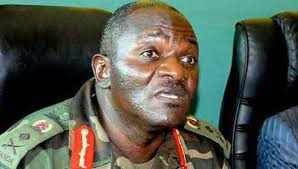
Works and Transport minister Gen. Edward Katumba Wamala. File Photo
Government has finalized arrangements to bring back mandatory vehicle inspection on roads across the country.
According to works and transport minister, Gen. Edward Katumba Wamala, the process will be aided by existing inspection facilities that were mounted nine years ago by Société Générale de Surveillance (SGS), a Swiss company.
The revival of mandatory vehicle inspection, Wamala said, will curb rising road accidents.
"Although accidents are majorly attributed to reckless driving, those arising from vehicles in poor mechanical condition are also many," Wamala said.
A recent police report indicated that in 2023, traffic crashes killed 4,806 people of which the majority were pedestrians, motorcycle riders, and passengers on motorcycles. The pattern of road accidents shows an increase by 59% in the last decade, with cases rising from 2, 845 people killed in 2013 to 4, 806 in 2023.
With 4, 806 deaths registered as a result of road accidents, it means that the country loses 13 people every day in road carnage.
SGS Problems
To avert this trend, in 2015, government signed a $12.5m (about sh45b) contract with SGS to undertake mandatory vehicle inspection services.
Works and transport officials argued that automated vehicle inspection service through SGS will not only improve road safety but also reduce emission from vehicles, eradicate vehicles in poor mechanical condition off rods and wipe out corruption tendencies associated with existing manual vehicle inspection schemes.
The SGS inspection came at a cost, with owners of motorcycles required to pay sh54, 752, while sh147, 500 was charged for vehicle owners.
All private vehicles will be subject to inspection once every 12 months, while commercial vehicles will require inspection once every six months.
However, the charges caused controversy, with MPs contesting the rationale behind the SGS charging citizens for the mandatory vehicle inspection services.
Some MPs argued that government should foot the inspection fees. They noted that already the Uganda National Bureau of Standards (UNBS) requires used vehicle importers to pay an inspection fee of $140 (about sh500, 000) for every vehicle before they are released from custom areas.
Others argued that local government institutions such as the Inspectorate of Motor Vehicles (IOV) in collaboration with works and transport ministry should take over exercise rather leaving it to SGS, a private company.
Following the political furor from Parliament, government terminated SGS contract.
Recently the permanent secretary of the works and transport ministry, Waiswa Bageya, said that government was required to pay SGS sh200b in compensation and total takeover of the existing vehicle inspection facilities.
Charges to be cut
When Parliament rejected SGS, the key contention was the fees charged for inspection.
However, with government take-over, Kharim Kibuuka, the principle inspector of motor vehicles with the ministry of works and transport, told New Vision that said fees payable for inspection of all categories vehicles including motorcycles have been reduced by 50%.
Commenting about the SGS take over, Wamala said process has been finalised. He added that SGS inspection facilities within Kampala and other areas will be taken over by government when the compensation process is concluded.
“The mandatory car inspection will also address issues of emissions in vehicles,” Wamala, said on May 11 during the road safety run at Kololo Independence Grounds.
The road safety run was organised by the works and transport ministry and Legacy Road Safety Initiative (LRSI) to support road crash victims.
“We are taking serious action against drivers of government vehicles who have for long proven to be abusing road safety and traffic regulations,” Wamala said.
On his part, Winstone Katushabe the commissioner for transport regulations and safety at the ministry of works and transport, rallied road users to curb road carnage.
“Accident victims, mainly those related to Boda Bodas accidents, are taking a substantial amount of Mulago Hospital budget that would otherwise have been spent on treatment of other diseases,” Katushabe said, rooting for collective responsibility against road carnage.
WHY WAS IOV SUSPENDED?
At one time, government used to conduct periodical car inspection. At the time, owners of all motor vehicles and motorcycles were required to take them at IOV’s offices in Naguru and other regional offices for the annual mandatory inspection.
The motor vehicle inspection unit of Police controlled the process. However, the arrangement was discontinued in 1998 when government scrapped the annual car road licensing regime.
Realizing gaps in the verification roadworthiness of vehicles, government privatised the exercise, and SGS was crafted into the equation.
Under the arrangement, SGS was required to aggressively invest vehicle inspection facilities across the country and operate them for five years, recoup profits and transfer the said assets to government.
The inspection exercise largely covered the braking system, wheel alignment, exhaust smoke, headlamps and motor vehicle suspension, among other conditions of the motor vehicles. All vehicles inspected, officials said at the time, must be beyond 50% to accuracy for them to pass the test.
However, SGS operated for a limited time, and Parliament froze their works.
By the time SGS was stopped by Parliament they had already finalised setting up automated inspection facilities in Namanve along the Kampala-Jinja highway, Namulanda along Kampala-Entebbe road, Kawanda along Bombo road and Nabbingo along Kampala-Masaka road. Upcountry stations in the districts of Mbarara, Mbale and Gulu were also set up.
WHAT VEHICLE OWNERS SAY
Citing an example of a lawyer, Raphael Okiot, who was recently killed by a concrete truck that lost control due to failure of brakes and collapsed on his vehicle in Nkumba, along Kampala-Entebbe road, some transport sector operators said vehicle inspection will reduce incidents of crashes emanating from motor vehicles in dangerous mechanical condition.
The general secretary for United Bus Owners Association (UBOA), Robert Mutebi, said the revival of vehicle inspection does not distort their operations, they will comply.
Mutebi also urged works and transport officials to take into account the condition of Ugandan roads when conducting the exercise. The roads, he added, especially within the districts of Kampala, Wakiso and Mukono automatically relegate all vehicles in road unworthiness zone.
“The system should be user friendly and cost effective to entice massive response from all vehicles categories,” Mutebi said.
The chairman of Uganda Tax Operators Federation (UTOF), Rashid Sekandi, said for the resumption of inspection services to make sense, government needs to address all challenges that SGS faced.
“Much as we are ready to comply, the government should devise ways of making fair inspection that accommodate even the old vehicles,” Sekandi said.
On his part, Byron Kinene, the chairman for Regional Lorry Drivers and Transporters Association (RLDTA), said although reinstating the mandatory vehicle inspection has been long overdue, government should consider reducing inspection costs or abolishing them altogether.
“The automated car inspection facilities will assist truck owners in detecting likely faults for timely fixing .Truck owners have for long been fooled by dishonest mechanics to the extent of spare parts that do not solve the problem,” Kinene said.



