Written By | International News Agencies
On 15 October, Finance Minister Situmbeko Musokotwane cut the government's growth forecasts for 2027 and 2028 to 4.9 and 5.0 per cent, down from 6 and 7.5 per cent.
Economic & Social Transformation
Two years ago, Zambia showed how much an economy depends on rain. The 2023/24 El Niño drought dried out the maize crop and drained Lake Kariba, the reservoir behind much of the country's hydropower. Households and businesses went without electricity for up to 21 hours a day. ZESCO, the state utility, asked mining companies to cut consumption by as much as 40 per cent. In a country where copper makes up about 72 per cent of export earnings and nearly half of government revenue, the drought hit far more than the energy sector. It hit the whole economy.
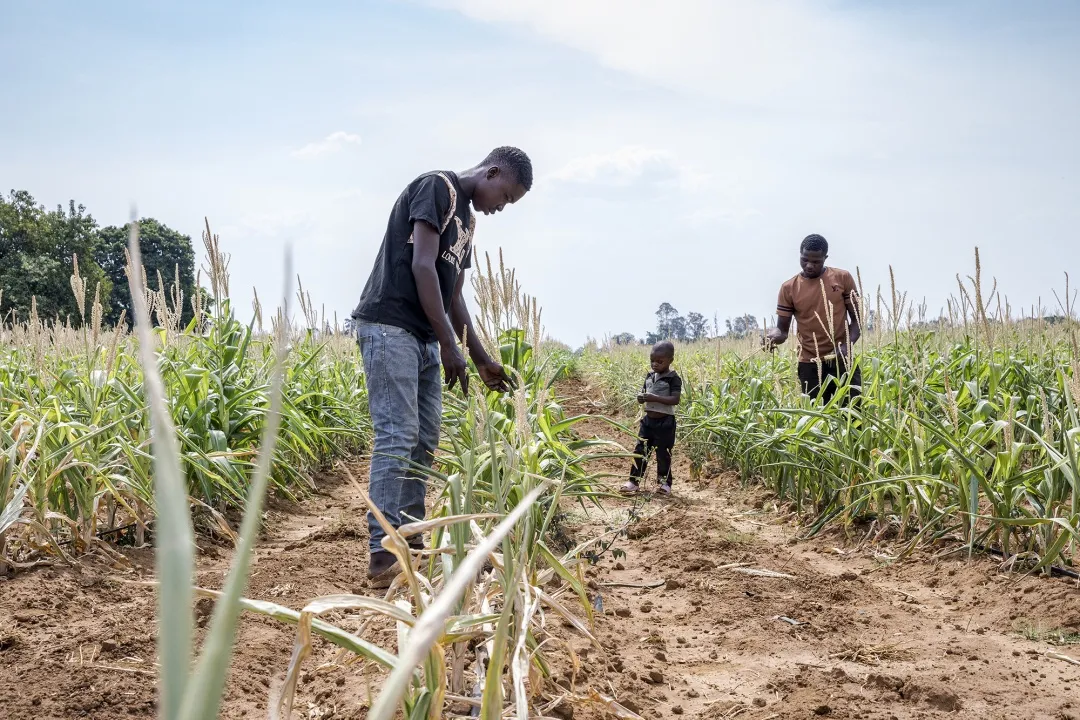
In October 2026, Zambia faces the same test again. On 15 October, Finance Minister Situmbeko Musokotwane cut the government's growth forecasts for 2027 and 2028 to 4.9 and 5.0 per cent, down from 6 and 7.5 per cent. He named two causes: the Gulf war and an El Niño that global forecasters expect to peak at a strength not seen in the modern record. The difference this time is that Zambia has spent two years rebuilding its power system to cope with exactly this kind of shock. This article looks at what has been built, what it has cost, and whether it is enough.
From crisis to surplus capacity, on paper
The headline numbers have changed a great deal. The government reports that total installed generation capacity rose from 3,777 MW in 2024 to 4,722.3 MW in 2026. Solar has driven most of that growth: installed solar capacity went from just 178 MW in 2024 to 1,027.5 MW, beating the government's 2026 target of 1,000 MW. In March 2026, the fifth and final unit of the 750 MW Kafue Gorge Lower hydropower station was commissioned. Independent producers such as Copperbelt Energy Corporation (CEC) and Maamba Energy have added thermal and solar output. The Ministry of Energy has tracked 29 public and private projects totalling 2,510 MW due across 2025–26, including Maamba Phase II (300 MW), CEC's Itimpi II solar (136 MW) and ZESCO's Mansa Solar (50 MW).
Institutional changes matter as much as the hardware. Zambia ended its single-buyer electricity model and moved to an open-access regime. Independent power traders and imports through the Southern African Power Pool can now reach customers directly. The Energy Regulation Board (ERB) ended its emergency tariffs in October 2025 and returned to a multi-year tariff framework that runs from 1 November 2025 to 31 October 2027. That gives ZESCO a more predictable path to recovering its costs. On 10 June 2026, ZESCO Managing Director Justin Loongo said nationwide load management would not return "this year and beyond".
Better rainfall has also helped. For 2026, the Zambezi River Authority allocated 30 billion cubic metres of Kariba water for power generation, split equally between ZESCO and Zimbabwe's utility. That was a large improvement on the drought years.
Why the structural risk has not gone away
The recovery is real, but it rests on a weakness that has been reduced rather than removed. In July 2026, the independent Zambian Economist estimated that about 85 per cent of installed capacity was still hydro. Solar growth has lowered that share since then. Even so, the grid still depends mainly on the Zambezi and Kafue basins, and those are the rivers an intense El Niño would hit hardest. Solar capacity also overstates how much power solar actually delivers. A megawatt of solar produces far less electricity over a year than a megawatt of baseload hydro, and it produces nothing at night. Without large-scale storage, the evening peak, when demand has exceeded 2,400 MW, would still fall mainly on hydro and coal plants.
The mining industry is not relying on ZESCO's promises. First Quantum Minerals is building a 430 MW wind and solar project for its Kansanshi and Sentinel mines. Vedanta's Konkola Copper Mines is planning a 300 MW coal-fired plant. CEC estimates that Zambia's mining growth plans would need close to 10 GW of new generation and about US$12 billion of investment. That scale explains why President Hakainde Hichilema has set a national generation target of 10,000 MW. He announced it in October 2026 as part of his second-term "Grow Zambia" agenda, along with a directive that government institutions buy only electric vehicles.
The 10,000 MW goal is more than double current capacity. Meeting it will depend on whether private investors trust that the open-access market and the multi-year tariff path will survive political pressure. That pressure is real. Under ZESCO's pre-approved 2026/27 schedule, the lowest residential band would rise from K0.35 to K0.54 per kWh, an increase of more than 50 per cent for the poorest users. Cost-of-living concerns dominated the August 2026 election campaign. Hichilema won a second term with about 61 per cent of the vote and was inaugurated on 1 September, but his party fell short of an outright majority in the provisional parliamentary results. Holding tariffs where the regulator set them will test the second term early.
Paying for the grid: a debt-for-energy swap
Zambia's most unusual move has been on the financing side. In May–June 2026, the Ministry of Finance used a US$600 million concessional loan from the African Development Bank, plus its own resources, to buy back a US$1.36 billion Eurobond due 2053. That bond came out of the post-default restructuring and carried coupons that would have risen steeply over time. In return, Zambia committed up to US$275 million of the interest savings to strengthening and modernising the national grid over 15 years.
Analysts have described it as the world's first debt-for-energy swap. It was contested. A group of bondholders objected to the tender terms, and the government added a US$65 million early-tender fee before reaching near-unanimous acceptance by 10 June. The swap's main benefit is where the money goes. Zambia's energy spending has historically favoured generation projects, which are visible and easy to announce. Transmission and distribution, where losses build up and where new solar has to be connected, have been neglected. A ring-fenced 15-year funding stream for the grid addresses that gap. Whether it delivers will depend on yearly reporting to Parliament and the Auditor General.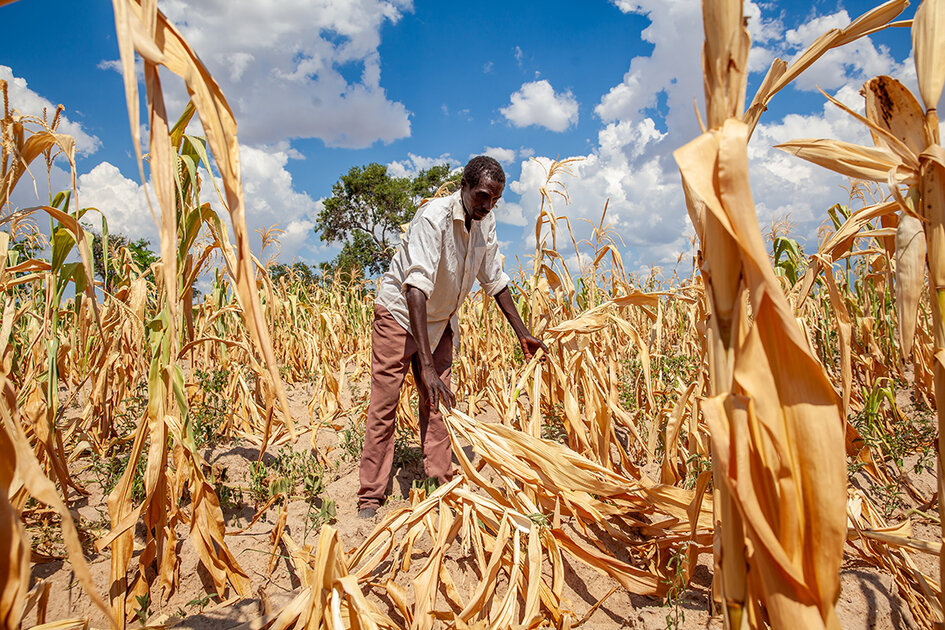
The fiscal backdrop: stability without buffers
The power build-out is happening as Zambia's broader stabilisation enters a harder phase. The country completed its 2022–26 IMF Extended Credit Facility in January 2026, having received about US$1.7 billion. External debt is now restructured to roughly 94 per cent of the restructuring perimeter. Public debt fell from 101 per cent of GDP in 2024 to 87.6 per cent in 2025, according to the AfDB's African Economic Outlook 2026. Inflation fell to 6.6 per cent in May 2026, inside the Bank of Zambia's 6–8 per cent target band, and reserves reached about US$6.4 billion.
The cushions are thinner than those figures suggest, though. In May, the IMF projected that the 2026 primary surplus would shrink to 1.1 per cent of GDP, down from 3.8 per cent projected earlier. It pointed to fuel-tax relief, a civil-service wage increase, pre-election spending and agricultural subsidy overruns of about 1.3 per cent of GDP. Purchases by the Food Reserve Agency (FRA) for the record 4.9-million-tonne maize harvest went well beyond the planned 500,000 tonnes and over budget. Musokotwane has said the Treasury will release no new money to the FRA for the coming season. Small farmers who sell to the agency see that as a setback.
The largest of the new developments came in October, at the IMF and World Bank annual meetings in Bangkok. Zambia reached a staff-level agreement on a new 36-month Extended Credit Facility worth US$1.5 billion, which the IMF Executive Board is expected to consider in December. IMF resident representative Reginald Darius said the country was better placed to absorb an El Niño shock because of its grain stocks, reserves and new generation. He also called for corrective action on fiscal slippage and closer oversight of state-owned enterprises, which includes ZESCO.
The social stakes
For households, electricity reliability is not abstract. Extreme poverty was still about 48 per cent in 2025. Most of the effects of load-shedding fall on small businesses: welders, millers, salons and cold-chain traders who cannot afford diesel generators. The 2024 outages hit Zambia's informal sector and its manufacturing ambitions hard. Reliable power now matters for every other goal in the "Grow Zambia" agenda, from agro-processing to the government's electric-vehicle push. The Centre for Trade Policy and Development put it plainly: "Macroeconomic stability is necessary, but it is not the final development outcome. The task now is to convert it into one."
What to watch over the 2026/27 rainy season
Zambia's 2024 crisis showed that its economy was effectively a bet on rainfall. Two years and nearly 1,000 MW of new capacity later, the country has reduced that exposure without eliminating it. The coming El Niño will be the first real test of whether the new power system holds up.



