Written By | Health News Agencies
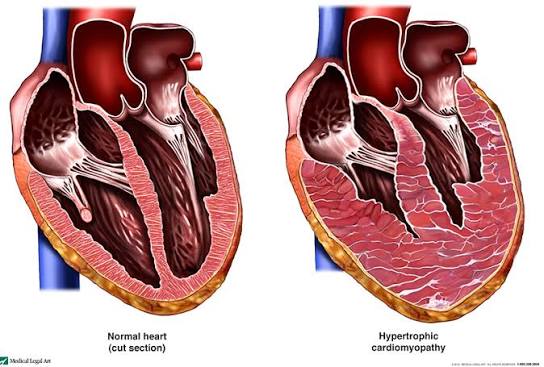
For the first time ever, children with obstructive hypertrophic cardiomyopathy have a drug aimed at the faulty engine inside their heart muscle, not just their symptoms
WASHINGTON, D.C.
For a teenager with obstructive hypertrophic cardiomyopathy, the enemy is their own heart working too hard. The muscle is too thick, it squeezes too forcefully, and with every beat it partly blocks the exit route that blood needs to leave the heart. Climbing stairs leaves them breathless. Running for a bus can bring chest pain. Some faint. Many are told to sit out of sport, and some end up on an operating table having part of their heart muscle cut away.
Until yesterday, the medicines doctors gave these young patients had never been properly tested in them. They were borrowed from adult medicine, and none of them went after the root cause of the disease.
That changed on Wednesday, 30 September 2026, when the US Food and Drug Administration approved Bristol Myers Squibb's heart pill Camzyos (mavacamten) for young patients with symptomatic obstructive hypertrophic cardiomyopathy, known to doctors as oHCM. The new label covers adults and children weighing at least 30 kilograms (about 66 pounds), and the decision rests on a trial in adolescents aged 12 to 17.
It makes Camzyos the first drug of its kind, a so-called cardiac myosin inhibitor, ever approved for children. According to the company, it is now the only FDA-approved medicine for oHCM in any paediatric population.
"The FDA approval of CAMZYOS for pediatric patients with symptomatic obstructive hypertrophic cardiomyopathy represents a landmark moment for pediatric cardiology," said Dr Joseph Rossano, chief of cardiology at Children's Hospital of Philadelphia and the lead investigator of the trial behind the decision. "For the first time, children with this serious condition have a therapy that is FDA-approved to reduce left ventricular outflow tract obstruction."
WHAT IS THIS DISEASE?
Hypertrophic cardiomyopathy is an inherited condition, usually caused by faults in the genes that build the heart's muscle machinery. The walls of the heart, especially the thick wall between its two pumping chambers, grow abnormally thick. In the "obstructive" form, that bulging wall gets in the way of blood flowing out of the left ventricle, the heart's main pumping chamber, into the body.
The result is a traffic jam inside the heart. Pressure builds up behind the blockage, and the heart has to push harder and harder to get blood out. Doctors measure this with an ultrasound scan, recording the pressure difference, or "gradient", across the narrowed exit. The bigger the number, the worse the blockage.
HCM is one of the most common inherited heart conditions, and it is a well-known cause of sudden cardiac death in young people, including young athletes. Many people with it go undiagnosed for years.
At the heart of the problem is a protein called cardiac myosin, the tiny motor that makes heart muscle contract. In HCM, too many of these motors are switched on at once. The heart becomes "hypercontractile": it squeezes too hard.
THE DRUG THAT EASES OFF THE ACCELERATOR
Mavacamten works by doing something that sounds alarming at first: it makes the heart squeeze less hard. It latches onto cardiac myosin and calms down the overactive motors, reducing the excess force. As the squeeze eases, the thickened wall stops slamming the exit shut so violently, the blockage shrinks and pressures inside the heart fall.
The FDA first approved Camzyos for adults with symptomatic oHCM in 2022. Since then, according to Bristol Myers Squibb, more than 5,000 US clinicians have prescribed it to over 25,000 patients.
Children, though, were left out. Until now, teenagers with the condition have relied on beta-blockers, calcium channel blockers and a drug called disopyramide. Doctors' recommendations for these young patients have largely been extrapolated from adult studies.
"Although those medications can help control symptoms, they do not specifically address the molecular mechanism of the disease," Dr Rossano told the trade publication Contemporary Pediatrics. Adolescents who stayed sick despite those pills "could ultimately require an invasive septal-reduction procedure", he said: surgery or a catheter procedure to remove or destroy part of the overgrown heart wall.
THE TRIAL: 44 TEENAGERS, ONE STRIKING RESULT
The approval is built on a phase 3 trial called SCOUT-HCM. It was randomised, double-blind and placebo-controlled, meaning neither the teenagers nor their doctors knew who was getting the real drug and who was getting a dummy pill.
The study enrolled 44 adolescents aged 12 to 17 with symptomatic oHCM. Twenty-three got mavacamten and 21 got placebo. Their average age was about 14 and a half. All had significant blockage: to qualify, they needed a gradient of at least 30 mm Hg while straining (the so-called Valsalva manoeuvre), and at least 50 mm Hg at its worst. At the start, average straining gradients were around 78 to 81 mm Hg in the two groups.
Teenagers could stay on their existing beta-blockers or other heart medicines. The new pill was added on top, started at 2.5 mg or 5 mg once a day depending on body weight, and adjusted based on repeat heart scans.
After 28 weeks, the difference was dramatic. In the mavacamten group, the straining gradient dropped by roughly 49 mm Hg on average. In the placebo group, it barely moved, dropping by about 1 to 2 mm Hg. The gap between the two groups was 48.0 mm Hg, a result so large it was very unlikely to be down to chance (P < .0001).
Put simply: for the average teenager on the drug, the blockage across the heart's exit was cut by more than half.
The same pattern showed up elsewhere. The resting gradient fell by 47 mm Hg more than placebo, and the gradient after exercise by 41.7 mm Hg more. The thickest part of the heart wall shrank by 1.8 mm more than on placebo, and a scan measure of how stiff the heart is when filling also improved.
The full results were presented at the American College of Cardiology's annual meeting in March and published the same day in The New England Journal of Medicine.
"The left ventricular outflow tract gradient is not merely an imaging measurement," Dr Rossano explained. "It reflects the resistance the heart must overcome to pump blood forward, particularly during exertion." Reducing it, he said, "often translates into fewer symptoms, including less shortness of breath, chest discomfort, fatigue, and exercise intolerance."
THE SAFETY PICTURE
Here is the worry with any drug that weakens the heart's squeeze: what if it weakens it too much? Push the brakes too hard and the heart can tip into failure.
That is why doctors watched one number closely: ejection fraction, the share of blood the left ventricle pumps out with each beat. In SCOUT-HCM, no teenager's ejection fraction fell below 50%, the danger threshold doctors watch for. No one stopped the drug because of side effects, and nobody died.
Serious adverse events were evenly split: two patients on mavacamten and two on placebo. On the drug, one teenager had two fainting episodes and another got an inappropriate shock from an implanted defibrillator. On placebo, one had chest pain and another had depression with suicidal thoughts. During the placebo-controlled period, there was no atrial fibrillation and no symptomatic heart failure in either group.
Bristol Myers Squibb says no new side effects turned up beyond those already known in adults.
But the warnings that came with the adult approval have not gone away. Camzyos still carries the FDA's most serious alert, a boxed warning, for heart failure caused by the heart squeezing too weakly. Patients need an echocardiogram before starting and repeat scans during treatment. The drug is only available through a restricted safety programme, the Camzyos REMS (Risk Evaluation and Mitigation Strategy), meaning doctors and pharmacies have to be certified to prescribe and dispense it.
Drug interactions matter too. Mavacamten is broken down by liver enzymes, and medicines that block those enzymes can push its levels up. For children, the label adds an extra 1 mg dose step so doctors can lower the dose more gently when such interactions arise.
THE FINE PRINT: WHAT WE DON'T KNOW YET
For all the excitement, this is a small trial measured over a short time. Forty-four patients is tiny by drug-trial standards, though HCM in children is rare enough that bigger studies are hard to run. The main result is a measurement on a scan, not proof that the drug helps teenagers live longer or avoid sudden death.
Bristol Myers Squibb itself notes that the confidence ranges for the secondary results were not adjusted for multiple comparisons and should not be treated as formal proof.
Dr Rossano, the trial's own lead researcher, was candid about the gaps. "The most immediate question is whether the benefits observed over 28 weeks remain durable over years," he said. He listed more unknowns: long-term effects on heart function, rhythm problems, "growth and development, reproductive health, medication adherence, and clinically important drug interactions."
He also flagged practical questions that doctors will now face in clinic: "Should mavacamten be used as a first-line agent or as an add-on to current conventional therapies? Can it reduce or defer the need for surgical myectomy?" And the approval does not answer what to do for children under 12 or for those with the non-obstructive form of HCM.
Answers are coming slowly. SCOUT-HCM continues with a 28-week phase in which placebo patients switch onto the drug, followed by an open-label extension of up to 144 weeks.
EXPERT PERSPECTIVE
For families who have spent years being told what their child can't do, the mood is one of relief.
"This is truly a milestone moment for patients and families," said Lisa Salberg, chief executive and founder of the Hypertrophic Cardiomyopathy Association. "Having a targeted therapy for cardiac myosin is a significant breakthrough, and it's a welcome change to bring this approval to a younger population."
Dr Rossano believes the drug could change the tone of conversations in the clinic, from a list of restrictions to something more hopeful. "A disease-targeted therapy can shift the conversation from one focused mainly on restrictions and symptom accommodation toward one that also includes the possibility of improving the obstruction," he said. "Ideally, therapy becomes part of enabling a fuller life rather than allowing HCM to define the adolescent's identity."
But he was equally clear about what the pill is not. "Treatment should not be presented as removing the diagnosis or all of its risks," he warned. "A lower outflow gradient does not necessarily eliminate the risk of arrhythmia or sudden cardiac death, nor does it automatically clear a patient for unrestricted competitive sports."
And it is not for every child with HCM. "It will not be appropriate for every adolescent with HCM — it was studied in patients with symptomatic obstructive disease," Dr Rossano said, "but for eligible patients it gives clinicians and families a meaningful new choice."
WHAT THIS MEANS FOR YOU
If your child has been diagnosed with hypertrophic cardiomyopathy, here is what you need to know:
Bristol Myers Squibb says it is discussing the paediatric data with regulators in other countries, so families outside the US may have to wait.
THE BOTTOM LINE
For decades, children with obstructive hypertrophic cardiomyopathy have been treated with hand-me-down medicines from adult cardiology, and the backstop for the sickest was surgery on a growing heart. Yesterday's approval gives their doctors, for the first time, a drug designed to go after the overactive motor at the root of the disease, backed by a trial in teenagers themselves.
The results in 44 young patients were striking: the blockage inside their hearts was more than halved in six months, with no dangerous drops in pumping power. But the drug is powerful by design, it comes wrapped in safety restrictions, and no one yet knows how it will perform over the decades a teenager will live with this condition. For now, as Dr Rossano put it, families have something they never had before: "a meaningful new choice."



