Written By | Baker Kwikiriza
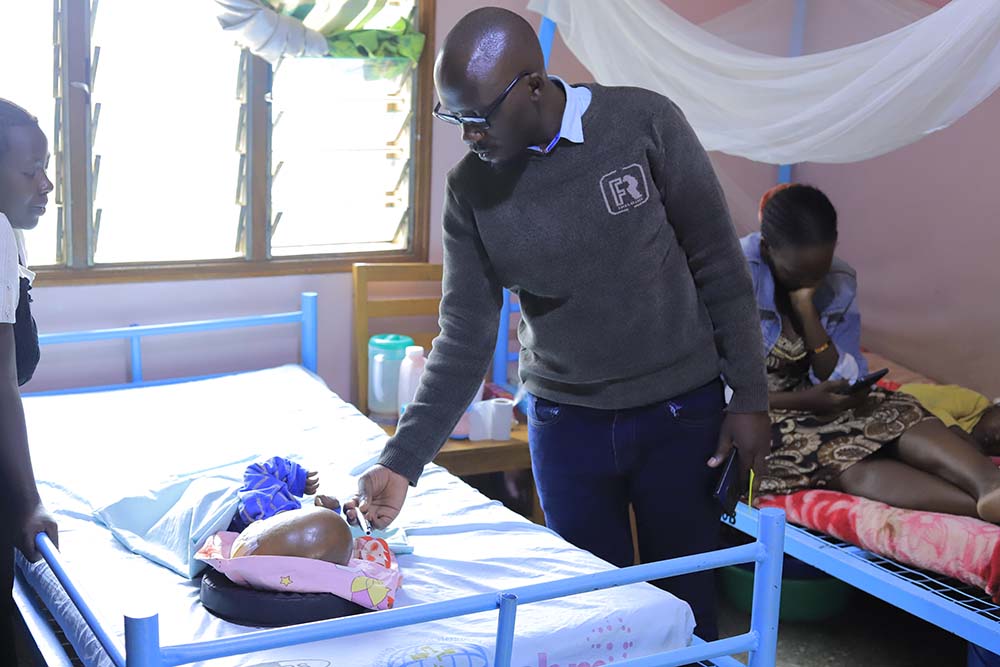
Aron Ndyowawe checking a child with spina bifida
HEALTH
For many families, the birth of a child brings joy, hope and expectations for the future. However, for parents whose children are born with conditions such as spina bifida and hydrocephalus, the journey can come with emotional, physical and financial challenges.
October is observed as Spina Bifida Awareness Month in many awareness campaigns, while World Spina Bifida and Hydrocephalus Day is marked annually on October 25. These observances aim to raise awareness, promote understanding and highlight the needs of individuals and families affected by these conditions.
The campaigns also provide an opportunity to encourage early medical assessment, improve access to appropriate care and challenge the stigma surrounding children living with these conditions.
Spina bifida and hydrocephalus often require specialised medical care, regular hospital visits, rehabilitation and continued support at home. Without adequate information and access to healthcare services, families may find it difficult to provide the care their children need.
Maclean Nabaasa, a resident of Kamwenge District, understands these challenges as she cares for her child, who has hydrocephalus, a condition characterised by an abnormal accumulation of cerebrospinal fluid in the brain.
“Raising a child with this condition is not easy. The child requires a lot of care every day, and carrying her around takes a lot of time and effort,” she says.
Her experience reflects the daily realities faced by many caregivers, who must balance their children’s medical needs with household responsibilities and the cost of treatment.
UNDERSTANDING THE CONDITIONS
Spina bifida is a birth defect that occurs when the neural tube, which develops into the brain and spinal cord, does not close completely during early pregnancy. Depending on its severity, the condition can affect movement, bladder and bowel function, and other aspects of a child’s health.
Hydrocephalus, on the other hand, occurs when cerebrospinal fluid accumulates abnormally in the brain. This can increase pressure inside the skull and cause serious complications if left untreated.
Although the two conditions can occur together, they are distinct conditions and do not always have the same causes or treatment requirements.
For children living with either condition, early assessment, appropriate medical treatment and continued follow-up are important in managing complications and supporting development.
REHABILITATION AND DAILY CARE
At Organised Useful Rehabilitation Services (OURS), based at Ruharo Mission Hospital in Mbarara, rehabilitation forms part of the support available to people living with disabilities and related conditions.
Musa, who lives with spina bifida, experiences mobility difficulties but continues with his daily activities with support. His experience highlights the importance of helping children develop independence and participate in family and community life according to their abilities.
Aron Ndyowawe Bram, a physiotherapist and administrator at the rehabilitation centre, emphasises the importance of appropriate care and rehabilitation for children living with these conditions.
Rehabilitation needs vary from one child to another. Depending on the child's condition, support may include physiotherapy, mobility aids, skin care, assistance with daily activities and regular medical reviews.
Caregivers are encouraged to follow treatment plans provided by health professionals, attend scheduled appointments and seek medical advice whenever they notice changes in a child’s condition. Children with limited mobility may also need particular attention to prevent pressure sores and other complications.
WHAT PARENTS SHOULD DO — AND AVOID
Healthcare professionals encourage parents and caregivers to seek medical attention early and work closely with qualified health workers.
Parents should attend antenatal appointments, follow medical advice and ensure that their children receive recommended treatment and rehabilitation. They should also seek prompt medical assessment if a child develops new symptoms or experiences a sudden change in health.
Caregivers should avoid delaying medical assessment, missing essential follow-up appointments or using unprescribed treatments as substitutes for professional care. Support should be tailored to each child’s specific needs rather than relying on a one-size-fits-all approach.
Dr Blessing Michael Taremwa, a specialist neurosurgeon at Mbarara Regional Referral Hospital, encourages parents and caregivers to seek medical attention early and make use of available public health facilities.
Early assessment can help health professionals identify complications and determine appropriate treatment. The care required depends on the nature and severity of the condition.
THE ROLE OF NUTRITION AND PREVENTION
Spina bifida develops during the early stages of pregnancy, often before a woman knows she is pregnant. Adequate folic acid intake before conception and during early pregnancy can reduce the risk of neural tube defects, including many cases of spina bifida.
Women planning to become pregnant are therefore encouraged to seek advice from qualified health workers about folic acid supplementation and appropriate antenatal care. A balanced diet is also important for maternal and child health, although diet alone cannot prevent all birth defects.
Hydrocephalus has several possible causes, and no single dietary measure can prevent all cases. Awareness of warning signs, timely medical assessment and access to appropriate treatment remain important.
THE FINANCIAL BURDEN ON FAMILIES
Beyond the medical challenges, the cost of treatment can place considerable pressure on families. Some may need to pay for transport to health facilities, repeated consultations, medication, rehabilitation and mobility support.
Treatment and related care can cost millions of Ugandan shillings, depending on the child’s needs and the services required. For families with limited resources, meeting these costs can be difficult and may affect their ability to maintain regular follow-up.
The Spina Bifida and Hydrocephalus Association of Uganda has highlighted the burden these conditions place on children and their families. The association’s reported figure of more than 8,000 affected children in Uganda points to the need for continued public awareness, support services and access to healthcare.
BUILDING AWARENESS AND SUPPORT
Spina bifida and hydrocephalus can present lifelong challenges, but children living with these conditions should not be defined by their diagnoses. With appropriate medical care, rehabilitation, family support and inclusive communities, many can participate more fully in everyday life.
For parents and caregivers, understanding these conditions, seeking professional advice and following individual care plans are important steps towards improving health and quality of life.
As awareness campaigns take place in October, families, health professionals and communities have an opportunity to share accurate information, challenge stigma and advocate for better access to medical care and rehabilitation.
Greater public awareness, early medical intervention and continued support can help reduce preventable complications and ensure that children living with spina bifida and hydrocephalus receive the care, dignity and support they deserve.



