Written By | International News Agencies
Gold, debt relief and fiscal discipline are reshaping West Africa's comeback economy
A Default Recedes Into the Rear-View Mirror
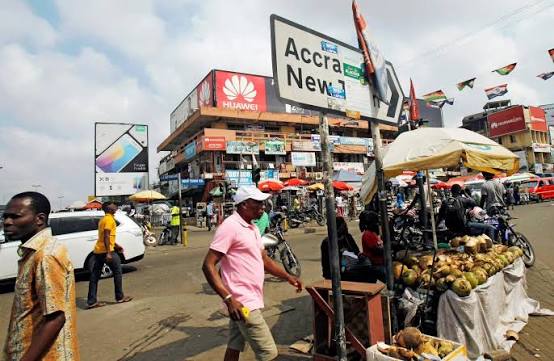
Three years ago, Ghana was the cautionary tale of West African public finance: a sovereign default in December 2022, an external debt load north of $30 billion, and a currency in free fall. In 2026, it has become the region's clearest example of how quickly a debt workout can turn into a growth story when fiscal discipline, a commodity windfall, and a completed restructuring arrive at the same time. The numbers now moving through the International Monetary Fund's Article IV process, credit-rating actions, and central bank data all point the same direction: Ghana has shifted from crisis management to consolidation faster than most sovereign-debt restructurings under the G20 Common Framework and comparable processes have managed.
The turnaround is not merely rhetorical. On 27 July 2026, the IMF's Executive Board completed the sixth and final review of Ghana's three-year, $3 billion Extended Credit Facility (ECF) arrangement — entered in May 2023 as the country's post-default stabilization anchor — and simultaneously concluded the 2026 Article IV Consultation. In the same decision, the Board approved a new 36-month, non-financing Policy Coordination Instrument (PCI), the IMF's tool for countries that no longer need Fund money but want continued policy monitoring. Ghana drew roughly $2.8 billion of the ECF's $3 billion envelope over the program's life, with a final disbursement of SDR 265.9 million (about $371 million) released alongside the sixth review.
Debt Restructuring: From High Risk to Moderate
The core of Ghana's rehabilitation was its debt restructuring, concluded through a mix of external and domestic operations. Under the terms agreed with bondholders, roughly $13 billion of Eurobond debt was restructured with a 37% haircut — about $4.7 billion of face-value relief — after a consent solicitation in September 2024 secured participation from 98.6–98.7% of eligible holders. A parallel process addressed roughly $5.4 billion in bilateral official creditor debt. Since January 2025, Ghana has made cumulative payments of about $2.1 billion to restructured Eurobond holders, including a $700 million payment settled early, on 2 July 2026, split between $525.2 million in principal and $174.8 million in coupon interest — itself on top of a $709 million final 2025 obligation paid ahead of schedule on 30 December.
The payoff shows up in Ghana's risk classification and credit ratings. The IMF's October 2025 Debt Sustainability Analysis moved the country from 'high risk' to 'moderate risk' of debt distress, and all three major agencies upgraded Ghana within the same twelve months: Fitch to 'B-' with a stable outlook in June 2025, Moody's to 'Caa1' stable in October 2025, and S&P Global to 'B-/B' in November 2025. Eurobond prices rose roughly 17% over the course of 2025 as yields compressed by more than 300 basis points. Looking ahead, Ghana still faces meaningful sinking-fund obligations of about $1.42 billion in 2026, $1.17 billion in 2027 and $1.14 billion in 2028 — a reminder that debt sustainability, while improved, is not the same as debt elimination.
The Cedi's Comeback and a Collapsing Inflation Rate
Perhaps the most visible sign of stabilization to ordinary Ghanaians has been the currency. The cedi appreciated by roughly 25% against the US dollar over 2025, moving from about GH¢16 to roughly GH¢11 per dollar — an unusually sharp swing for a currency that had been one of the world's worst performers just two years earlier. Inflation fell in tandem, from 23.8% year-on-year in December 2024 to 8% by October 2025, and further to 3.7% by May 2026. The Bank of Ghana responded by cutting its policy rate from a peak of 28% down to 14% by May 2026, though the central bank has since paused its easing cycle to assess how durable the disinflation is.
Ghana's external buffers have also been rebuilt. Gross international reserves exceeded $11 billion by December 2025, equivalent to roughly 4.8 months of import cover, and the government has set explicit targets of reaching 8.6 months of cover by the end of 2026 and 15 months by the end of 2028. On the fiscal side, Ghana posted a primary surplus of 1.6% of GDP through September 2025, evidence that the revenue and spending discipline built into the IMF program has outlasted the program's financing phase — one reason the Fund was comfortable letting the arrangement expire into a policy-coordination instrument rather than a successor loan.
Gold Is Doing the Heavy Lifting
Behind the fiscal numbers sits an old export earner having an unusually good run: gold. Ghana's GDP grew 6.4% year-on-year in the first quarter of 2026, up from 5.8% in the prior quarter, prompting analysts to revise full-year growth forecasts upward from an initial 4.8% to 'above 6%.' Industrial output, which had grown just 1.9% the previous quarter, expanded 6.9% in the first quarter of 2026 — described by commentators as the strongest industrial performance the country has recorded in close to two years. Mining now accounts for 5.5–6% of GDP and generates 33–40% of Ghana's total foreign-exchange earnings, cementing its position as Africa's largest gold producer. In 2026 the government introduced a new gold royalty regime specifically designed to capture a larger share of the windfall created by elevated global bullion prices.
That windfall has also sharpened political attention on how the gold trade is governed. Ghana Gold Board (GoldBod), the state entity created to formalize and aggregate gold purchases from small-scale miners, is preparing to roll out a blockchain-based traceability system by the end of 2026, following a national competitive tender. The stated goal is to ensure 'every gram of purchased gold links to verified legal sources,' using structured district gold-buying centers and periodic operator audits to keep gold from illegal small-scale mining — known locally as galamsey — out of the formal export chain. Parliament is expected to legislate on the treatment of suspect gold once the system is operational. The push has real environmental stakes: reclamation work is already under way on 50 hectares of the Tano Nimiri Forest Reserve in the Western Region, a roughly GH¢35.1 million contract split between the Ghana Armed Forces Engineers Regiment (GH¢27.9 million for earthworks) and the Forestry Commission (GH¢7.2 million for a ten-year afforestation program), with an ambition to extend rehabilitation to at least 150 hectares by 2027. GoldBod's rollout has not been free of controversy — opposition figures, including Ghana's parliamentary Minority Leader, have argued its purchasing activities are inadvertently encouraging more illegal mining, a charge the parliamentary majority disputes.
Paying for Stability: New Revenue Measures
Sustaining the primary surplus without IMF financing behind it has required Ghana's government to find new, politically difficult revenue. In 2026, authorities introduced a mobile-money levy of 0.75% on wallet-to-bank transfers, capped at 55 cedis per transaction — a sequel to an earlier package of higher income, corporate and excise taxes worth roughly $340 million that passed parliament by a single-vote margin (137–136) in April 2023. Revenue mobilization, fiscal stabilization and financial-sector stability were explicitly named among the priority areas of the IMF's sixth review, an indication that Fund surveillance — even without fresh lending attached — will keep pressure on Accra to hold the line on these measures.
Outlook
Ghana's 2026 story is, in essence, a case study in how a debt restructuring, a disciplined fiscal anchor and a favorable commodity cycle can compound. The risk is that the third leg of that stool — gold prices — is the one Accra controls least. A sustained pullback in bullion prices would strip away much of the foreign-exchange and fiscal cushion that has underwritten the currency's rally and the disinflation of the past eighteen months, testing whether the institutional gains from the restructuring — the moderate-risk debt rating, the primary surplus, the new revenue base — can hold on their own. For now, though, Ghana has done something few recently defaulted sovereigns manage: convince the IMF it no longer needs the Fund's money, only its supervision.