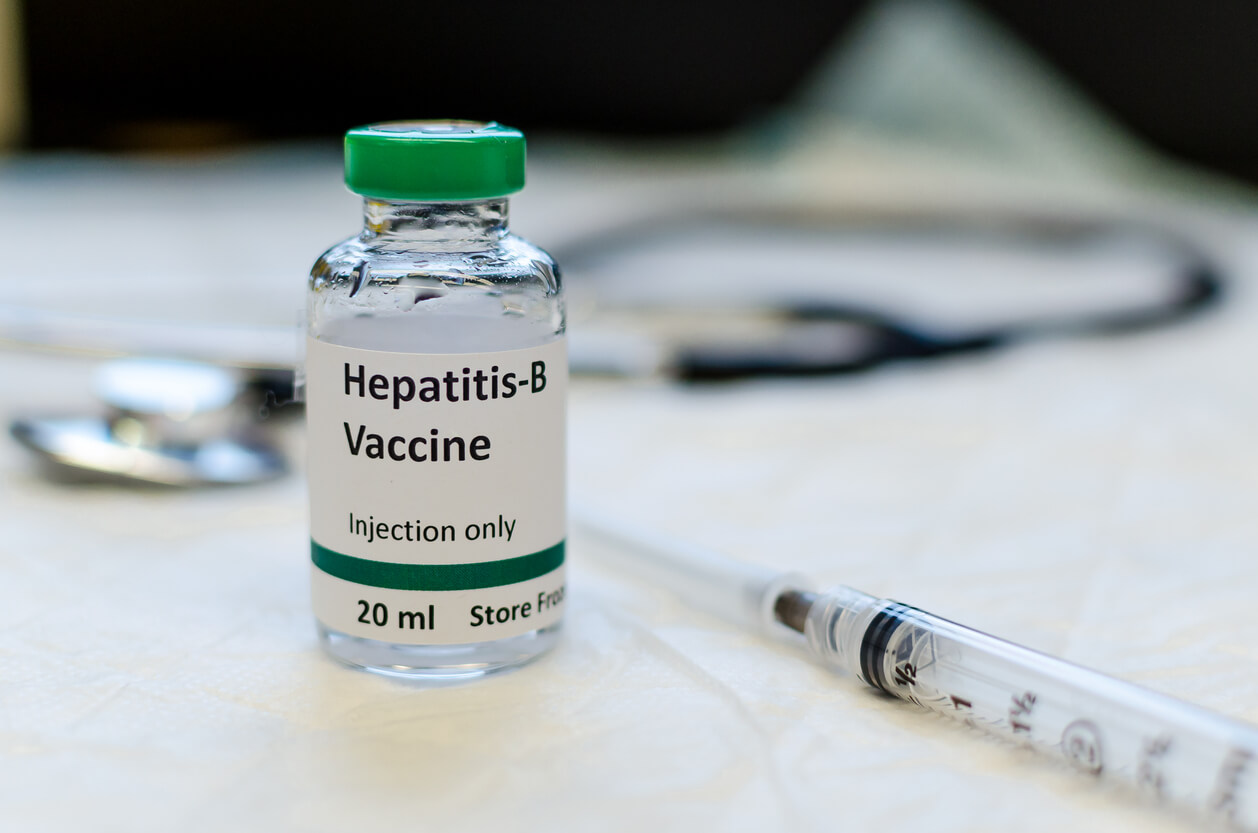
The FDA has approved Hibsago (bepirovirsen), the first drug that can clear hepatitis B from the blood in a fifth of patients. But a boxed warning and a long list of safety checks mean it is no magic bullet.
WASHINGTON
For decades, a diagnosis of chronic hepatitis B has meant a promise to swallow a pill every day, probably for the rest of your life. Now, for the first time, there is a treatment that offers some people a chance to put the virus into long-term remission and stop the pills altogether.
On 20 October 2026, the US Food and Drug Administration approved Hibsago (bepirovirsen), a course of injections taken for up to 24 weeks, as the first therapy capable of delivering what doctors call a functional cure of chronic hepatitis B. It is the first antisense oligonucleotide medicine ever approved for the disease, developed by Ionis Pharmaceuticals and licensed to GSK.
Hepatologists are calling it a milestone. Cautious voices add a reminder: fewer than one in five patients in the trials were cured, and the drug carries two boxed warnings.
A silent infection affecting hundreds of millions
Chronic hepatitis B (CHB) is one of the world's most widespread and under-recognised infections. More than 240 million people worldwide live with it, including about 1.7 million in the United States. It is a leading cause of liver cancer, and many people carry the virus for years without symptoms.
Current treatment relies on nucleos(t)ide analogues (NrtIs), antiviral pills that hold the virus's DNA at undetectable levels but almost never remove it. According to Ionis, standard antivirals achieve a functional cure in fewer than 1 percent of patients after a year. Stop the pills and the virus can come roaring back, sometimes with dangerous liver flares. That is why most patients stay on treatment indefinitely.

What is a 'functional cure'?
A functional cure does not mean every trace of the virus is gone. It means the virus's surface protein, called HBsAg, and its DNA are undetectable in the blood for at least 24 weeks after all treatment has stopped. The immune system, in effect, takes back control.
That is a very different outcome from what today's pills achieve, and it is the goal that hepatitis B researchers have chased for decades.
How Hibsago works and who can get it
Bepirovirsen is an antisense drug: a short strand of genetic material designed to latch on to the virus's RNA and destroy it, shutting down production of the proteins, including HBsAg, that help the virus hide from the immune system.
The FDA approved it for use together with NrtI therapy in adults who do not have cirrhosis. Patients must have been on NrtI treatment for at least six months, have suppressed HBV DNA, and have HBsAg levels at or below 3,000 IU/mL, as measured by an FDA-authorised test. The agency also authorised a companion test from Roche to identify eligible patients.
It is given by subcutaneous injection for up to 24 weeks, roughly six months. After the first dose, patients can administer it themselves at home. Each dose consists of two injections placed at least two inches (5 cm) apart, and injection sites must be rotated week to week. It should never be injected into skin that is tender, bruised, red, or hard.
The label was granted under priority review and Breakthrough Therapy designation, which the FDA accepted in April 2026. Approval has also been granted in Japan, according to the announcement.
The trial results
Approval rests on two large Phase 3 studies, B-Well 1 and B-Well 2, run across 29 countries. Both were randomised, double-blind and placebo-controlled, enrolling adults with CHB who were already taking NrtI therapy. The results were published in the New England Journal of Medicine.
Participants received bepirovirsen or placebo for six months, with functional cure measured at week 72. In the main group, those with baseline HBsAg at or below 3,000 IU/mL, the pooled functional cure rate was 19 percent (233 of 1,220 patients) compared with 0 of 614 on placebo. In patients with lower starting levels, at or below 1,000 IU/mL, the rate rose to 26 percent (200 of 768 patients) versus none of 393 on placebo. Both results were statistically significant.
The two trials were consistent. B-Well 1 showed 20 percent functional cure and B-Well 2 showed 19 percent in the main group.
Other measures were encouraging, too. Sustained undetectable HBV DNA at week 72 was seen in 23 percent of bepirovirsen patients overall. In an exploratory analysis, 49 percent of those treated had HBsAg at or below 100 IU/mL one year after treatment finished. According to the FDA, 24 percent of treated patients met criteria to stop NrtI therapy altogether.
Put simply: roughly one in five treated people moved from a lifetime of pills toward being treatment-free, and among those with the lowest starting virus levels, about one in four did.
The fine print: two boxed warnings
This is not a gentle drug. The label carries two boxed warnings, the FDA's most serious category. The first is hepatic flares. As HBsAg falls, the immune system can attack infected liver cells, causing sudden spikes in liver enzymes. In trials ALT rose to 20 to 40 times the upper limit of normal in some cases, sometimes with raised bilirubin, mostly within the first 12 weeks. The drug must not be started in people with acute liver impairment or cirrhosis.
The second is thrombocytopenia, a sudden and potentially life-threatening drop in platelets, the blood cells that help clotting. Hibsago is contraindicated if platelets are below 100 x 10^9/L before treatment. Platelet counts must be checked before starting and at least weekly during treatment. Dosing can only resume once platelets recover to at least 100, and treatment is stopped permanently if they fall below 50.
Other warnings include worsening kidney function, which generally reversed after stopping; serious inflammatory and immune reactions, such as autoimmune hemolytic anaemia; and one case of omental infarction, a blockage of blood supply to fatty abdominal tissue, in a participant who failed to rotate injection sites. Anyone who stops NrtI pills must be monitored for at least one year because severe hepatitis flares can occur. The drug is not recommended in people also infected with hepatitis D, and patients co-infected with HIV-1 should not stop NrtI therapy unless directed by their HIV specialist.
The most common side effects, affecting 10 percent or more of patients, were injection site reactions, fever, fatigue and headache. Safety and effectiveness have not been established in anyone under 18, and there are no data on whether the drug prevents transmission of the virus, so patients must keep taking precautions.
In other words, this is a treatment for specialist clinics with reliable weekly blood monitoring, not a casual prescription.
What the experts say
Wendy Carter, DO, acting director of the FDA's Office of Infectious Diseases, said the approval "offers a new treatment approach that gives some patients the possibility of maintaining control of the virus."
Norah Terrault, MD, MPH, of USC Keck Medical Center, went further: "This is the start of a new era in treating people living with CHB."
Chari Cohen, DrPH, MPH, of the Hepatitis B Foundation, said: "Today marks significant progress towards our aim of transforming the way CHB is managed."
Ionis chief executive Brett Monia, Ph.D., highlighted "unprecedented functional cure rates after a six-month treatment course," while GSK chief scientific officer Tony Wood said US patients now "have the potential to achieve functional cure after a six-month treatment course."
Under its 2019 licence deal, GSK holds rights to the drug, and Ionis is eligible for tiered royalties of 10 to 12 percent on net sales. No price has been announced in the material reviewed.
What this means for you
If you have chronic hepatitis B and are on antiviral pills, do not stop them. Stopping NrtI therapy on your own can trigger serious flares. Ask your liver specialist whether you meet the criteria: at least six months on treatment, suppressed viral DNA, no cirrhosis, and HBsAg at or below 3,000 IU/mL. That last figure comes from a blood test your doctor can order.
If you have never been tested, now is a good moment. Hepatitis B often causes no symptoms for years. A simple blood test can reveal infection, and vaccination protects those who are not infected.
Expect a trade-off. A one-in-five chance of a functional cure comes with weekly blood tests, close monitoring for liver flares, and the possibility of side effects. For some patients, particularly those with lower HBsAg levels, that bargain may be well worth it. For others, staying on pills will remain the safer choice.
Questions about cost, insurance coverage and availability in countries beyond the US and Japan remain open.
Why this matters beyond one drug
For decades, hepatitis B was seen as a disease to be managed, not cured. Hibsago changes the conversation. It proves that a finite, six-month course can reset the relationship between virus and immune system in a meaningful minority of people, and it opens the door to combinations that might push the cure rate higher.
Researchers will now watch how patients fare over the longer term, whether functional cures hold, and whether the monitoring burden is manageable in everyday practice. The drug is also a landmark for antisense medicines, a technology that has until now been used mainly for rare genetic diseases.
For the 240 million people living with this infection, it is the first real sign in a generation that the finish line might exist.
Published By | Features Editor