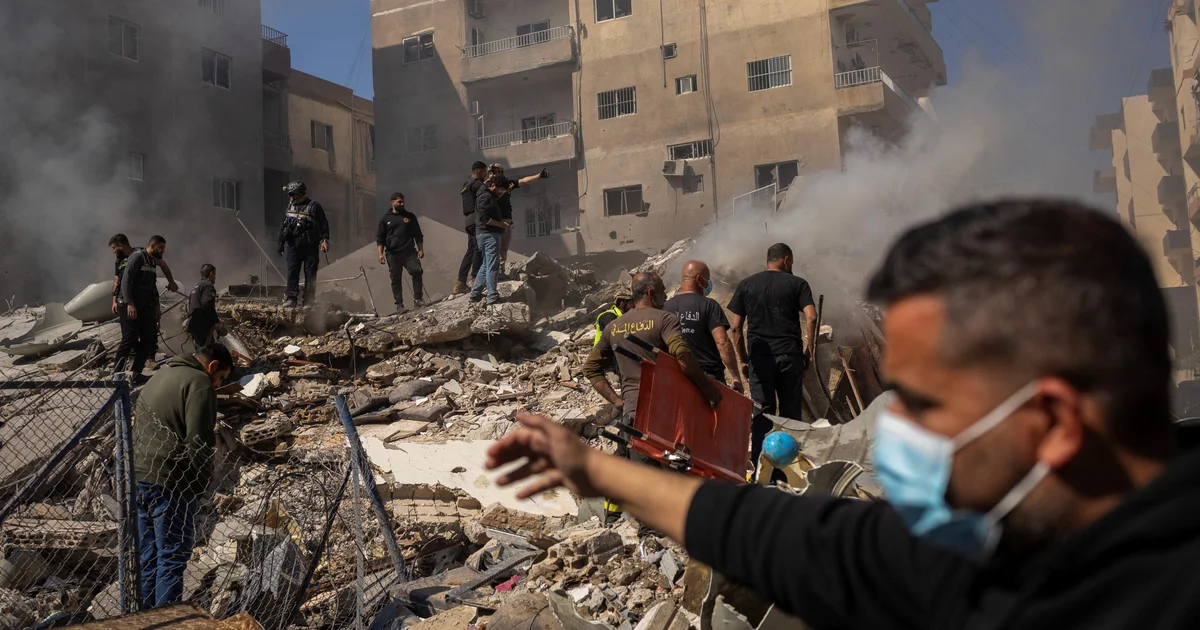
Reports that Vice President JD Vance reached out to a senior Iranian security official have collided with warnings of renewed US strikes after the November 3 elections, as Iran presses a seven-day plan to reopen the Strait of Hormuz.
World Politics
Overview
Eight months into a war that has reshaped the Middle East and rattled global energy markets, the diplomatic and military tracks between Washington and Tehran are moving at the same time and in apparently opposite directions. On Wednesday evening and into Thursday, October 29, 2026, the Wall Street Journal reported that Vice President JD Vance had sent a letter to Mohsen Rezaei, the secretary of Iran's Supreme National Security Council and a former commander of the Islamic Revolutionary Guard Corps, and that subsequent contacts between US and Iranian officials had taken place. According to the report, the outreach sketched a possible negotiating framework rather than the specifics of a peace proposal.
Within hours, President Donald Trump muddied the picture. Asked about the report, he denied that he had directed Vance to restart peace talks, saying instead that Iran "needs help with medical supplies." Other accounts differ on who initiated the contact: one source cited by the Journal said Trump directed it, while Trump told reporters that Vance brought him the idea and that he told his deputy to proceed as he saw fit. At the same time, the Associated Press and other outlets reported that US officials have told several Middle Eastern governments and allies to prepare for possible renewed military action after the November 3 midterm elections.
The result is a week in which a hand extended to Tehran, a threat of a "short, intense" campaign, a Houthi missile fired at Saudi Arabia and a claim by the Guards that three tankers hit mines in the Strait of Hormuz are all part of the same story. This article sets out how the war arrived at this point, what is actually known about the Vance outreach and Iran's seven-day plan, how the main players are reacting, and what could happen next.

Background: A War in Its Eighth Month
The current conflict began on February 28, 2026, when Trump announced that the United States was launching "major combat operations" against Iran alongside Israeli strikes. Washington cited the goal of ensuring that Iran never obtains a nuclear weapon. The campaign followed the twelve-day Israel-Iran war of June 2025, during which the United States struck Iranian nuclear sites. Reporting on Thursday put the current war at roughly day 242.
A deal in June, described in coverage as a memorandum of understanding that laid out a path toward a permanent settlement, has since collapsed, and repeated diplomatic efforts have failed. Since then Iran has blockaded the Strait of Hormuz, the narrow waterway through which a large share of the world's seaborne oil passes, while the United States maintains a naval blockade of Iranian ports. The standoff has produced tanker incidents, threats to Gulf infrastructure and a widening set of fronts, including Israeli strikes in southern Lebanon and a sustained Houthi campaign against Saudi Arabia.
In September, Iran put forward what has become known as the seven-day plan, conveyed through Qatar. Under it, Iran says the Strait of Hormuz would reopen within seven days if certain conditions are met, including a ceasefire across the region. Tehran's demands, as reported, are the release of frozen overseas assets, the lifting of oil sanctions and an end to the US naval blockade. The United States has not conducted major strikes on Iran since September, a lull that diplomats say reflects both the mediation efforts and the proximity of the midterm elections.
Key Developments: The Vance Letter
The most striking development is the reported letter. Rezaei is a hardliner, and writing to him rather than to Iran's foreign ministry would signal an attempt to reach the security establishment that actually controls decisions on the war. The Wall Street Journal's account, as relayed by Israeli and Indian outlets, says the letter and later contacts concerned a framework for talks. A regional source quoted by Israel's Channel 12 said, "There is some movement. We are waiting for the Iranian response." Axios, meanwhile, reported that Qatar is leading a push to restart talks.
Trump's denial that he ordered peace talks, paired with his statement that the message concerned medical supplies, leaves the purpose of the outreach genuinely unclear. A humanitarian channel and a negotiating channel are not mutually exclusive, and administrations often use humanitarian gestures to open doors that cannot be opened publicly. But the divergence between the Journal's sourcing and the president's account is itself a signal that the White House is not speaking with one voice, or does not want to be seen negotiating while it is also preparing for force. Analysts quoted in coverage framed the situation as a question of whether Washington is sending mixed signals to Tehran.
Iran's public response has been measured. Foreign Minister Abbas Araghchi said on X that Tehran is in "close and ongoing contact" with mediators about how to implement the seven-day plan, that implementation could come in under a week, and that Iran "continues to give diplomacy a chance to succeed" even as its armed forces stand ready to defend the country. Iranian officials have been less gracious about the substance of Qatari proposals: a senior Iranian official told Reuters that Qatar had offered "unacceptable ideas and not an offer," while another said Doha had presented a draft peace agreement on Sunday, when a Qatari delegation visited Tehran. Iran says it will show no flexibility on its nuclear programme.
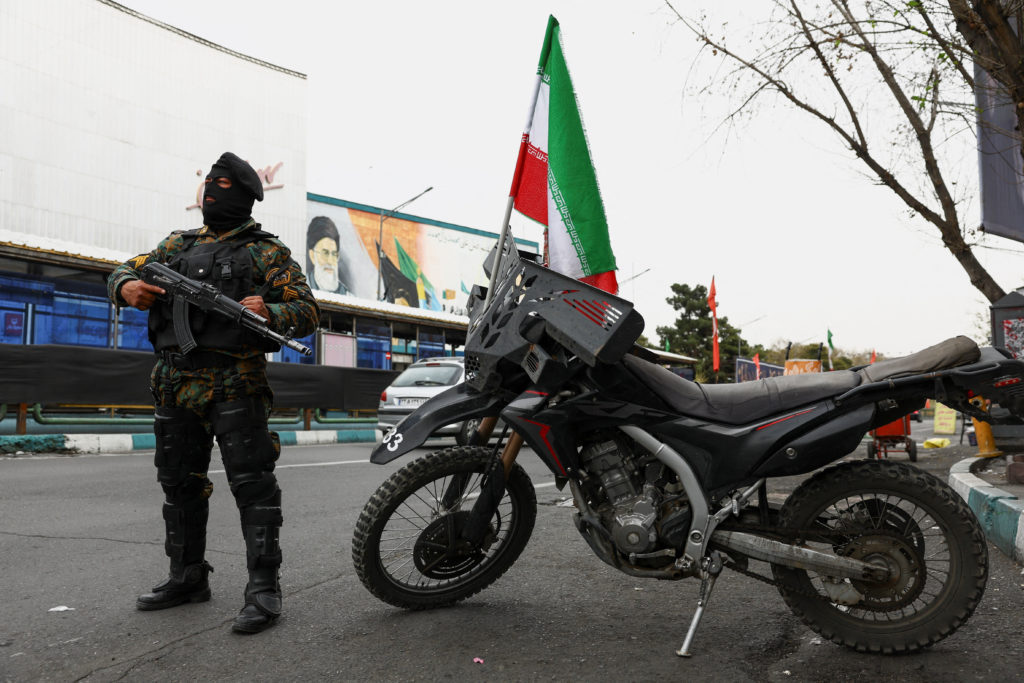
Key Developments: Mediation, Mines and Threats
Qatar-led mediators are reportedly working to secure a deal before the US midterms. Axios reported that they are seeking access for United Nations inspectors to the bombed nuclear sites in exchange for some US sanctions relief. Saudi officials, who have borne the brunt of Houthi attacks this month, have urged the White House to give talks more time. Qatar's prime minister and foreign minister also met Jordan's foreign minister in Amman on Wednesday to discuss de-escalation.
The military track is running in parallel. On Tuesday the Wall Street Journal reported that Washington told Gulf states to prepare for a possible "short, intense military campaign" after the midterms, though it said Trump had not made a final decision. Two senior diplomats told the Associated Press that Trump has repeatedly signaled he is weighing new strikes after November 3, and the White House declined to comment. Iran has answered with its own threats: Rezaei has said Iran could target US-linked infrastructure including data centers and artificial-intelligence facilities, and other reports say the Guards have threatened US bases and Gulf internet links. Araghchi has warned of a "devastating" effect on international markets from any Israel-instigated attack in the Gulf.
In the Strait itself, Iran's Revolutionary Guards said on Thursday that three oil tankers caught fire after hitting naval mines while transiting, the latest in a series of such incidents; earlier this month they made similar claims about supertankers. The claim comes from one party to the conflict and could not be independently verified in the sources reviewed, and outlets that have examined earlier incidents have noted that responsibility for mines is contested. Meanwhile, the Saudi-led coalition said it intercepted a Houthi ballistic missile fired toward the Eastern Province on Thursday. This follows a Houthi strike on a Saudi airport that reportedly killed 12 people and injured 309, which the coalition called a war crime, and attacks that caused a fire at an Aramco building in Riyadh. India's foreign ministry said 22 Indian nationals, including 14 seafarers, have died in the conflict.
Reactions
Reactions so far reflect the fractured politics around the war. In Washington, the Vance outreach lands in the final week of a midterm campaign in which Trump's approval has been reported at record lows, and where any new military operation would carry electoral risk, as would the appearance of negotiating with a government the administration has described as an enemy. Critics are likely to question why a possible campaign would be telegraphed to allies days before an election, and whether the timing is a pressure tactic on Tehran or a political calculation at home.
In the region, governments are preparing for both outcomes. Gulf states, told to brace for strikes and retaliation, have strong incentives to see a deal succeed: their airports, oil facilities and shipping lanes are the most exposed targets. Riyadh's call for more time for diplomacy reflects that exposure. Israel, whose own election count on Thursday was still unresolved, has not publicly responded to the Vance contact in the reporting reviewed; Israeli officials have however pressed for a harder line on Iran, and the composition of the next Israeli government could shape how much room Washington has to maneuver. Tehran, for its part, is trying to project openness without conceding its core positions on sanctions, blockade and its nuclear programme.
Discrepancies and Open Questions
Several important facts remain unsettled. Whether the Vance letter was ordered by Trump, merely tolerated by him, or aimed at humanitarian goals only depends on whether one credits the Journal's source or the president, and the letter's contents have not been published. The terms of Iran's seven-day plan are known in outline, but outlets differ on how conditional the reopening of Hormuz is on a broader regional ceasefire. The tanker incidents are reported through Iranian official channels. And it remains unclear whether Qatar's draft, which Iranian officials have disparaged, is a basis for talks or a dead end. Readers should treat the timeline for any agreement with caution.
What Comes Next
The calendar is the story. November 3 is both the midterm election and the date after which US officials have reportedly signaled that strikes could resume. If mediators can deliver even a limited arrangement before then, such as a partial reopening of Hormuz in exchange for sanctions relief and inspector access, the administration could claim a diplomatic win in the campaign's last days. If they cannot, the combination of mines, Houthi attacks and Iranian threats to data centers and bases gives both sides ample opportunities to escalate.
Three indicators are worth watching. The first is whether Iran formally answers the Vance outreach and whether Rezaei, rather than the foreign ministry, is the one who speaks. The second is whether tanker traffic through Hormuz changes in the next week, which would show whether the seven-day plan has any practical traction. The third is the language coming from the White House after the election: a decision to proceed with a "short, intense" campaign would end the current diplomatic window, while a decision to extend talks would suggest the Vance channel was more than a humanitarian gesture. For now, the war's fate appears to hinge on a few days of quiet diplomacy and a president who is publicly denying that he is conducting it.
Published By | News Editor