Written By |
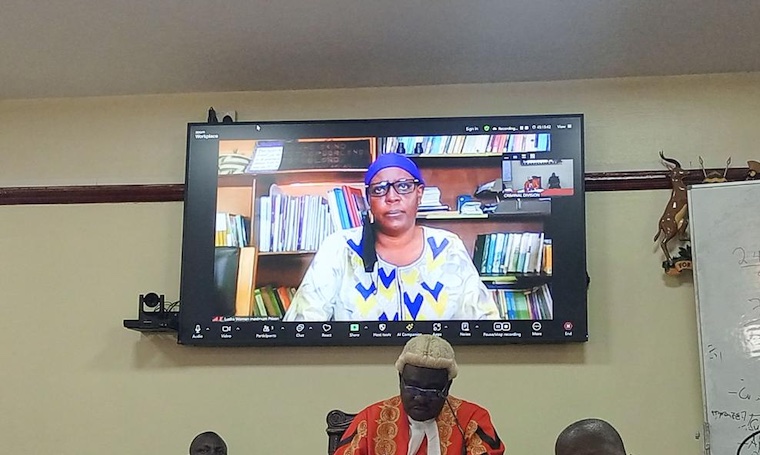
Molly Katanga appearing in court on zoom from Luzira
In a tense courtroom filled with sharp exchanges, the trial for the murder of businessman Henry Katanga resumed, with forensic expert Andrew Kizimula Mubiru facing a barrage of questions from the defense team. The cross-examination aimed to unravel the significance of DNA evidence found on the alleged murder weapon and other exhibits linked to Molly Katanga, the widow accused of killing her husband. Molly was not alone in the dock, as her daughters, Patricia Kakwanza and Martha Nkwanzi, along with domestic worker George Amanyire and nursing officer Charles Otai, were also charged with being accessories to the murder and tampering with evidence.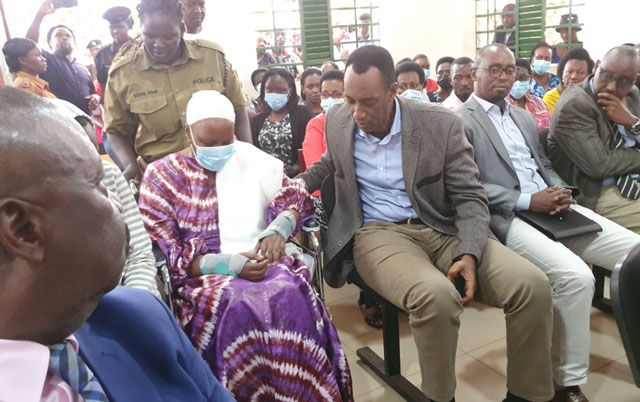
Molly Katanga in court
As the defense, led by Peter Kabatsi and Elison Karuhanga, pressed Mubiru on the nature of DNA transfer, it became clear that the question of who deposited the DNA on various objects—especially the pistol—was far from simple. Mubiru explained the concept of secondary DNA transfer, illustrating how DNA could be present on an object even without direct contact. This revelation sparked further debate about the relevance of the DNA found on the murder weapon, raising doubts about whether the presence of Molly’s DNA on certain items could conclusively prove her involvement in the crime.
The defense skillfully led Mubiru into a discussion about the limitations of forensic analysis, highlighting that while he could identify whose DNA was present, he could not determine how or when it was deposited. This distinction became central to the defense’s strategy, casting doubt on whether the DNA alone could establish Molly’s culpability in the murder.
The court also delved into bloodstain analysis, with Karuhanga grilling Mubiru about the presence of Molly’s blood in various parts of the crime scene, including the bathroom door, wardrobe, ceiling, and floor of the master bedroom. Despite the forensic evidence, Mubiru remained cautious in drawing conclusions about the events that transpired on the night of Katanga's death. He consistently deferred questions about the activities that led to the bloodstains to the investigators, avoiding any claims about what the blood patterns might reveal.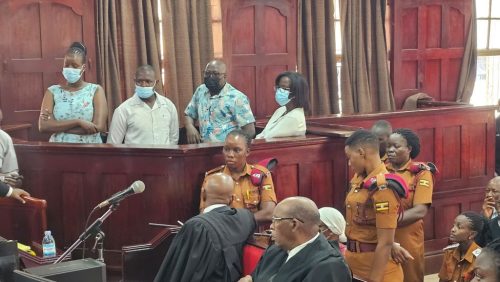
Katanga's children in court
The trial, overseen by Justice Isaac Muwata, unfolded with dramatic moments, including when Mubiru's response about how blood leaves the body caused unexpected laughter in the courtroom. Despite the light moment, the case remains a high-stakes affair, with the defense working to poke holes in the prosecution’s forensic evidence while the prosecution seeks to prove that Molly and her co-accused were involved in Katanga's death.
As the trial continues, the focus on forensic evidence, particularly DNA and bloodstains, underscores the complexities of linking physical evidence to the actions that led to the tragedy. Both sides are grappling with the interpretation of the science, and the final outcome will hinge on how well they can convince the court of their respective narratives. For now, the evidence points to a bloody scene, but who was responsible for Katanga's death remains a question that the court must carefully consider.
Torch Media Africa



