Written By | International News Desk
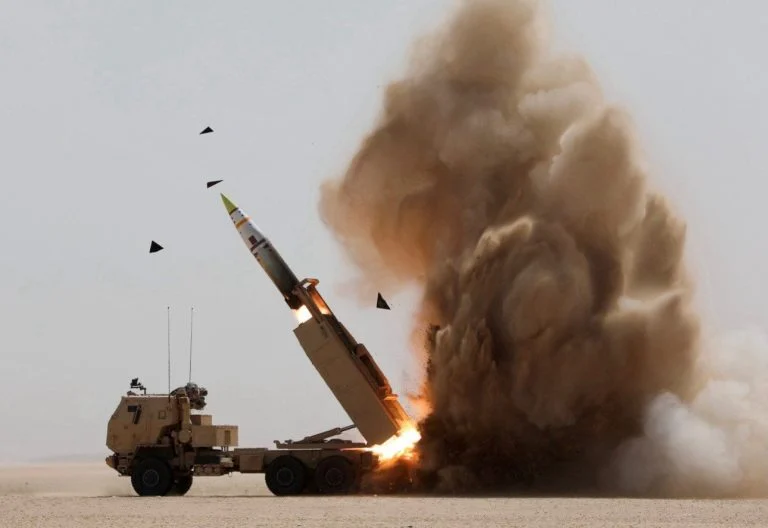
The war between the United States and Iran has dominated headlines for most of 2026
World Politics
Background
The war between the United States and Iran that has dominated headlines for most of 2026 began on February 28, when American and Israeli aircraft struck Iranian nuclear facilities and military infrastructure, opening a conflict that has since swept in Israel, the Gulf Arab states, and now Iraq. What followed was a grinding cycle of strikes, brief truces, and renewed violence. A ceasefire memorandum of understanding signed June 17 held only weeks before Iranian attacks on shipping in the Strait of Hormuz — the narrow waterway through which roughly a fifth of the world's seaborne oil trade normally passes — prompted the United States to resume bombing. By mid-July, American strikes on Iran had stretched to thirteen consecutive nights, Iranian missiles had killed at least two U.S. service members at a base in Jordan on July 17-18, and Iran had declared the Strait fully closed, sending oil prices sharply higher and disrupting global energy markets. Iran's government, still adjusting to a change in its supreme leadership after Ali Khamenei was killed in the war's opening strikes and succeeded by his son Mojtaba, has repeatedly rejected mediated ceasefire proposals, including one brought by Iraq in the days before this latest flare-up.
That relentless pace paused on the night of July 24-25, when the Pentagon halted its bombing campaign following a Situation Room meeting at which Vice President JD Vance and Joint Chiefs Chairman Gen. Dan Caine reportedly raised concerns about depleted munitions stockpiles and the risks of further escalation. Even as the pause held, Trump was said to be weighing a further, "massive" expansion of the campaign, and Defense Secretary Pete Hegseth was pressing a skeptical Congress for roughly $80 billion in supplemental funding. Diplomats seized the five-day lull to try to revive the collapsed June ceasefire framework. Oman has taken the lead in mediation, working alongside Qatar, Pakistan and Egypt, along with Trump's envoys Steve Witkoff and Jared Kushner, on an interim arrangement that might create space to negotiate the conflict's most contentious issues: Iran's nuclear program, the fate of frozen Iranian assets, war reparations, and free passage through the Strait of Hormuz. As recently as Monday, Trump told supporters in Michigan there was "a good chance" of progress in the talks, while still warning that military action would resume if negotiations failed.
Key Developments
That fragile calm ended on the evening of July 28, when Iran's Islamic Revolutionary Guard Corps launched multiple ballistic missiles from Iranian territory at American forces in the region, in what U.S. Central Command called an "attempted surprise attack" at roughly 5:45 p.m. Eastern time. It marked Iran's first ballistic-missile attack on a U.S. base since the pause began three days earlier. CENTCOM said every missile was intercepted, with several shot down over Jordanian airspace, and reported no American casualties. The attack came just hours after President Trump had met at the White House with Israeli Prime Minister Benjamin Netanyahu, a session both sides described as "excellent and comprehensive," during which the two leaders reaffirmed what they called an "ironclad" commitment to preventing Iran from acquiring nuclear weapons.
The missile attack did not occur in isolation. In the roughly seventy-two hours beforehand, U.S. and Saudi officials say Iran-backed militia fighters operating from Iraqi territory launched more than thirty drone strikes at oil infrastructure in eastern Saudi Arabia, with additional drones aimed at Saudi facilities intercepted on July 28 itself. In response, Saudi Arabia and the United States carried out joint strikes — described by officials as "limited" and "targeted" — against Iran-aligned militia sites inside Iraq that were linked to the drone attacks. It was the first time Riyadh has publicly acknowledged conducting strikes on Iraqi soil since the war began five months ago, a significant expansion of the conflict's geography. Iraq's Popular Mobilization Forces, an umbrella of mostly Shia militias that formally answers to the Iraqi state but includes factions closely tied to Tehran, said the strikes hit logistics depots and weapons stores, killing at least twenty fighters and wounding roughly thirty-two more. The PMF condemned the operation as a "highly dangerous escalation" and a violation of Iraqi sovereignty. Iraq's prime minister, Ali al-Zaidi, who took office only in May and had been due to travel to Riyadh for talks on pipeline and security cooperation, postponed that visit in the aftermath of the strikes — an early sign of how the escalation is straining Baghdad's attempts to balance its relationship with Washington and Riyadh against the political weight of Iran-aligned factions inside its own governing coalition.
Financial markets registered the shift immediately. Oil prices jumped roughly five percent on news of the intercepted missile attack, with both Brent crude and U.S. benchmark West Texas Intermediate rising to the low-to-mid eighties per barrel, reversing a partial retreat toward pre-war price levels that had taken hold during the short pause. Iran, for its part, continues to insist — contrary to Hegseth's earlier claims that its missile production had been "functionally defeated" — that its production lines remain active, a claim that gained some credibility given Wednesday's launch. At a Senate hearing last week, Hegseth was pressed on whether his earlier assessment that Iran's military had been rendered "combat ineffective" still held, and he declined to directly reaffirm it.
Reactions
The reaction in Washington has split along now-familiar lines. The administration has framed the interception as evidence that U.S. and allied missile defenses remain effective and that Iran, rather than the United States, broke the pause first — a point CENTCOM emphasized in describing the launch as a "surprise attack." Congressional Republicans who have grown increasingly uneasy about the war's cost and duration are likely to face fresh pressure over the pending $80 billion supplemental request, particularly after Hegseth's inconclusive Senate testimony on Iran's military capacity. In the Gulf, Saudi Arabia's willingness to publicly own its role in the Iraq strikes marks a notable hardening of Riyadh's posture after months of trying to stay above the fray; Gulf capitals including Bahrain, Qatar, Kuwait and the UAE have each been drawn into the conflict at various points since February through Iranian retaliatory strikes.
Iraq's response has been the most immediately consequential politically. The Popular Mobilization Forces' condemnation of the strikes as a violation of sovereignty puts Prime Minister al-Zaidi — already Iraq's youngest-ever premier and a political newcomer only two months into the job — in a difficult position between Washington-aligned security cooperation and the domestic political power of Iran-aligned militia blocs that sit inside his own governing coalition. His decision to postpone the Riyadh trip suggests Baghdad is trying to avoid the appearance of taking sides while the situation remains fluid. Mediators in Oman, Qatar, Pakistan and Egypt, whose diplomacy had appeared to be gaining traction just days earlier, now face the task of explaining how a ceasefire built around a pause in U.S. strikes on Iran can survive Iran initiating an attack of its own, and how Iraq's sovereignty concerns can be folded into talks that, until now, had centered almost entirely on Washington and Tehran.
What's Next
The immediate question is whether the events of July 28 represent a one-off spasm inside an otherwise resumable negotiation, or the effective end of the pause altogether. Trump's own posture will likely be decisive: he had reportedly been weighing a "massive" escalation even before the missile attack, and the incident hands him a ready-made justification to resume, or intensify, the bombing campaign should he choose to. Congress's willingness to fund an expanded campaign remains genuinely uncertain given Hegseth's rocky recent testimony and lingering questions about munitions stockpiles that helped drive the original pause. Diplomatically, Oman and its partners will need to decide whether to press ahead with talks on the nuclear file, frozen assets, reparations and Hormuz access, or whether the Iraq dimension — sovereignty violations, militia casualties, and a fragile new Iraqi government caught in the middle — has introduced a fourth front that must be addressed before any broader deal can hold. Markets will be watching Hormuz shipping data and Saudi oil-infrastructure security closely in the coming days as an early signal of whether this marks a new phase of the war or another temporary spike before talks resume.



