CAMBRIDGE, Mass
For decades, spacecraft engineers faced a cruel choice: fast but fuel-guzzling chemical thrusters, or slow but efficient electric thrusters. You could not have both. Until now.
A team at MIT’s Space Propulsion Laboratory has shattered that assumption. In a new paper in the Journal of Propulsion and Power, Professor Paulo Lozano and former postdoc Amelia Bruno show that a single fuel can power both thruster types. The team is now working with NASA to test the technology in space aboard a satellite the size of a briefcase. If successful, tiny CubeSats could one day reach Mars, the asteroid belt, and beyond.
The Breakthrough Fuel: ASCENT
The solution came from a propellant called ASCENT, originally developed by the U.S. Air Force as a “green” alternative to the toxic, carcinogenic fuel hydrazine. ASCENT is an ionic liquid at room temperature—and the MIT team realized that meant it might also work in electric thrusters.
“If you can have chemical and electrical propulsion in one small package, it’s the best of both worlds,” said Bruno.

Testing in a Vacuum
Using a custom magnetic levitation test stand, the team filled tiny reservoirs with one gram of ASCENT and ran electrospray thrusters continuously for up to 100 hours. Results showed ASCENT matched the performance of conventional electric propellants, delivering a specific impulse of 600 seconds and 15% efficiency. The dual-mode dream was real.
The Mission That Could Make History
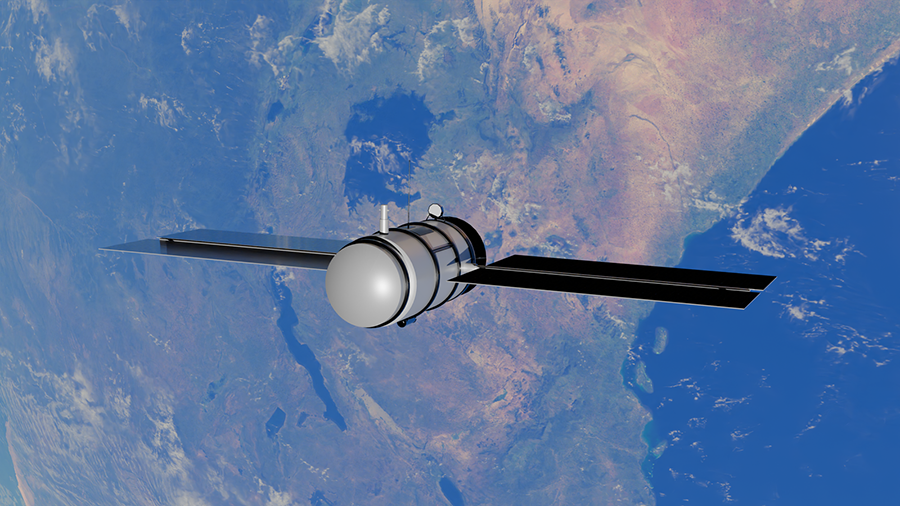
NASA and MIT have developed the Green Propulsion Dual Mode (GPDM) mission: a 6U CubeSat carrying one chemical and four electrospray thrusters, all fed from a single ASCENT tank. Scheduled for launch no earlier than November 2026, it will be the first satellite to fly with truly shared propulsion.

Why It Matters
A dual-mode CubeSat could burn chemically to escape Earth’s gravity, then switch to electric thrusters for the long, efficient cruise to Mars—and still have fuel left for quick maneuvers upon arrival. Closer to home, a constellation could rush to position over a hurricane, then relax into efficient flight.
“We could send CubeSats to Mars or the asteroid belt,” said Lozano. “You could have a lot more flexibility to do a lot more things.”
What Comes Next
The November 2026 GPDM launch is the critical test. If successful, the technology could democratize deep-space exploration, allowing universities and small nations to reach the Moon and beyond. The ancient tradeoff—fast or efficient, powerful or precise—is over. MIT ended it with a single tank of green fuel and thrusters no bigger than a thumbnail.
Published By | Tech Wiz