Written By | International News Agencies
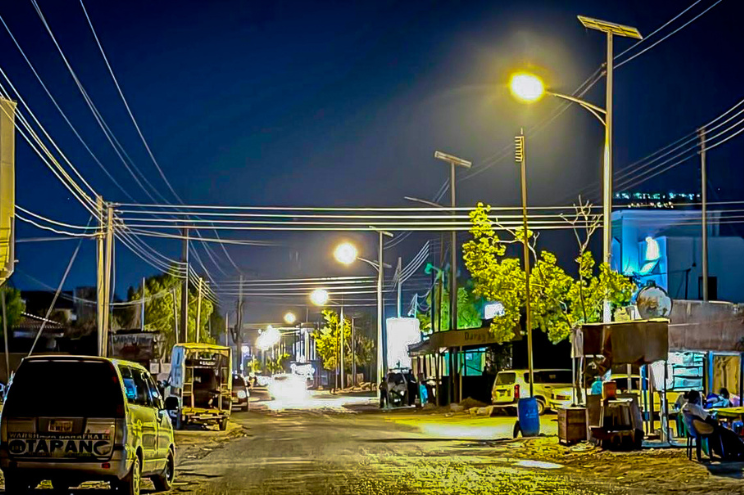
More than 80 percent of Somalia's electricity comes from diesel generators, according to World Bank estimates, and the fuel is imported
Economic and Social Transformation
Somalia spent the first half of this decade assembling the institutional furniture of a normal state. It cleared the Heavily Indebted Poor Countries process in December 2023, cutting external debt from roughly 64 percent of GDP to under 6 percent. It signed an Extended Credit Facility with the International Monetary Fund on 19 December 2023 and has passed every review since. It wrote a National Transformation Plan and a Centennial Vision 2060. By the conventional scoring of post-conflict recovery, this is close to a model run.
And yet the growth line has flattened. The eleventh edition of the World Bank's Somalia Economic Update, released in Nairobi on 13 May 2026 under the title Navigating Shocks, Powering Growth, put 2025 growth at an estimated 3 percent, down from about 4 percent across 2023 and 2024, with real GDP per capita broadly stagnant. The Bank projects 2.8 percent for 2026 and 3.1 percent for 2027. The African Development Bank is marginally more optimistic at 3.1 percent for 2026. Neither number clears Somalia's population growth rate. On the Bank's own reading, poverty reduction stalled outright in 2025.
A recovery that has stopped compounding
The immediate causes are familiar to anyone who follows the Horn: drought, higher living costs, and a sharp contraction in external assistance. Consumer price inflation rose to 3.7 percent in 2025 from 3.3 percent in 2024, driven by food, utilities and transport, and the World Bank projects it will roughly double to 6 percent in 2026 before easing. The fiscal deficit is projected to widen to about 1.1 percent of GDP this year — small in absolute terms, but Somalia has almost no domestic borrowing capacity with which to absorb it.
What makes the 2026 edition worth reading closely is not the headline forecast, which is unremarkable, but its special focus. The Bank chose to build this year's analysis around household access to electricity. That choice is an argument: it says the binding constraint on Somali household welfare is no longer the absence of a state, and no longer even the absence of connection to a grid. It is the price of the electricity that flows through the connection.
Seventy-one percent connected, twenty-one percent supplied
The figure that should reframe the conversation comes from the World Bank's Multi-Tier Framework survey, conducted in Somalia during 2025 and drawn on in the Economic Update. Seventy-one percent of Somali households report having access to electricity. Only 21 percent receive more than eight hours of supply per day. The gap between those two numbers is the whole problem. Access, measured as a binary, looks like a development success. Access, measured as hours of usable power, looks like something closer to a rationing regime.
The reason is generation mix. More than 80 percent of Somalia's electricity comes from diesel generators, according to World Bank estimates, and the fuel is imported. The Somalia Electricity Sector Recovery Project reported an average national cost of roughly $0.61 per kilowatt-hour in 2023, with prices exceeding $1 per kWh in some areas served by private diesel operators. Even Banadir, the Mogadishu region and the cheapest market in the country, sat at about $0.36 per kWh. For comparison, that lower bound is several times what industrial users pay in Ethiopia or Egypt. Somali firms are competing in regional markets while paying some of the highest power prices on the continent.
Why diesel is a macroeconomic variable, not an infrastructure detail
A diesel-based grid converts every global oil price movement into a domestic inflation event with almost no lag and almost no buffer. The World Bank's May 2026 assessment is explicit on the transmission chain: fuel price increases raise the cost of electricity, then transport, then food, then weaken firm competitiveness, and the burden falls disproportionately on poorer households. Somalia has no strategic fuel reserve, no meaningful hedging, no domestic refining and no regulated tariff structure capable of smoothing the pass-through. The result is that a country with 3 percent growth and a 1.1 percent fiscal deficit — macro numbers that in another context would read as boringly stable — is structurally exposed to a variable set in Rotterdam and Singapore.
This also explains why the poverty line has not moved in step with the institutional reforms. Cheap capital and clean audits do not lower the marginal cost of running a cold chain, a welding shop, a water pump or a flour mill. In Somalia that cost is set by the generator outside the building.
There is a demonstration that the arithmetic can change. BECO, which handles transmission and distribution in Mogadishu and several other cities, brought its tariff down from about $0.49 per kWh to roughly $0.36 per kWh by blending solar into its generation mix. A 55 megawatt-peak hybrid solar plant with battery storage is planned for Mogadishu. These are not marginal efficiency gains; a 27 percent tariff reduction from partial solar substitution implies that a fuller transition would reset the cost base of the entire private sector. The World Bank's recommendations follow directly: strengthen sector governance and regulation, promote scalable renewable investment, and modernise transmission and distribution.
The revenue state that has to be built anyway
None of this is affordable on the current fiscal base. Somalia's tax take stands at roughly 3.2 percent of GDP as of 2025 — among the lowest ratios recorded anywhere — against a government target of 5.0 percent by 2030. Domestic revenue mobilisation has improved, rising to about 2.8 percent of GDP from 2.5 percent in 2022, and the approval of a new Income Tax Law in May 2025 under the Medium-Term Revenue Roadmap was a genuine milestone. But a state collecting three cents on every dollar of national income cannot underwrite grid modernisation, and cannot replace departing donors.
The IMF programme has been topped up to compensate, not to substitute. On completion of the fourth ECF review in December 2025, the Executive Board approved an augmentation of about $40 million (SDR 30 million), lifting total access to roughly $140 million (SDR 105 million) and releasing an immediate $30 million for budget support, bringing cumulative disbursements to about $100 million. That is real money in a $14.2 billion economy, but it is measured in tens of millions against an aid shortfall measured in hundreds.
The aid cliff, quantified
Before 2025, roughly 40 percent of the official development assistance Somalia received — about $950 million — came from the United States. The dismantling of USAID removed that pillar, including a $125.5 million committed tranche. The consequences arrived fast. Of the $1.4 billion sought under the 2025 Somalia humanitarian response plan, only around $370 million was received. The number of people receiving emergency food assistance was projected to fall from 1.1 million in August to 350,000 by November. The UN Office for the Coordination of Humanitarian Affairs reported over 4.6 million people — roughly a quarter of the population — affected by drought conditions, with at least 120,000 newly displaced between September and December.
Set against that, the country's largest and least-discussed external flow is private. Somali diaspora remittances were about $1.73 billion in 2023, and are commonly estimated at between a quarter and 45 percent of the economy — more than humanitarian aid, development aid and foreign direct investment combined. A proposed 3.5 percent United States levy on outbound remittance transfers would therefore fall on the one external flow that has proven counter-cyclical, at precisely the moment the others are contracting. Whatever its fiscal logic in Washington, in Mogadishu it lands as a tax on the household safety net.
What would actually move the line
Somalia's development debate has for two decades been framed around security, statehood and debt. Those framings produced results: the debt is gone, the institutions exist, the programme is on track. The 2026 evidence suggests the next binding constraint is more prosaic and more tractable. It is the cost and reliability of a kilowatt-hour, the width of the tax base, and the resilience of a remittance corridor.
The encouraging feature of all three is that they are domestic policy variables rather than geopolitical ones. Tariff regulation, independent sector oversight, concessional finance for solar and storage, and a functioning income tax do not require anyone's permission. The discouraging feature is that they all require exactly the administrative capacity that a 3.2-percent-of-GDP revenue base struggles to buy. That is the circularity Somalia has to break, and the reason the next two years matter more than the growth forecast suggests.




