Economic & Social Transformation
Libya's economy is in the middle of its strongest run in more than a decade, powered almost entirely by a rebound in oil output. Real GDP grew 12.4% in 2025 after contracting 0.4% in 2024, and the World Bank and African Development Bank both expect growth to stay elevated in 2026, with AfDB projecting 6.5% for the year and 4.3% in 2027, conditional on security holding and crude production continuing to climb. Oil revenues surged roughly 30% in 2025, and total government revenue reached the equivalent of 53.6% of GDP — a scale of hydrocarbon dependence that is both Libya's greatest asset and its central vulnerability. Yet fifteen years after the 2011 revolution, that windfall is flowing into a country still split between two rival governments, and the everyday reality for most Libyans — high unemployment, patchy public services, and a housing stock still scarred by 2023's catastrophic floods — looks little like the headline growth numbers would suggest.
Oil Output Climbs Toward Pre-War Levels
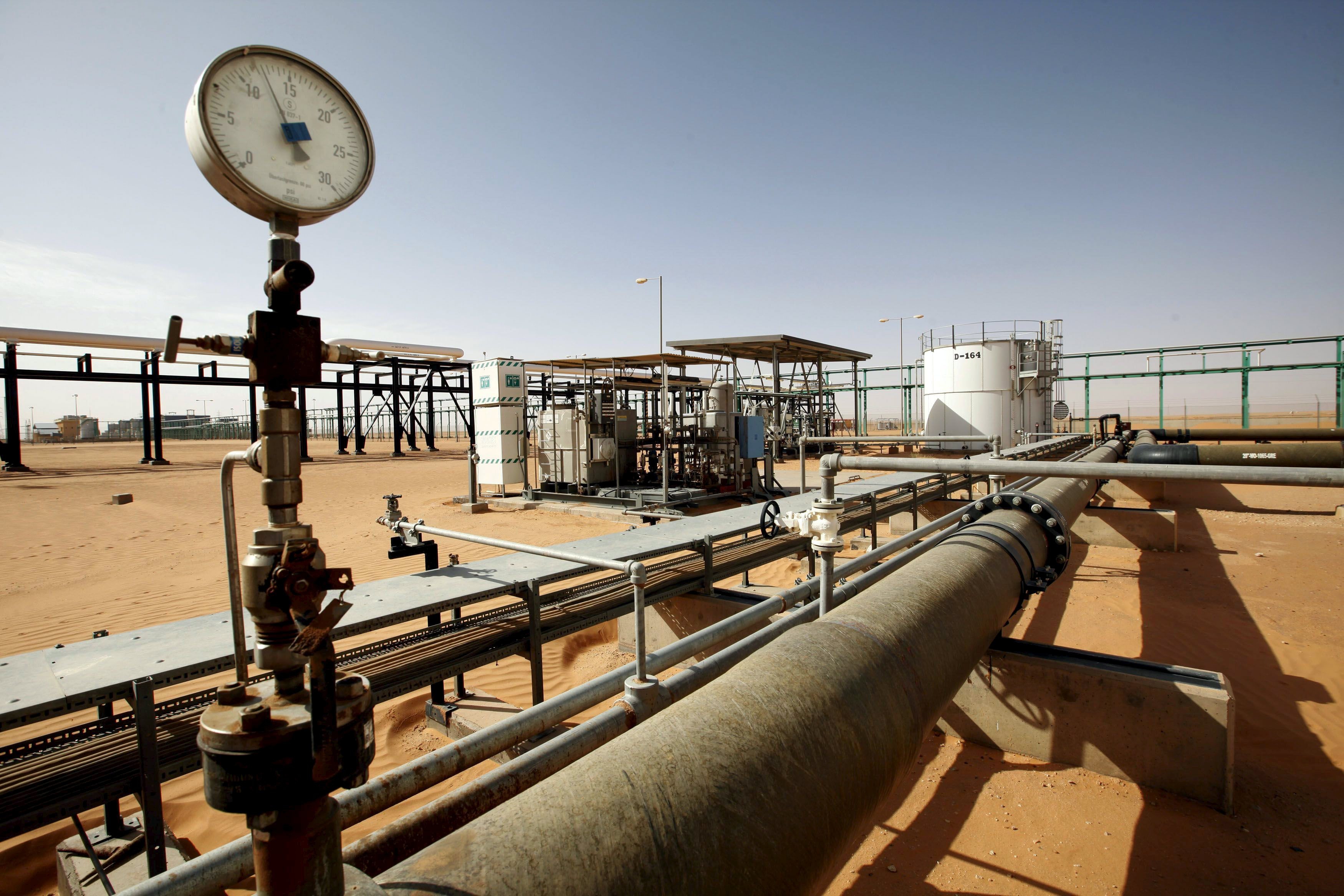
Libya's National Oil Corporation (NOC) reported crude production averaging 1.35–1.4 million barrels per day in early 2026, up from roughly 1.3 million bpd across 2025 and 1.1 million bpd in 2024 — the country's best annual performance in more than ten years, though still below the 1.6 million bpd Libya pumped before 2011. NOC's near-term target is to reach 1.6 million bpd by the end of 2026, backed by an estimated $3–4 billion in annual investment to rehabilitate mature fields and modernize export infrastructure, with a longer-range ambition of 2 million bpd by 2030. The recovery reflects both improved field access and a relatively stable, if fragile, security environment compared with the blockade-plagued years of 2020–2022, when rival factions repeatedly shut in production as leverage in political disputes.
The scale of the fiscal windfall has not translated into a comparable reconstruction push, however. NOC chairman Massoud Suleiman said publicly in January 2026 that the corporation had operated throughout 2025 without an approved budget, and that debts owed to oilfield service companies and suppliers kept accumulating even as output — and revenue — rose. Analysts covering the sector describe a structural irony: oil is generating more cash than at any point since the civil war, but because neither of Libya's rival authorities fully controls or trusts the other's spending, that cash increasingly finances the standoff itself rather than the roads, hospitals, and power grids reconstruction plans call for.
A Country Still Split in Two
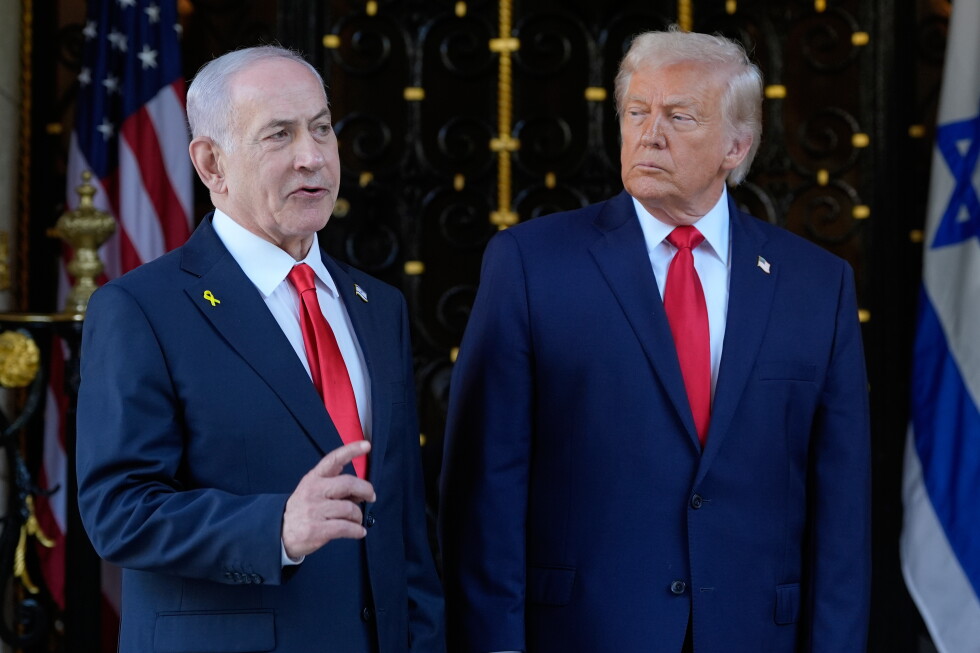
Libya remains divided between the internationally recognized, Tripoli-based Government of National Unity (GNU) under Prime Minister Abdul Hamid Dbeibah, and the eastern-based Government of National Stability (GNS), headed by Osama Hammad and backed militarily by Field Marshal Khalifa Haftar's Libyan National Army. The UN Security Council's monthly forecasts on Libya throughout 2026 have tracked a familiar deadlock: both sides agree in principle that elections are needed to end the stalemate that has persisted since the indefinite postponement of the planned 2021 vote, but they disagree on the mechanism. The GNS and the House of Representatives favor forming a new unified interim government to organize elections; the GNU and parts of the High State Council oppose that path, fearing it would cost them their current hold on Tripoli and the capital's institutions. The UN Support Mission in Libya (UNSMIL) has floated a roadmap intended to bridge the gap on an electoral framework, but as of the Security Council's most recent 2026 monthly assessments, little concrete progress has been made toward unification.
There has been one notable financial breakthrough this year: on April 11, 2026, the United States brokered a unified spending framework endorsed by both the eastern and western factions, a step officials on both sides described as significant for coordinating how oil revenue is allocated even without full political unification. Days later, on April 14, 2026, the UN Security Council adopted Resolution 2819, permitting the Libyan Investment Authority (LIA) — Libya's sovereign wealth fund and, at roughly $70 billion in assets, potentially the second-largest in Africa — to begin reinvesting some of the assets that have been frozen since 2011. The LIA itself estimates about $33 billion of its holdings remain frozen abroad, though independent reviews by groups such as The Sentry and the International Crisis Group put the frozen share of its $60-billion-plus portfolio closer to two-thirds. The resolution calls on member states to cooperate with the LIA and encourages the fund to improve the transparency of its investment plans — a precondition, diplomats say, for any broader unfreezing given long-standing governance concerns about how the fund has been managed by competing factions.
The Human Ledger: Unemployment, Services, and Flood Recovery
Behind the macro rebound, Libya's labor market and public services tell a more strained story. Unemployment stands at 18.6% nationally, and youth unemployment is roughly 50.6% — figures the World Bank links directly to the private sector's underdevelopment: non-state employment accounts for only about 14% of the workforce, with the state and state-linked enterprises absorbing most formal jobs. Service delivery in health, education, water, and electricity remains weak and geographically uneven, with the World Bank flagging "stark regional disparities" and rising poverty risk even as aggregate output grows.
The clearest illustration of Libya's reconstruction gap is the aftermath of the September 2023 flooding in the eastern city of Derna and surrounding areas, still unresolved more than two years later. A joint World Bank–EU–UN damage assessment put reconstruction and recovery needs at $1.8 billion, with more than 18,500 houses destroyed or damaged — about 7% of the country's entire housing stock. Restrictions on discretionary spending beyond wages, salaries, and social transfers have limited authorities' capacity to fund reconstruction and broader development projects even where political will exists, underscoring how the GNU–GNS split constrains not just elections but basic public investment.
Outlook: Growth Without Convergence
The AfDB's Libya Economic Outlook and the World Bank's most recent assessments converge on a similar diagnosis: growth over the medium term could be strong — the World Bank has floated a rebound toward double-digit GDP growth as oil output recovers further — but it will remain highly volatile and hostage to political frictions, the risk of renewed conflict, oil disruptions, and climate shocks such as the 2023 floods. Diversification away from hydrocarbons, which still dominate exports and government revenue, is repeatedly cited as the structural fix Libya needs but has not pursued at scale. For a country producing more oil revenue than at any point since the war, the binding constraint on turning that revenue into roads, schools, and rebuilt neighborhoods in Derna is not geology or capital — it is the absence of a single government both sides recognize as entitled to spend it.
Published By | Business News Editor