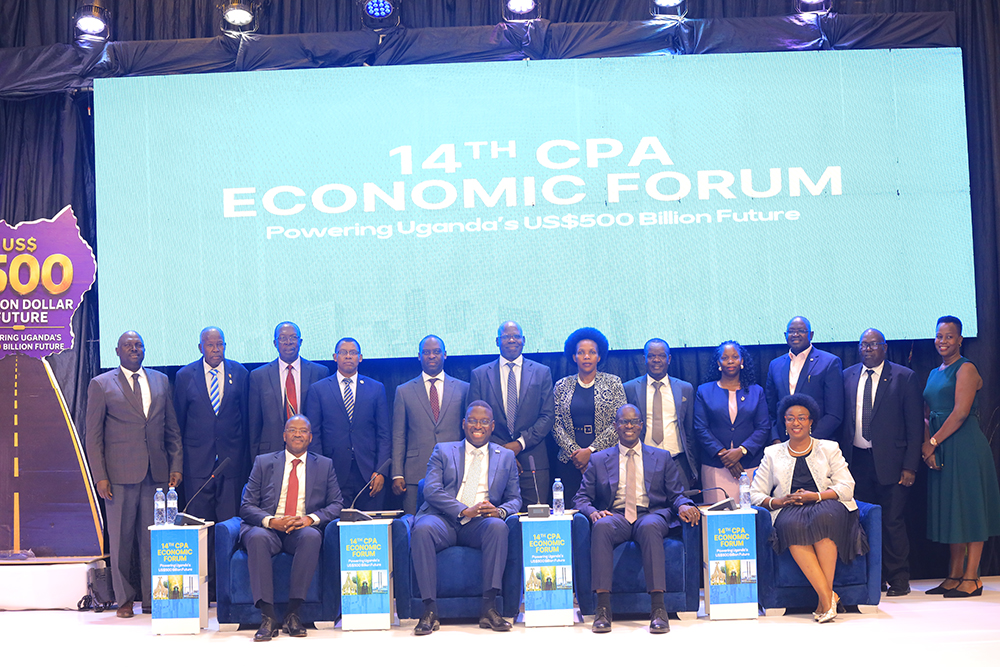
Uganda's accounting profession spent three days last week trying to answer a question that has become the organizing ambition of the country's economic policy: how does an economy of roughly 66 billion dollars grow tenfold to 500 billion dollars, and what role should professionals, rather than politicians, play in getting there? The 14th CPA Economic Forum, held July 15 to 17 at the Imperial Resort Beach Hotel in Entebbe under the theme "Powering Uganda's US$500 Billion Future," brought together 785 participants from government, industry, and the accounting profession to hash out an answer, and the resulting recommendations are now headed to the Ministry of Finance to help shape next year's national budget.
What is happening
The forum was organized by the Institute of Certified Public Accountants of Uganda (ICPAU), the statutory body that regulates the country's accounting profession, and was structured around the four pillars of the government's so-called Tenfold Growth Strategy: agro-industrialisation, tourism, mineral-based industrialisation, and science, technology and innovation. Rather than a purely ceremonial gathering, the forum was explicitly designed as an input into policy — its recommendations will be submitted to the Ministry of Finance, Planning and Economic Development to inform preparations for the 2026/27 national budget.
Throughout the sessions, a consistent message emerged from ICPAU leadership and industry speakers: Uganda's growth ambitions will not be met by raw resource extraction alone. On minerals specifically, forum participants pushed for value addition — processing and refining raw materials domestically rather than exporting them unprocessed — arguing that Uganda captures only a fraction of the potential value of its mineral wealth under the current export model. ICPAU also urged government to prioritize domestic revenue mobilization as a way to curb reliance on external borrowing, a recurring concern given Uganda's debt servicing trajectory. Other sessions addressed the need for stronger accountability and governance structures, arguing that trust in public institutions is itself a precondition for attracting the private investment the growth strategy depends on. Separately, speakers also called for greater investment in Uganda's youth as a channel to unlock the $500 billion goal, tying workforce development directly into the industrialisation agenda.
![]()
The economic backdrop
The forum's ambitious framing sits against a backdrop of genuinely solid, if uneven, macroeconomic data. Uganda's economy grew 6.4 percent in real terms in the 2025/26 financial year, an acceleration from 6.3 percent the year before, driven in part by continued rollout of the Parish Development Model and financing from the Uganda Development Bank. The Uganda Investment Authority has described the near-term outlook as "robust," citing controlled inflation and a stable currency. The Ugandan shilling appreciated 1.9 percent against the US dollar between May and June 2026, making it the best-performing currency in the East African Community over that stretch, aided by stronger export earnings, higher remittances, and increased offshore investment. Foreign exchange reserves climbed to 6.01 billion dollars by the end of March 2026 — equivalent to four months of import cover — up sharply from 3.56 billion dollars a year earlier, and the country recorded its largest balance-of-payments surplus in fifteen years.
Not every indicator points the same direction. Quarterly GDP growth for the third quarter of the 2025/26 fiscal year came in at 5.8 percent year-on-year, a marked slowdown from the 8.5 percent expansion recorded in the same quarter a year prior, according to Uganda Bureau of Statistics data. Inflation has also ticked upward, from 3.2 percent in May to 3.7 percent in June, driven largely by higher transport and energy costs tied to rising international oil prices amid ongoing Middle East tensions — though officials note the figure remains comfortably within the medium-term target ceiling of 5 percent.
There is also a structural headwind that the forum's optimistic framing did not fully resolve: Uganda's own procurement system has been flagged as a bottleneck to the Tenfold Growth Strategy. Separate reporting has described the "10-fold growth dream" hitting a "procurement wall," a reference to persistent delays and inefficiencies in how government contracts and capital projects are executed — precisely the kind of execution risk that can undercut ambitious targets regardless of how sound the underlying policy framework is. Notably, Uganda's electronic government procurement system, intended to phase out manual procurement processes entirely, was set to become mandatory by July 1, 2026, a reform aimed squarely at this problem.
Who the main players are
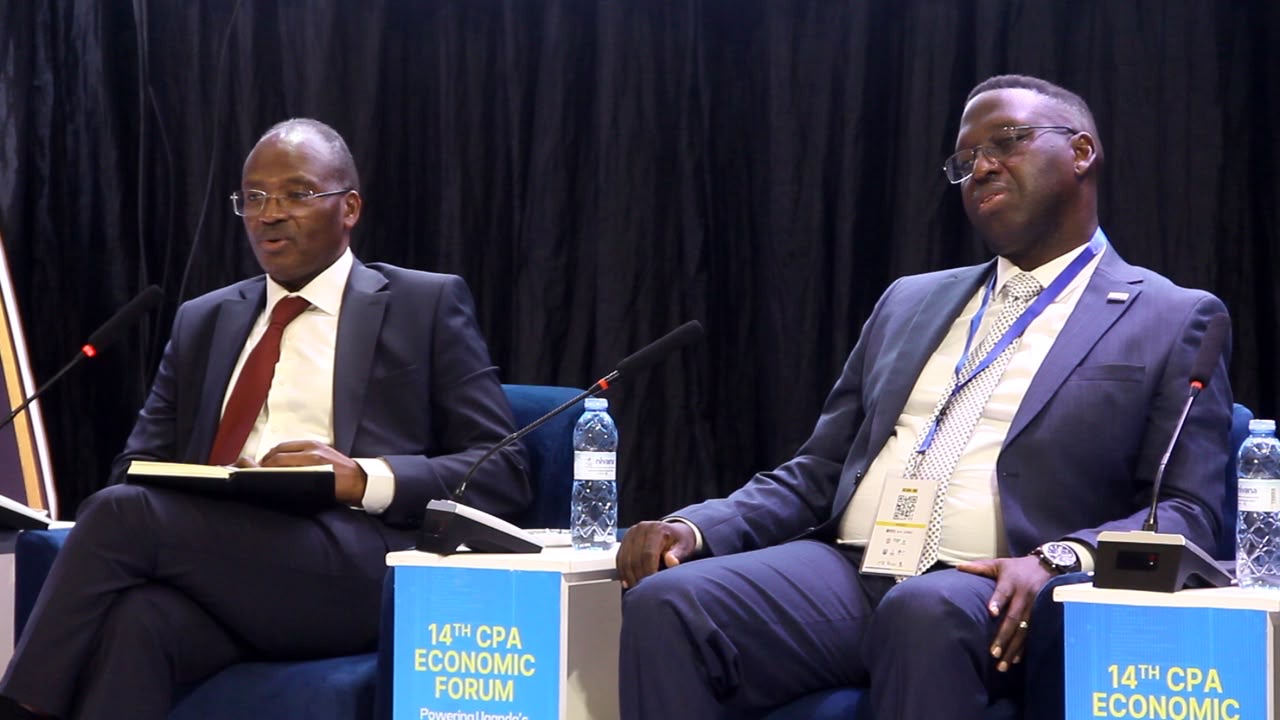
ICPAU, as the forum's convener, occupies the central institutional role, positioning the accounting profession as a partner to government in economic planning rather than a purely technical, after-the-fact auditing function. The Ministry of Finance, Planning and Economic Development is the ultimate recipient of the forum's recommendations and the body that will decide how much of the input translates into the 2026/27 budget. The Uganda Investment Authority and Bank of Uganda are the two institutions most directly responsible for the currency, reserves, and investment data cited throughout the forum's discussions. Industry and professional leaders speaking at the event — accountants, economists, and sector representatives across agro-industry, tourism, and minerals — supplied much of the sector-specific detail behind the value-addition and governance recommendations.
Why it matters
The $500 billion target is not simply aspirational rhetoric; it has become the explicit organizing frame for government economic policy, and forums like this one are part of the mechanism by which that frame gets translated into specific budget line items and regulatory choices. The emphasis on value addition, in particular, reflects a broader debate playing out across resource-rich African economies about whether growth models built on raw commodity exports can ever deliver the kind of broad-based prosperity implied by a tenfold GDP expansion, or whether that requires a more difficult pivot toward domestic processing, manufacturing, and services. Uganda's relatively strong currency and reserve position give it more room to make that pivot than some regional peers, but the procurement bottlenecks and moderating quarterly growth numbers are reminders that macro stability alone does not guarantee execution.
What to watch next
The most concrete near-term marker will be the 2026/27 national budget itself, expected in the coming months, and whether it visibly incorporates the forum's recommendations on domestic revenue mobilization, mineral value addition, and governance reform. Beyond the budget, watch whether the mandatory electronic procurement system, now in effect, measurably reduces the delays that have been blamed for slowing the Tenfold Growth Strategy's rollout. Currency and inflation trends will also matter: continued shilling strength and contained inflation would support the forum's optimistic narrative, while a reversal — particularly if global oil prices keep rising — could complicate the picture heading into the next fiscal year.
Published By | Business News Editor




