Written By | International News Agencies
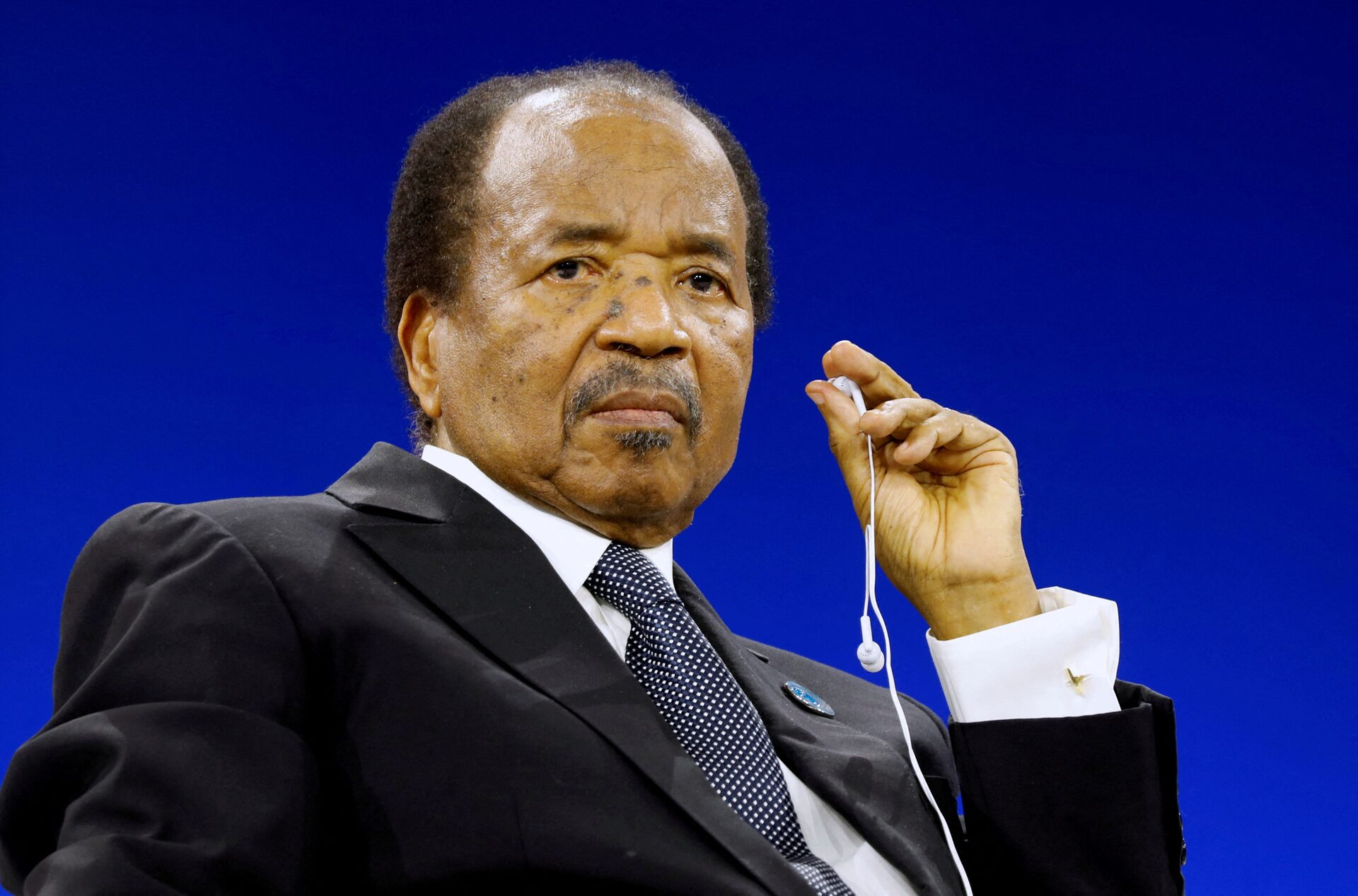
The 93-year-old head of state, the world's oldest sitting president, left Yaoundé on June 7 for what his office described as a brief private stay in Europe
Yaoundé, Cameroon
President Paul Biya of Cameroon has not set foot in his own country in more than nine weeks, and the office created six months ago specifically to answer the question of who runs the nation in his absence remains empty. The 93-year-old head of state, the world's oldest sitting president, left Yaoundé on June 7 for what his office described as a brief private stay in Europe. He is now believed to be in Geneva, Switzerland, and neither his government nor his family has said when — or whether — he intends to come home soon, leaving Africa's sixth-most-populous nation to be governed, in the words of one exasperated opposition figure, on "auto pilot."
The extended absence matters far beyond a head of state's travel schedule. It is unfolding just months after Cameroon's parliament, dominated by Biya's Cameroon People's Democratic Movement, rewrote the constitution to reintroduce the vice presidency for the first time since 1972, explicitly to provide an automatic successor if the president dies, resigns or becomes incapacitated. Lawmakers passed the measure 200 to 18, with four abstentions, on April 4, and Biya promulgated it into law ten days later. Yet more than four months after that law took effect, the post it created sits unfilled. No vice president has been sworn in. The very mechanism designed to prevent uncertainty in a moment like this one is, itself, the source of uncertainty.
A 43-Year Rule Nearing Its Limit
Biya has led Cameroon since 1982, making him one of the longest-serving heads of state anywhere in the world. He secured an eighth term in disputed elections last October, when the Constitutional Council declared him the winner with 53.66% of the vote. That result triggered protests across the country amid opposition allegations of fraud, and runner-up Issa Tchiroma Bakary, a former Biya government minister who had broken with the ruling party, ultimately fled the country, first reportedly to Nigeria and then to exile in Gambia, citing fears for his safety. Because the new seven-year presidential term does not expire until 2032, Biya, if he serves it out, could remain in power until he is 100 years old.
It was against that backdrop — an aging, increasingly reclusive leader facing no obvious internal check on his authority — that the debate over a vice presidency took shape earlier this year. Under the new constitutional provisions, a vice president assumes office immediately upon appointment and installation by the president, without an oath of office at that stage; the oath is required only if the presidency actually becomes vacant, at which point the vice president would serve out the remainder of the term rather than triggering a fresh election within 120 days, as previously would have applied under the Senate-president succession model in place since 1972. The change concentrates enormous, if still theoretical, power in whoever eventually holds the post — and in the president who appoints and can dismiss them at will.
That theoretical power turned briefly chaotic in April, when a decree began circulating on Facebook claiming Biya had already named his son, businessman Franck Emmanuel Biya, as vice president, head of the armed forces and a defense ministry official, all at once. State-run broadcaster CRTV never reported any such appointment, and Cameroon's official news agency dismissed the decree as fake on April 6, noting it lacked the presidency's standard watermark and that no authentic version existed. Fact-checking organizations including Africa Check and GhanaFact confirmed by early May that the appointment had not actually occurred. As of this month, according to the constitutional office's own historical record, the vice presidency remains formally unoccupied — a real legal vacancy, not a rumor, sitting alongside a real and prolonged physical absence of the president himself.
Two Months Abroad, and Counting
Biya's current trip has stretched well past what Cameroonian officials initially signaled. Communication Minister René Emmanuel Sadi told Radio France Internationale on Aug. 3 that he could not say precisely when the president would return. "I cannot tell you exactly when President Paul Biya is returning," Sadi said. "And even if I knew, it is not my place to announce it here. I can at least tell you that he is coming back very soon." Sadi has separately insisted that Biya, despite reports he was treated at a private clinic in Geneva after falling ill around national day celebrations in May, is "by no means admitted in any medical facility" and remains fully capable of overseeing state affairs from abroad.
The government's position has been distilled into a now-widely quoted line from Biya loyalists: "Power is not vacant. The lion has not gone." But that reassurance has done little to quiet a chorus of concern that spans the political spectrum. Tchiroma, speaking from exile in Gambia, said there is a widespread perception inside Cameroon "that all is not well" with Biya, adding that "Biya's very long stay in Switzerland only aggravates that lack of legitimacy and his desperate attempts to hold on to power by force." Opposition figures have gone further, formally calling for the presidency to be declared vacant under the constitution given the length of Biya's absence — a demand the government has flatly rejected.
Compounding the unease, Biya has continued to exercise executive authority from Switzerland, including a reshuffle of senior army positions during his time abroad — a move Semafor's Africa desk reported has "stoked fresh speculation about political stability" in a country that produces both cocoa and oil and sits amid a genuinely turbulent regional neighborhood. To Cameroon's north and east, Chad and the Central African Republic continue to battle militant insurgencies; to the south, a 2023 coup toppled the Bongo family's decades-long grip on power in Gabon, a comparison that has not been lost on Cameroonian commentators watching an equally personalized system of rule enter a period of visible strain. Bloomberg has reported that Biya's absence has begun to unsettle holders of Cameroonian sovereign bonds, translating political uncertainty directly into a market signal.
A Family Question Beneath the Constitutional One
Underneath the immediate question of when — or whether — Biya returns lies a second, more combustible one: who succeeds him, and whether that succession will run through his own household. Franck Biya, the president's son from his first marriage, studied political science and economics at the University of Southern California, worked at the Bank of Central African States, and later built business interests spanning forestry, banking and energy through a company he founded in 2004. He has, by most accounts, kept a low public profile for most of his adult life and holds no formal government post — which is precisely what made April's false vice-presidential decree so combustible: it did not seem entirely implausible to a public already primed for exactly that outcome.
Opposition leaders have said as much openly. The Social Democratic Front boycotted April's parliamentary vote on the constitutional amendment altogether, saying in a statement that it "fails to guarantee democratic legitimacy, inclusiveness, and proper institutional balance." Maurice Kamto, leader of the Cameroon Renaissance Movement and a repeat presidential challenger to Biya, was more pointed, describing the reform as a "constitutional and institutional coup" that risks concentrating power within a single family, and pledging to mobilize public opposition to it. Whether that mobilization has any realistic prospect of altering the outcome is a separate question in a political system where the ruling party controls parliament by an overwhelming margin and where, as October's disputed election and its aftermath demonstrated, street opposition has repeatedly been contained rather than accommodated.
What to Watch
Three threads will determine how this story develops in the coming weeks. The first is the simplest: whether and when Biya actually returns to Yaoundé, and in what apparent physical condition, since his continued absence past the two-month mark is itself doing political damage regardless of the underlying medical reality. The second is whether Biya moves to fill the vice presidency at all, and if so, with whom — a decision that would either confirm or defuse months of speculation about a Biya family succession plan, given that a Franck Biya appointment remains, as of this writing, unconfirmed rather than merely denied. The third is regional and financial: bondholders, diplomatic partners and neighboring governments are all now pricing in some probability of a disorderly transition in a country that has functioned, for more than four decades, as a rare point of stability — however authoritarian — in a turbulent Central African neighborhood. Cameroon has weathered leadership uncertainty before without a rupture. But it has never before combined a nonagenarian president's unexplained absence with a newly created, still-empty office built for exactly this moment.



