With Emirati officials desperate to slash food import dependence and Uganda's pension fund hunting for new asset classes, a proposed co-investment pact could reshape how — and for whom — Uganda's land is farmed
Uganda's National Social Security Fund is better known to most Ugandans as the custodian of workers' retirement savings than as a broker of international agriculture deals. But NSSF Managing Director Patrick Ayota is now positioning the fund as the vehicle for what could become one of the more consequential agricultural investment arrangements in Uganda's recent history: a proposal to make Uganda a designated overseas food production base for the United Arab Emirates.
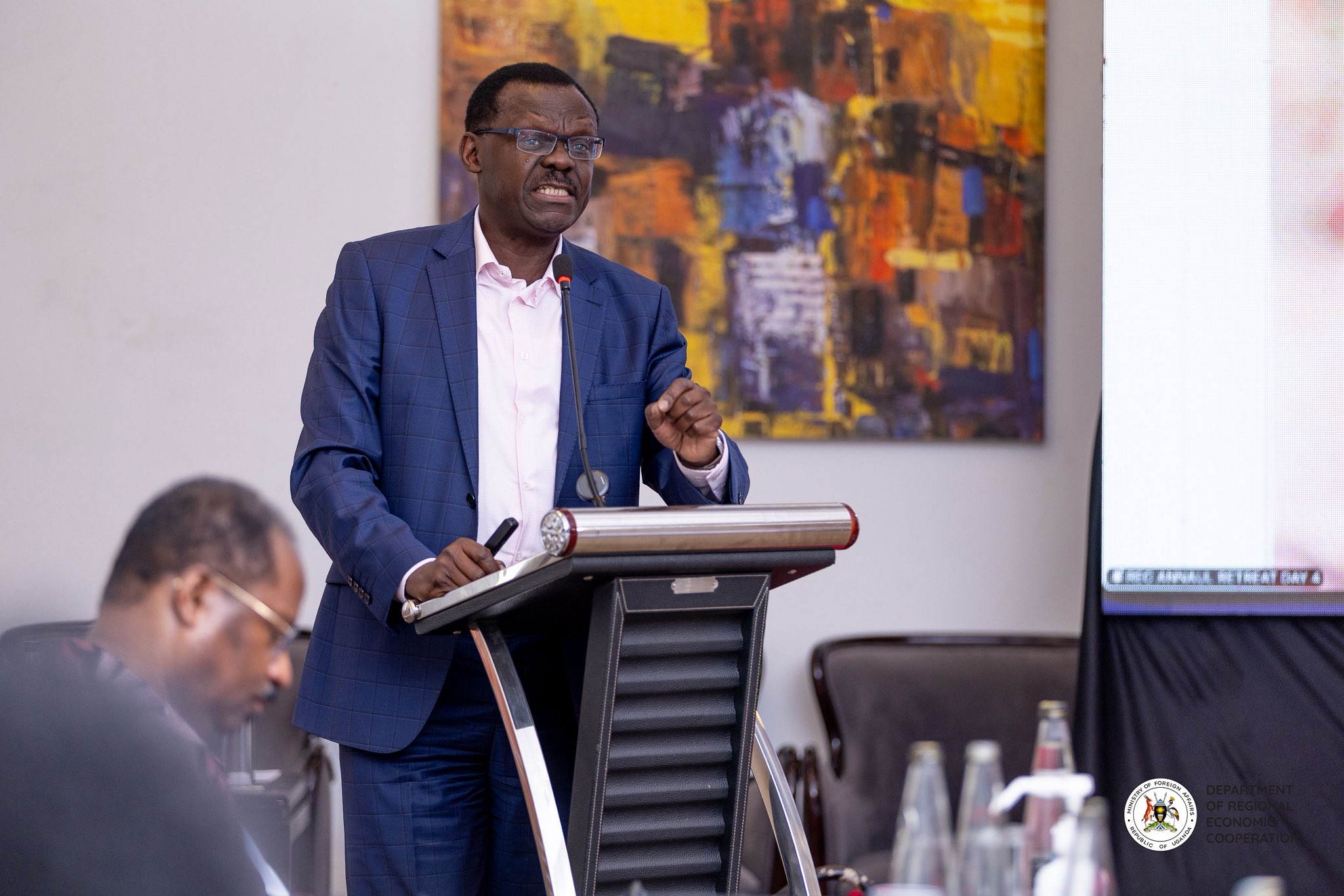
Speaking publicly this week, Ayota confirmed that NSSF is in active discussions with UAE-based partners to attract capital into Uganda's agriculture sector, with the explicit aim of positioning the country as what he called a "strategic food production hub" for the Gulf state. A UAE delegation visited Uganda three weeks earlier to explore the idea directly, he said, adding that the visitors left convinced Uganda could deliver. "They now know they've got a partner they can work with to make this happen," Ayota said.
Why the UAE is looking outward
The logic driving the UAE's interest is straightforward and, from Abu Dhabi and Dubai's vantage point, urgent. The UAE currently imports roughly 80 percent of the food it consumes, a dependence that leaves a wealthy but arid nation exposed to global supply shocks, shipping disruptions and price spikes it cannot control domestically. The government has set a target of cutting that import dependence to 50 percent by 2051, part of a broader Gulf-wide push — mirrored by Saudi Arabia and Qatar in various forms — to secure food supply chains by investing directly in farmland and agricultural production abroad rather than relying solely on open markets.
That strategy has already reshaped agricultural investment patterns across parts of Africa and Asia, where Gulf sovereign wealth funds and state-linked investors have taken stakes in everything from grain terminals to dairy operations. Ayota's pitch is that Uganda should be a primary beneficiary of that capital reallocation. His argument rests on the country's natural endowments: fertile soils, a relatively favourable and diverse climate, and abundant water resources that, unlike much of the arid Gulf and North Africa, do not require energy-intensive desalination to put to agricultural use.

The structure of the ask
Notably, Ayota's proposal is not framed as a simple land-lease or export-supply arrangement, the model that has drawn criticism elsewhere in Africa when foreign investors have acquired large tracts of farmland with limited benefit flowing to local economies. Instead, he has pitched a co-investment structure in which Emirati capital partners with Ugandan entities — potentially including NSSF itself, which manages one of East Africa's largest pools of investable capital — across the agricultural value chain. "Come and invest with us as local co-investors. We can produce every seed, every food, as long as you invest with us across the value chain," Ayota said, describing the proposal he has put to Emirati counterparts.
That value-chain framing matters. Rather than positioning Uganda purely as a source of raw agricultural commodities for export, the pitch envisions joint investment stretching from seed production and primary cultivation through to processing and logistics — the kind of arrangement that, if realised as described, would keep a larger share of value addition, and the jobs and tax revenue that come with it, inside Uganda rather than exporting raw produce for processing elsewhere.
Built on an existing trade relationship
The proposal is not emerging from nothing. The UAE is already Uganda's single largest export destination, absorbing more than 35 percent of the country's total export earnings — a relationship worth around $2.61 billion in goods shipped from Uganda to the Emirates in the most recent reporting period, driven substantially by gold along with agricultural commodities such as coffee. That existing trade relationship, and the two countries' broader investment ties — Kampala and Abu Dhabi struck agreements worth several trillion shillings at a recent Kampala Business Forum — gives Ayota's pitch a foundation of institutional familiarity that a cold pitch to an unrelated market would lack.
NSSF's own involvement also fits a pattern the fund has pursued in recent years: Ayota has previously spoken about growing the fund's asset base toward an ambitious Shs50 trillion target and about widening its membership by drawing savers from small business and agricultural sectors that have historically sat outside formal pension coverage. Positioning NSSF as a co-investment partner in a large-scale, foreign-capitalised agricultural push would mesh with both goals: it opens a new asset class for the fund's portfolio and creates a higher-profile flagship investment that could, in theory, catalyse smaller agribusiness investment and formal-sector jobs that eventually feed new NSSF membership.
What it could mean for farmers and the wider economy
For Uganda's agriculture sector, the implications cut in more than one direction. On the optimistic side, a serious, sustained flow of Gulf co-investment capital into value-added agriculture — processing plants, irrigation infrastructure, cold-chain logistics, seed production — would address chronic underinvestment in exactly the segments of the value chain where Uganda currently loses the most value to importers and re-exporters elsewhere in the region. It would also diversify Uganda's dependence on the UAE relationship beyond raw commodity exports like gold and unprocessed coffee, building instead a bilateral production partnership with more durable, harder-to-relocate physical assets on Ugandan soil.
There are, however, open questions the announcement does not yet answer. Large-scale foreign co-investment in agricultural production has, in other African contexts, raised concerns about land tenure, the terms on which Ugandan smallholders participate versus being displaced or sidelined by larger commercial operations, and how "co-investment" translates in practice — whether it means genuine joint ventures with Ugandan capital and management, or foreign capital with a thin layer of local participation. Ayota's public remarks so far describe an aspiration and an ongoing conversation rather than a signed agreement, financing figures, or a specified timeline for when Emirati capital might actually begin flowing into Ugandan farms and processing facilities.
An early-stage bet with a long horizon
What is clear is that both sides have incentive to move this forward. The UAE has a 2051 deadline pressing against its food import dependence and a demonstrated regional appetite for exactly this kind of overseas agricultural investment. Uganda, for its part, has spare arable land, a government actively courting agro-industrial investment through record budget allocations this year, and now a pension fund manager willing to use his institution's balance sheet and credibility as a bridge to Gulf capital.
Whether the "strategic food production hub" framing becomes a defining feature of Uganda's agricultural investment landscape over the next decade, or fades as one of many exploratory Gulf conversations that never reach binding agreements, will depend on details still to be negotiated: financing structures, land arrangements, labour terms and the actual division of value along the chain Ayota has promised to build together. For now, it marks a notable expansion of who is trying to shape the future of Ugandan farming — moving the conversation beyond government ministries and development agencies to include a domestic pension fund acting as matchmaker for sovereign-scale Gulf capital.
Published By | News Editor