Written By | International News Desk
Trump
World Politics
Background
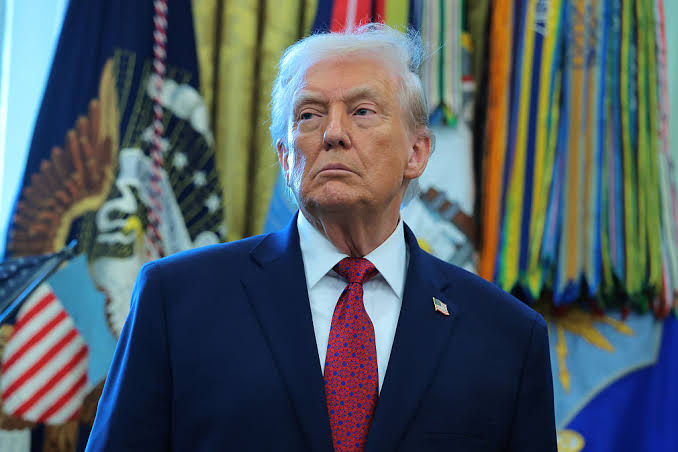
Four months out from the November 2026 midterm elections, Democrats are converging on a message they believe cuts across their fractured coalition: that the Trump administration has normalized a scale of self-dealing that would once have ended a presidency, and that only a Democratic Congress can hold it accountable. Vice President JD Vance gave voice to just how far norms have shifted when he remarked that "if Watergate happened tomorrow, it would be like a 12-hour news story," adding that the idea it would have taken down a presidency today is "crazy." That comment, intended or not, has become something of a talking point for Democratic strategists making the case that ethical standards in Washington have eroded to the point that they need to be rebuilt almost from scratch.
The catalogue of episodes Democrats point to has grown steadily over the course of Trump's second term. House Oversight Committee Democrats maintain a running tracker of what they call the "Trump family corruption" record, while outside watchdog groups such as Citizens for Responsibility and Ethics in Washington and RepresentUs have separately compiled lists of conflicts of interest involving the president's relatives and business ventures. Among the episodes most frequently cited: a settlement between the Trump administration and the president's own government that shields the Trump family from IRS audits; a U.S. Air Force contract to buy interceptor drones from Powerus, a company backed by Donald Trump Jr. and Eric Trump; Trump family investment in a construction firm that merged with a mining company days after that company secured $1.6 billion in U.S. government backing for a Kazakhstan tungsten project; large-dollar stock trades in companies with direct exposure to administration policy; and cryptocurrency ventures that watchdogs say have sharply increased the president's personal net worth. House Oversight Committee Democrats estimate the schemes have generated roughly $2.25 billion in realized profits from foreign payments and other sources tied to the presidency, a figure that Democrats say could rise as high as $9.7 billion once the value of Trump-linked digital assets is included, with as much as $600 million of that traceable to foreign interests.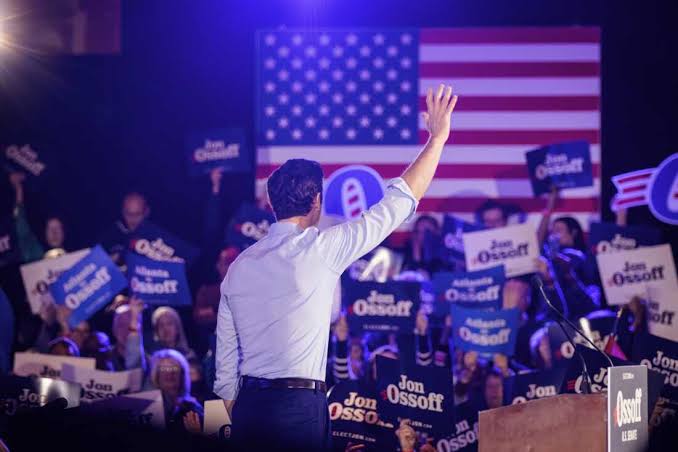
Key Developments
Senate Democratic Leader Chuck Schumer moved to formalize the party's messaging strategy this week, launching a new Senate Democratic anti-corruption working group made up of himself and Senators Sheldon Whitehouse of Rhode Island, Jeff Merkley of Oregon, Catherine Cortez Masto of Nevada, Alex Padilla of California and Andy Kim of New Jersey. In floor remarks, Schumer said Trump and his family had used the White House to generate what he called "eye-popping profits" while ordinary Americans struggle with the cost of living, and said the group's mandate is to document the financial impact of the administration's self-dealing and to draft legislation aimed at preventing future presidents from using the office for personal enrichment. The initiative builds on a series of earlier Democratic reports this year examining housing, grocery, health care, child care and energy costs, reflecting a deliberate strategy of tying corruption allegations directly to voters' economic anxieties rather than treating ethics as a stand-alone issue.
The push extends beyond the executive branch. Senator Adam Schiff of California has reintroduced a trio of bills aimed at tightening conflict-of-interest rules for federal judges and Supreme Court justices, requiring them to place financial assets in blind trusts, and subjecting the federal judiciary to Freedom of Information Act requests for the first time. Schiff is also backing the Supreme Court Tenure Establishment and Retirement Modernization Act, which would impose eighteen-year term limits on Supreme Court justices, as well as a companion Biennial Appointments and Term Limits Act. Those judicial proposals sit alongside a broader wave of member-level reform bills, including a bipartisan measure from Representatives Marie Gluesenkamp Perez and Zach Nunn to ban congressional stock trading, end automatic pay raises for lawmakers, and extend the post-office lobbying ban — legislation that gained enough traction that the House voted in late July to advance limits on stock trading by its own members, elevating the issue as a campaign flashpoint heading into the fall.
The messaging has also become a centerpiece of individual campaigns. In Pennsylvania's 8th Congressional District, Democratic candidate Paige Cognetti unveiled an eight-point anti-corruption platform aimed at incumbent Republican Rob Bresnahan, proposing a ban on congressional stock trading, a ban on former lawmakers becoming lobbyists, eighteen-year term limits for members of the House, Senate and Supreme Court, a prohibition on corporate PAC donations, withheld pay for lawmakers if a budget isn't passed on time, and audits of government agencies. Cognetti argued that corruption concerns are crowding out substantive policymaking, saying "it's hard for us at any level of government to get to the substance of how we improve people's lives, if corruption is getting in the way." Progressive Senate candidates such as Graham Platner in Maine have built similar anti-corruption platforms into their campaigns, suggesting the issue has traction across the party's ideological spectrum, from centrist House hopefuls to insurgent Senate contenders.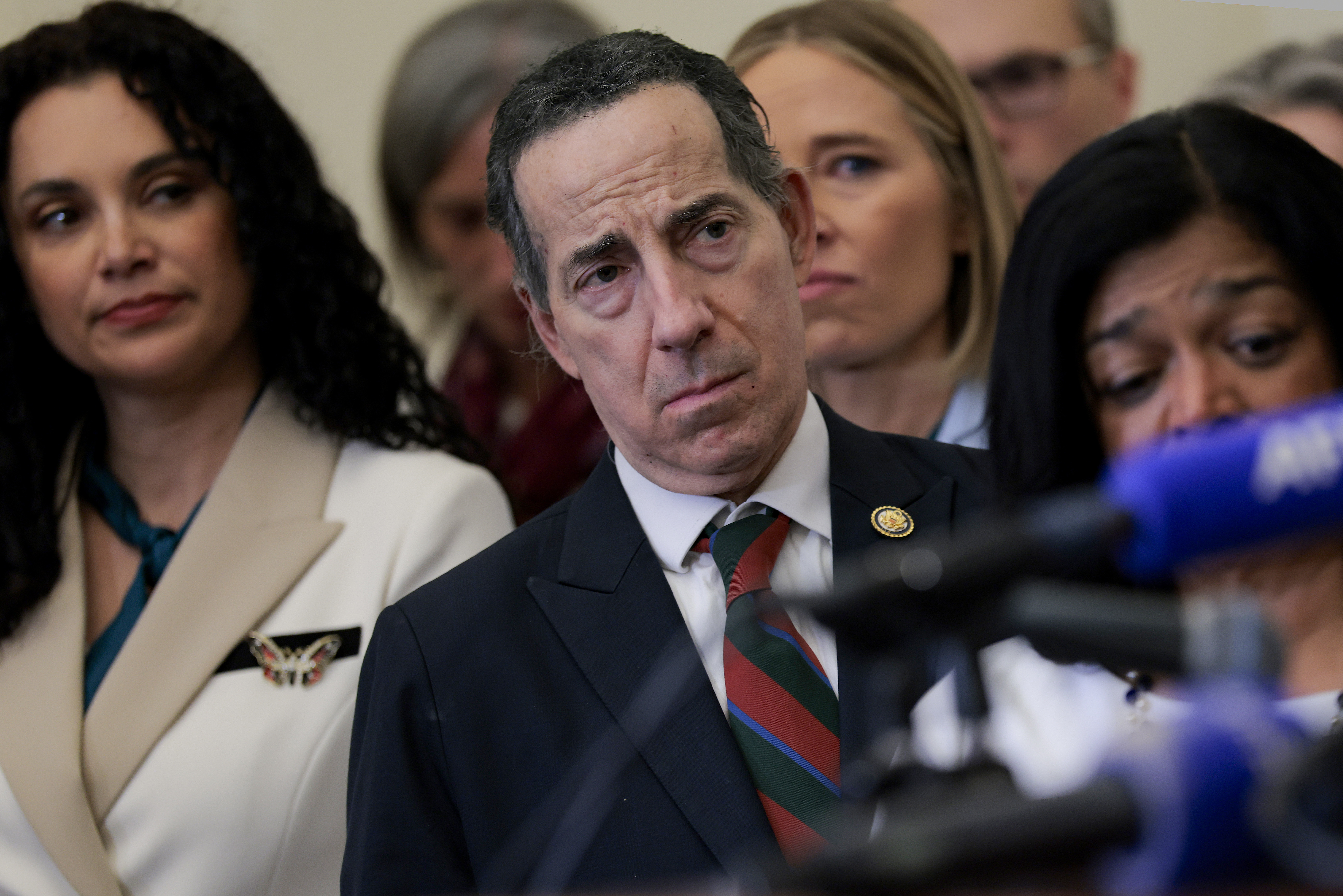
Reactions
Public polling gives Democrats real, if limited, grounds for optimism. An Ipsos survey conducted in April and May found 37 percent of Americans named corruption a major concern, a ten-point increase over the prior year, while a Brennan Center for Justice poll found that more than 90 percent of Republicans, Democrats and independents alike agreed that corruption is a significant problem in government institutions generally. But the same body of polling complicates the notion that voters see corruption as a uniquely Trump or Republican problem. Strategists in both parties caution that surveys do not show voters trusting Democrats markedly more than Republicans on ethics; one Republican strategist put it bluntly, saying "I don't think either party really holds an edge on the corruption issue." NPR's own focus groups of swing voters in Pennsylvania this month found a genuine split: of twelve participants, half said they were "troubled" by the president's earnings, while the other half dismissed the issue, with one voter offering the classically cynical view that "when it comes to ethics, moral and financial, I think that just about every politician is corrupt."
Republicans have largely responded by trying to redirect the corruption conversation rather than rebut it directly, pointing to Vice President Vance's anti-fraud task force — aimed at government waste and improper payments — as their own answer to voter frustration with Washington. The Democratic National Committee, for its part, has folded the corruption message into a broader triad of talking points that also includes lowering costs and expanding health-care access, suggesting the party views corruption less as a stand-alone winning issue than as one component of a larger affordability-and-accountability pitch.
What's Next
The central test for Democrats over the next four months will be whether they can convert generalized public disapproval of Washington ethics into a message that specifically benefits their own candidates, rather than depressing trust in government and incumbents of both parties equally, a risk several strategists have flagged. Legislative vehicles are already moving: the House's stock-trading vote gives Democrats a concrete marker to point to, while Schiff's judicial ethics and term-limit bills and the Gluesenkamp Perez-Nunn lobbying measure will offer further tests of whether reform proposals can attract meaningful bipartisan support or stall as messaging exercises. Schumer's new working group is expected to produce its first documentation of alleged presidential self-dealing in the coming weeks, timed to keep the issue in the news through the fall campaign. Whether that translates into votes will likely depend on whether Democrats can tie abstract ethics complaints to the kitchen-table economic concerns — housing, groceries, health care — that the party's own internal strategy documents suggest voters respond to far more readily than corruption in isolation.



