SPORTS
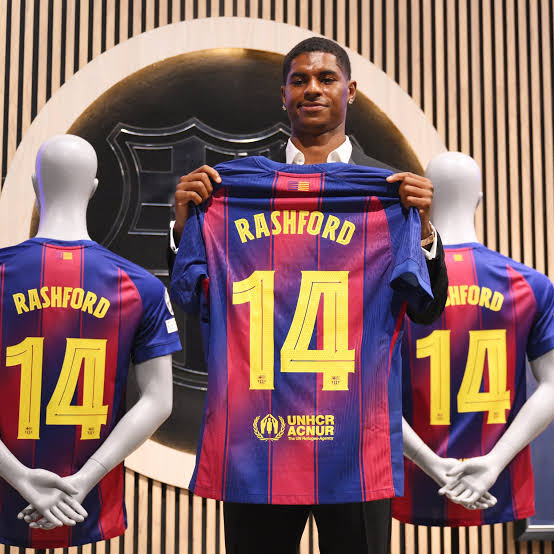
A little over a year ago, Marcus Rashford walked out of Manchester United’s Carrington training ground with his reputation in tatters, his relationship with manager Ruben Amorim beyond repair, and his career at a genuine crossroads. This week he walked back in — not as a cautionary tale, but as a man who spent twelve months rebuilding himself in Barcelona and forced his old club to take him seriously again.
On Thursday, Rashford confirmed on social media that his season-long loan spell at Barcelona had officially ended, thanking the Catalan giants for what he called “a special and unforgettable chapter” in his career. Within hours, he was back on a plane to Manchester, ready to report for pre-season training ahead of a Premier League campaign that kicks off August 22 against newly promoted Hull City. The homecoming closes one of English football’s stranger sagas of the past two years and opens an even more interesting question: what does Manchester United do with him now?
From Outcast to Asset
Rewind to the winter of 2024-25, and Rashford was a player United seemed desperate to be rid of. Dropped from the squad by Amorim after a string of disciplinary and application issues, he cut a increasingly marginalized figure at Old Trafford, with the manager publicly questioning the “choices” being made by people around him. By the following summer, a loan to Aston Villa had done little to fully rehabilitate his standing, and when Barcelona came calling in July 2025, United let him go with what amounted to a sigh of relief.
Barcelona’s interest wasn’t charity. Under financial strain and eager for attacking reinforcements without a full transfer fee, the Catalan club structured the move as a loan with an option to make it permanent for a reported €30 million (roughly $35 million). For Rashford, it was a chance to reset in one of the most demanding, technically exacting environments in world football — a proving ground with no room to hide.
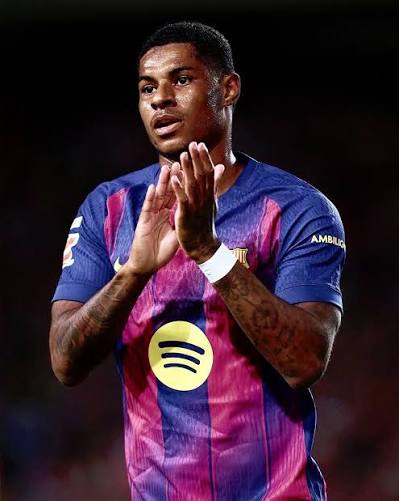
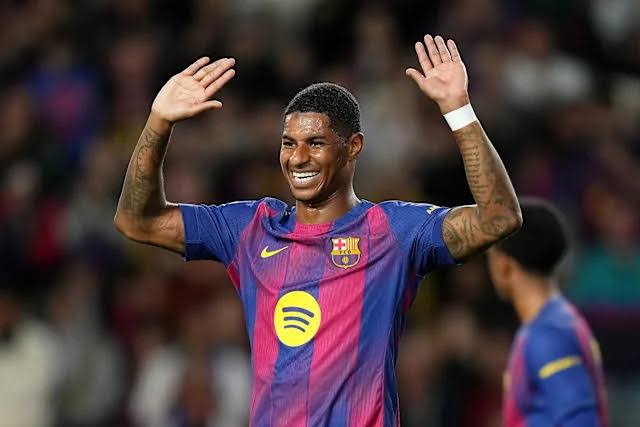
He answered emphatically. Across 49 appearances in all competitions, Rashford racked up 25 goal involvements — 14 goals and 11 assists — playing with a freedom and sharpness that had been largely absent during his final, fractious years under Amorim. Barcelona’s coaching staff praised his work rate and his willingness to press from the front, qualities that had reportedly been in short supply during his lowest ebb in Manchester. For a player written off by large parts of the English football press as a cautionary tale about wasted talent, it was as complete a reclamation project as the sport produces.
Why Barcelona Let Him Go Anyway
And yet, when the June 15 deadline arrived for Barcelona to trigger that permanent option, the club walked away. The decision had less to do with Rashford’s performances than with Barcelona’s chronic financial constraints under La Liga’s salary-cap rules, which have forced the club into a familiar pattern of prioritizing certain positions over others each transfer window. Sporting sources indicated the club’s recruitment budget was earmarked instead for Newcastle winger Anthony Gordon and Borussia Dortmund’s Karim Adeyemi, with Barcelona also chasing a deal for Manchester City striker Julian Alvarez. Rashford, for all his goal contributions, became a casualty of a spreadsheet rather than a football judgment.
The loan itself cost Manchester United roughly €15 million net once wages and structuring fees are accounted for — a substantial sum for a player they had been trying to offload entirely. But football executives inside Old Trafford are framing the numbers differently now: what looked twelve months ago like dead money spent getting a problem player off the wage bill now looks like the cost of a very effective loan-out development program.
A Different Manager, A Different Conversation
Perhaps the most significant shift is who is waiting for Rashford at Carrington. Amorim, whose relationship with the forward became irreparably toxic, is no longer in the dugout. Michael Carrick, the former United midfielder now installed as permanent manager, has taken a notably different tone. According to reporting from inside the club, Carrick does not view Rashford’s return as a problem to be managed but as a genuine opportunity, and has already held direct conversations with the player about a long-term future at Old Trafford.
“He showed at Barcelona that he remains a top-level attacker,” is the substance of the message being relayed by those close to the manager — a marked departure from the “he has to change” ultimatums that defined the Amorim era. Whether that translates into first-team minutes, a starting role, or eventually another sale remains to be seen, but the tone of the conversation itself signals how far Rashford’s stock has recovered.
What This Means for Fans
For Manchester United supporters, the Rashford saga is a case study in patience — and in how loan spells, so often dismissed as face-saving exercises, can genuinely reset a career. It’s also a reminder that a player’s value isn’t fixed; it moves with form, environment, and the willingness of a club to actually use him. Fans heading into the new Premier League season now have to reconcile two competing images of the same player: the disengaged, sidelined figure of early 2025, and the 25-goal-involvement attacker who thrived under Barcelona’s demands.
The Road Ahead
Rashford will link up with his United teammates this week as preseason ramps up before the August 22 opener against Hull City. Carrick’s side, still finding its identity after a turbulent managerial transition, could badly use a forward with Rashford’s pace and directness — assuming the reset holds. Barcelona, for its part, moves on to chase Gordon, Adeyemi, and Alvarez, betting that its immediate needs outweigh the long-term cost of letting a rejuvenated Rashford walk.
Football has a short memory for redemption arcs once the goals start again. Twelve months ago, few would have predicted Marcus Rashford’s homecoming would be treated as good news at Old Trafford. This week, it unambiguously was.
Published By | Sports Editor