Background
The confrontation between the United States and Iran has, by August 2026, been running for roughly six months. Open war broke out in February, triggered by a series of strikes that killed Iran's longtime supreme leader, Ali Khamenei, in the conflict's opening days; his son, Mojtaba Khamenei, was subsequently named his successor and has rarely appeared in public since, reportedly owing to injuries suffered around that time. What followed was a grinding cycle of American and Israeli air campaigns against Iranian military, nuclear and, later, energy and infrastructure targets, punctuated by short-lived ceasefires that repeatedly collapsed. A June 17 memorandum of understanding was meant to end the fighting; instead, it broke down within weeks amid new strikes on shipping in the Strait of Hormuz, and by mid-July the United States was once again bombing Iran nightly, including strikes that killed American troops stationed in Jordan.
Iran responded to the U.S. campaign by closing the Strait of Hormuz — the narrow waterway through which roughly a fifth of the world's seaborne oil trade normally passes — and the United States, for its part, imposed a naval blockade on Iranian ports that remains in force. Shipping traffic through the strait has collapsed from around 130 vessels a day before the war to roughly a dozen, according to U.S. officials, contributing to elevated global oil prices for much of the year. In mid-August, President Trump escalated the rhetoric further, posting a map labeling the Strait of Hormuz "NEW U.S. TERRITORY" and telling reporters "we control it with the blockade" — a claim international legal experts say has no basis under the U.N. Convention on the Law of the Sea's rules on transit passage through international straits, and which Iran's deputy foreign minister, Kazem Gharibabadi, dismissed by saying the strait "cannot be seized with a tweet."
Underneath the military standoff, Iran's economy has been sliding toward what regional analysts describe as the edge of collapse. The International Monetary Fund has projected inflation approaching 69 percent this year — the highest since Iran's 1979 revolution — while the rial has continued to lose value, prompting the central bank to introduce a 10-million-rial note only a month after issuing a 5-million-rial note. Iranian oil exports, the government's principal source of hard currency, have been severely curtailed by the naval blockade and sanctions enforcement, forcing authorities to ration fuel and electricity even as they struggle to meet public-sector payroll. It is against this backdrop — a Tehran government already under severe economic strain, and a military campaign that has produced no lasting ceasefire — that the latest escalation unfolded this week.
Key Developments
On August 18, Trump told administration officials to halt any ongoing conversations with Iranian counterparts, writing on social media that "there are no talks or conversations going on, or scheduled, with the Islamic Republic of Iran." The announcement came the same day the United Arab Emirates' defense ministry said it had detected two ballistic missiles launched from Iranian territory toward its waters — the first such incident reported since a missile strike on the Emirati port of Fujairah back in May. Both missiles fell into the sea, the UAE said, but it characterized the launches as targeting "maritime traffic" and, within hours, suspended all trade, commercial exchanges and financial transactions with Iran indefinitely, citing a threat to regional and international security. Iran's foreign ministry spokesman, Esmaeil Baghaei, rejected the UAE's account as "baseless," with Iranian officials suggesting the episode may have been a staged or false-flag provocation.
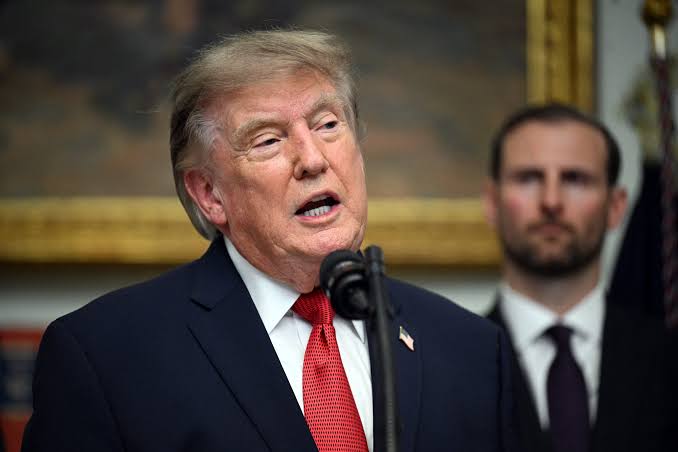
Late on August 19, Trump then announced what he called a new phase of pressure on Tehran, describing it on social media as "the MOST CRUSHING ECONOMIC OPERATION EVER TAKEN AGAINST ANY COUNTRY." He said the campaign — which some outlets have taken to calling an "Economic D-Day" — would target financial institutions, businesses, airports and government entities anywhere in the world found to be providing what he called "any type of lifeline to Iran," threatening those found to be involved with "TREMENDOUS Economic Consequences." Trump specifically named oil smuggling, currency swap lines, cash transfers, exchange houses, ship registries and front companies as the mechanisms he intends to target, though he did not detail the specific new sanctions authorities, if any, that would be invoked, nor a timeline for implementation.
The announcement marks a notable pivot in the administration's public strategy, coming after months in which Washington's Iran policy centered on direct military strikes and, more recently, the disputed claim over the Strait of Hormuz. With talks now explicitly suspended and no new bombing campaign announced this week, the shift toward sanctions-based "economic warfare" suggests the administration is, at least for now, favoring financial pressure over further strikes — even as the naval blockade of Iranian ports continues, and even as Trump has left open the possibility that talks could resume "at some point."
Reactions
Iranian officials moved quickly to dismiss the announcement. Foreign Minister Abbas Araghchi said Trump's "Economic D-Day" language was "a distraction from America's own crisis," arguing in a social media post that the United States' own debt burden and interest costs made it poorly positioned to lecture other countries on economic management, and that "U.S. economic terrorism threatens the global economy and sovereignty worldwide." Deputy Foreign Minister Kazem Gharibabadi was more pointed, saying that "the military war didn't yield results, so now they've named the next failure 'economic war,'" while Iran's state broadcaster, IRIB, characterized the announcement as nothing substantively new, framing it as an acknowledgment that the military campaign had failed to achieve its goals.
The UAE's decision to suspend all trade with Iran was a significant reaction in its own right, given that the two countries are major commercial partners in the Gulf and that some maritime trade between them had only recently resumed as hostilities eased in late June. The suspension effectively reverses that limited normalization and signals that Gulf states — several of which have been targeted or threatened by Iranian and Iran-aligned forces over the course of the war — are increasingly unwilling to extend Tehran any economic accommodation while the conflict remains unresolved.
Inside the United States, the announcement has drawn less attention than the military phases of the war, partly because it coincided with a major escalation elsewhere: a large Russian missile-and-drone barrage on Kyiv the same week, which killed more than a dozen people and drew its own wave of international attention. Congressional reaction to the sanctions push has so far been muted compared with the debate earlier this month over the Lindsey O. Graham Sanctioning Russia and Iran Act, which passed the Senate 86-11 and already includes expanded Iran energy and terrorism sanctions Trump had specifically requested; it remains unclear how Trump's newly announced executive-level campaign will interact with or duplicate that legislation once it reaches the House.
What's Next
The immediate question is what concrete measures follow Trump's announcement. Broad rhetorical threats of this kind have preceded specific Treasury and State Department actions in the past, and analysts expect the administration to move toward designating additional financial institutions, shipping registries and "shadow fleet" intermediaries that Iran has used to move oil and hard currency despite existing sanctions — many of the same networks the U.S. and EU have separately targeted in the parallel sanctions campaign against Russia's own shadow fleet. Whether third countries with significant Iran trade, including China, respond by curbing that trade or by defying the threatened penalties will be an early test of how much practical force lies behind the announcement.
For Iran, the central question is whether an already-battered economy — with inflation near 69 percent, a collapsing currency and a government struggling to pay public salaries — can absorb a further, deliberately intensified squeeze without triggering broader unrest. Iranian officials have so far responded defiantly in public, but the economic data suggests the government has limited room to maneuver, and some regional analysts have suggested that sustained economic pressure, rather than further military strikes, may be the lever Washington now believes is most likely to force concessions on the naval blockade, the Strait of Hormuz dispute and Iran's nuclear program.
Diplomatically, the picture remains murky. Trump has simultaneously declared talks over and said they could resume "at some point," a pattern that has recurred several times already this year, including a similar on-again, off-again sequence in early August around a reported (and ultimately denied) Hormuz reopening deal. Oman and Qatar have continued to play mediating roles between the two sides, and it remains possible that economic pressure is intended, at least in part, as leverage to bring Iran back to the table rather than as a permanent substitute for negotiation. For now, though, the Strait of Hormuz remains effectively closed to normal traffic, the U.S. naval blockade continues, and the region is watching to see whether "economic warfare" proves any more decisive than the military campaign that preceded it.
Published By | News Editor