WORLD NEWS
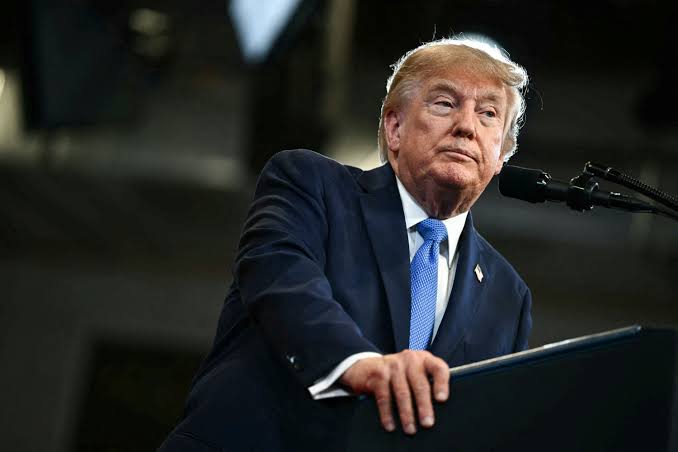
Ten candidates endorsed by President Donald Trump have now lost their Republican primary races in the 2026 midterm cycle, with six of those defeats coming in August alone, as the primary season draws to a close and both parties begin turning fully toward November's general election. The wave of losses — spanning gubernatorial, congressional and attorney-general races from Florida to Wyoming to Minnesota — has put 2026 on pace to become one of the roughest primary cycles of Trump's endorsement career, trailing only the 12 losses he absorbed in 2022. Unlike that earlier cycle, when the losses were concentrated almost entirely in one state, Georgia, this year's defeats are scattered across the map and stem from a mix of local scandals, candidate-specific liabilities and, in some races, primary voters simply looking past a presidential endorsement altogether.
Background
Trump's endorsement has functioned since his first term as one of the most powerful forces in Republican primary politics, frequently determining the outcome of contested races and reshaping the party in his image. Ballotpedia has tracked his overall 2026 primary endorsement success rate at 96 percent, a figure the White House has cited as evidence of his continued dominance over the GOP. But that headline number obscures a rockier picture in the specific category of races without an incumbent to anchor the outcome: in open gubernatorial primaries where Trump backed a non-incumbent, his candidates have now lost 5 of 12 contests, a 42 percent failure rate that is far higher than his overall average suggests.
The pattern fits into a broader trend that has defined the 2026 cycle: scandal and anti-incumbent sentiment cutting through party lines and presidential endorsements alike. Political observers have described this year's primaries as producing incumbent losses at a near-record pace outside of redistricting years, driven by ethics investigations, controversial public statements and a restive Republican base willing to reject even Trump-blessed candidates when local concerns outweigh the endorsement. At the same time, Trump has notched significant intra-party victories this cycle, most notably helping oust longtime incumbents he viewed as insufficiently loyal — including Senators John Cornyn of Texas and Bill Cassidy of Louisiana, and Kentucky Representative Thomas Massie — underscoring that his influence remains formidable even as his endorsement record shows new cracks.

Key Developments
The most closely watched defeat came in Florida's 7th Congressional District, where Republican Rep. Cory Mills lost his primary despite Trump's backing. Mills had been dogged for months by a House Ethics Committee investigation into allegations that he sexually harassed a former girlfriend, misrepresented information on financial disclosure forms, and committed campaign finance violations; a judge separately issued a restraining order against him for dating violence after his ex-girlfriend accused him of threatening and harassing her. A Justice Department inquiry into his finances added to the pressure. Mills's defeat was one of several notable Florida results that night, alongside the loss of Trump-backed candidate Catalina Lauf in the state's 19th Congressional District.
In Tennessee, Rep. Andy Ogles lost his renomination bid to former state Agriculture Commissioner Charlie Hatcher, a defeat attributed largely to a string of controversial public comments and social media posts that had drawn sustained criticism even from within his own party. In Minnesota, MyPillow founder and prominent 2020 election-fraud conspiracy promoter Mike Lindell lost his bid for the Republican gubernatorial nomination, a result that underscored the limits of both his own national profile and Trump's endorsement in a statewide race. And in Wyoming, Trump-endorsed state schools superintendent Megan Degenfelder fell short in her bid for the Republican gubernatorial nomination, one of the clearest examples this cycle of an endorsement failing to overcome an opponent's local standing.
Michigan produced another notable defeat when Trump-endorsed congressional candidate Amir Hassan lost a primary to a rival who had, at one point, formally dropped out of the race — a result that drew particular attention for how thoroughly it undercut the theory that a Trump endorsement alone can guarantee victory. Taken together, of the ten Trump-backed candidates who have lost this cycle, five were running in gubernatorial primaries, four in House races, and one for attorney general, according to tallies compiled by news organizations tracking the president's endorsement record.
Reactions
Republican strategists and commentators have offered competing interpretations of what the losses signify. Some have argued the results reflect the normal, healthy functioning of primary elections — voters weighing scandal-plagued or locally unpopular candidates against an endorsement and, in a meaningful number of cases, choosing to prioritize electability or personal conduct over presidential loyalty. Others have framed the cycle as evidence of genuine erosion in Trump's grip on the party, noting that a sitting president's endorsement typically carries even more weight than a former president's, which makes this year's failure rate more striking than the comparable losses of his first term or of 2022, when he was out of office.
Commentary from outlets across the political spectrum has converged on a similar point: the losses are notable less for their raw number, which remains below the 2022 high-water mark, than for their breadth. Where the 2022 cycle's losses were heavily concentrated in Georgia — a state where the local Republican establishment openly broke with Trump over his false 2020 election-fraud claims — this year's ten defeats span Florida, Tennessee, Minnesota, Wyoming and Michigan, suggesting a more geographically diffuse willingness among Republican primary voters to look past his endorsement when a candidate carries significant personal baggage. At the same time, Trump allies have pointed to his continued success in high-profile, incumbent-versus-incumbent fights — including the ousting of Cornyn, Cassidy and Massie — as proof that his endorsement remains the single most consequential factor in most contested Republican primaries.
Democrats, for their part, have seized on the scandal-driven nature of several of the losses — particularly Mills's — as evidence of broader Republican dysfunction heading into the general election, while some have cautioned that a chaotic primary need not translate into general-election vulnerability if the eventual nominees consolidate party support by November.

What's Next
With primary season nearing its end, attention is shifting to how these results shape the battle for control of Congress and governorships in November. Political scientists studying midterm dynamics have long found that a president's job approval rating is one of the strongest predictors of how many seats his party loses in a midterm election, and Trump's standing has shown signs of erosion in recent polling, including softening support among his core Make America Great Again base amid backlash over deportation enforcement and economic conditions. Whether the primary losses translate into weaker general-election nominees in swing districts and states — or whether Republican voters simply selected stronger alternatives to flawed, Trump-backed candidates — is likely to be one of the more closely watched threads of the fall campaign.
Trump himself has continued to campaign aggressively for Republican candidates ahead of November, including a recent push in Iowa where he warned that midterm losses would lead to what he described as 'very bad things' for his agenda. The White House has continued to emphasize his overall 96 percent endorsement success rate rather than the narrower failure rate in open, non-incumbent races, a distinction likely to remain a point of contention between the administration and political analysts as final primary contests wrap up over the coming weeks and the parties pivot to the general election battle for the House, the Senate and a slate of competitive governorships.
Published By | News Editor