Written By |
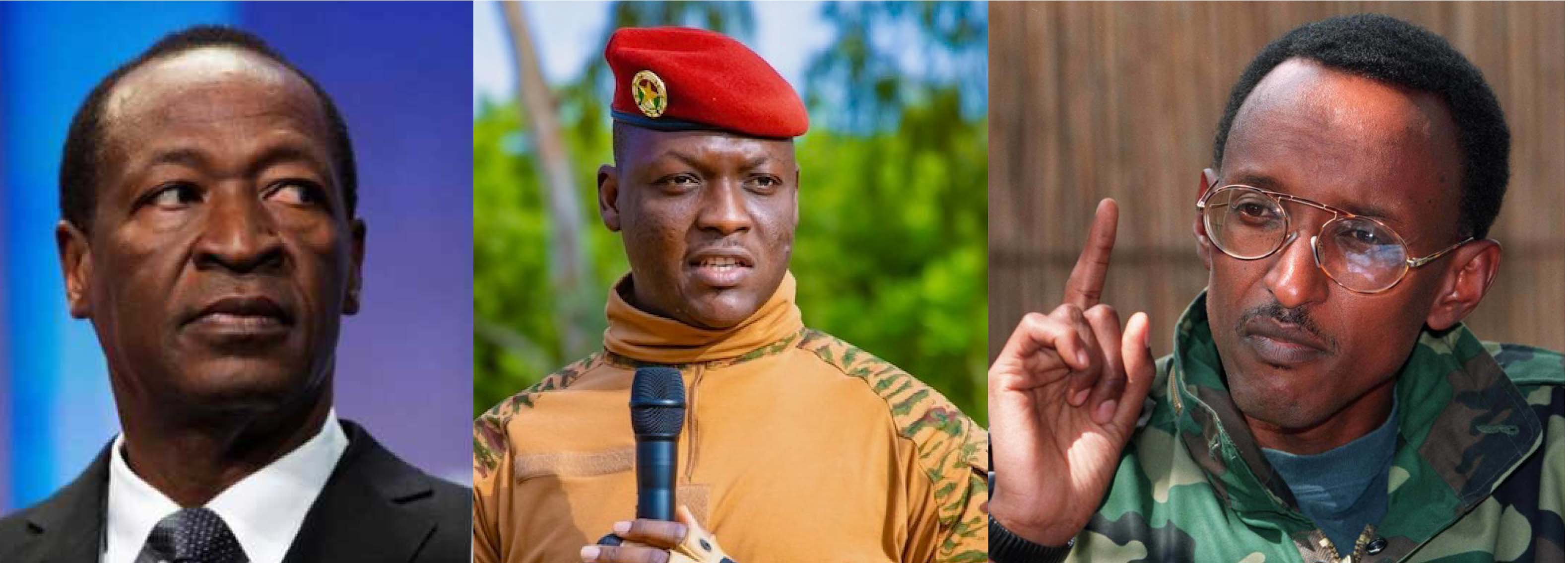
Blaise, Tarore, Kagame all took over power by staging coups: Coups emerge as a structural phenomenon in regimes where formal mechanisms for political accountability are blocked
By Evan Sande Ndahura
“We can only be betrayed by people we trust most.” The aphorism resonates with an unsettling clarity in the study of political power, particularly when examining the architecture of coups. Throughout modern history, coups have been executed not by external enemies or mass uprisings, but by those who occupy intimate proximity to the seat of power. The driver who escorts a head of state, the minister who sits beside them in cabinet meetings, the general who oversees elite military units—these are the actors capable of executing what has repeatedly proved the ultimate paradox of governance: betrayal from within, liberation from within.
Coups emerge as a structural phenomenon in regimes where formal mechanisms for political accountability are blocked. In contexts where constitutions are circumvented, elections become ceremonial, and institutions are hollowed by fear and patronage, the only agents capable of altering the political equilibrium are insiders who combine knowledge of state machinery with command over coercive instruments. It is in this sense that coups, historically, are not merely seizures of power; they are surgical interventions by actors who understand the vulnerabilities of entrenched authority.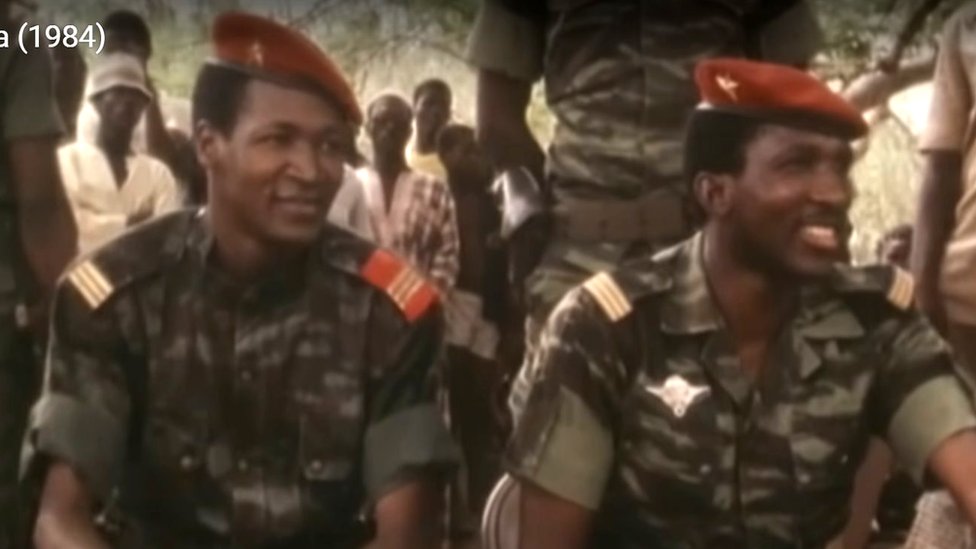 The man who assassinated Thomas Sankara was his childhood friend. His name is Blaise Compaoré.
The African continent provides illustrative cases. Uganda in 1980–1986 offers a quintessential example. After the tumultuous regimes of Milton Obote and Idi Amin, Yoweri Museveni led the National Resistance Army (NRA) to dismantle structures of terror and reconstruct a functioning state. Museveni’s strategy relied not on external legitimacy but on intimate knowledge of state fragility, military networks, and the ability to mobilise loyal forces from within. By embedding himself within the political and military system, Museveni navigated both the predictable paranoia of his predecessors and the institutional gaps that allowed for rapid reconfiguration of state control. “The problem of Africa is leaders who overstay in power.” — Museveni
Similarly, the 1994 Rwandan Patriotic Front (RPF) campaign under Paul Kagame illustrates the interplay between internal knowledge and strategic execution. Kagame’s forces, largely composed of exiled soldiers familiar with the internal fault lines of the Hutu-dominated military, leveraged both military precision and information asymmetries to dismantle the genocidal apparatus. The coup-like elements embedded in RPF operations—control over communication nodes, calculated engagement with international observers, and rapid occupation of key state infrastructure—demonstrate the recurring pattern: successful coups exploit proximity, surveillance blind spots, and operational predictability.
Ibrahim Traoré’s 2022 intervention in Burkina Faso further highlights the pattern. Unlike mass protests or external pressures, the power transition emerged from within the military hierarchy. Traoré’s command of key units and his embedded legitimacy within the armed forces allowed for a seamless narrative of liberation. Citizens, fatigued by repetitive cycles of mismanagement, perceived Traoré not as a usurper but as a saviour. This recurring theme—internal agents recast as liberators—reinforces a historical axiom: political salvation rarely arrives from outside the system; it is forged by those who inhabit its inner circuits.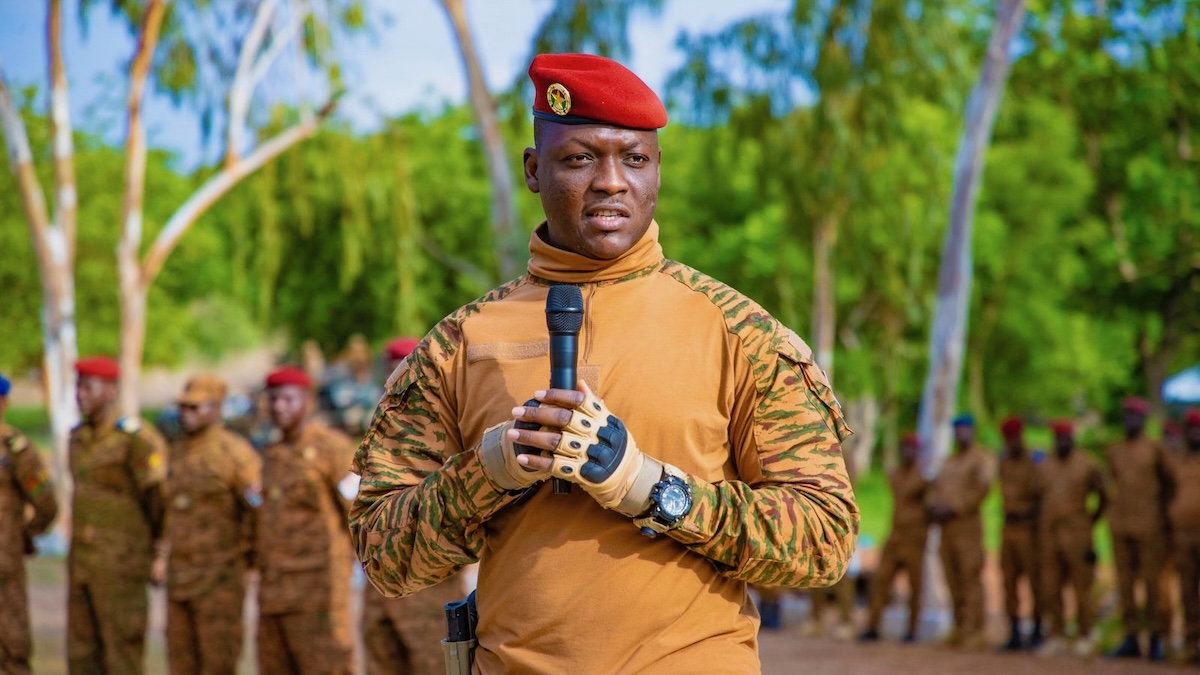
Traoré’s command of key units and his embedded legitimacy within the armed forces allowed for a seamless narrative of liberation. [File: Courtesy]
The success of these coups relies on identifiable strategies. First, insiders cultivate legitimacy prior to intervention. This is not merely symbolic; it shapes public perception and reduces resistance post-coup. Second, they consolidate control over coercive instruments without overexposing intent. Military and security apparatuses are central; command of specialized units or elite forces permits decisive action with minimal opposition. Third, coups exploit predictable weaknesses—over-centralization of power, patronage networks that generate internal envy, and systemic institutional fragility. Fourth, the management of information channels—radio, military communications, capital city infrastructure—ensures immediate perception of success and prevents counter-narratives. Finally, savvy actors appeal to moral or historical imperatives, framing intervention as restoration rather than seizure, often preempting international scepticism.
“We are tired of repeating the same history. We must write a new one.” — Ibrahim Traoré
Historically, these strategies have been replicated across contexts. In Egypt, Gamal Abdel Nasser’s 1952 Free Officers’ Movement, executed in intimate proximity to the monarchy and military command, illustrates a similar template. The structural vulnerabilities of King Farouk’s regime—a centralized bureaucracy, opaque military hierarchies, and public dissatisfaction—enabled a small cohort of insiders to orchestrate systemic transformation. Similarly, in Ghana, Jerry Rawlings’ interventions reflected careful calibration within military structures, leveraging trust networks, information asymmetries, and political legitimacy to institutionalize a narrative of corrective governance.
Yet, the consequences for democracy are complex. While coups can dismantle regimes that are morally delegitimized and institutionally corrupt, they rarely establish durable democratic frameworks. Instead, they frequently entrench power in new centres, creating a paradox wherein the liberator becomes the new anchor of authority. Museveni, Kagame, and Nasser exemplify this dynamic. Once victorious, these leaders consolidate power, often circumventing institutional checks established prior to the coup. Huntington’s observations regarding the political patterns of violence underscore this phenomenon: “The single most dangerous political pattern in the developing world is that violence establishes political reward.” The coup, while solving immediate legitimacy crises, often institutionalizes pathways for future authoritarian resilience.
“The problem is not always the leader, but the system that permits overstay and abuse of power.” — Paul Kagame
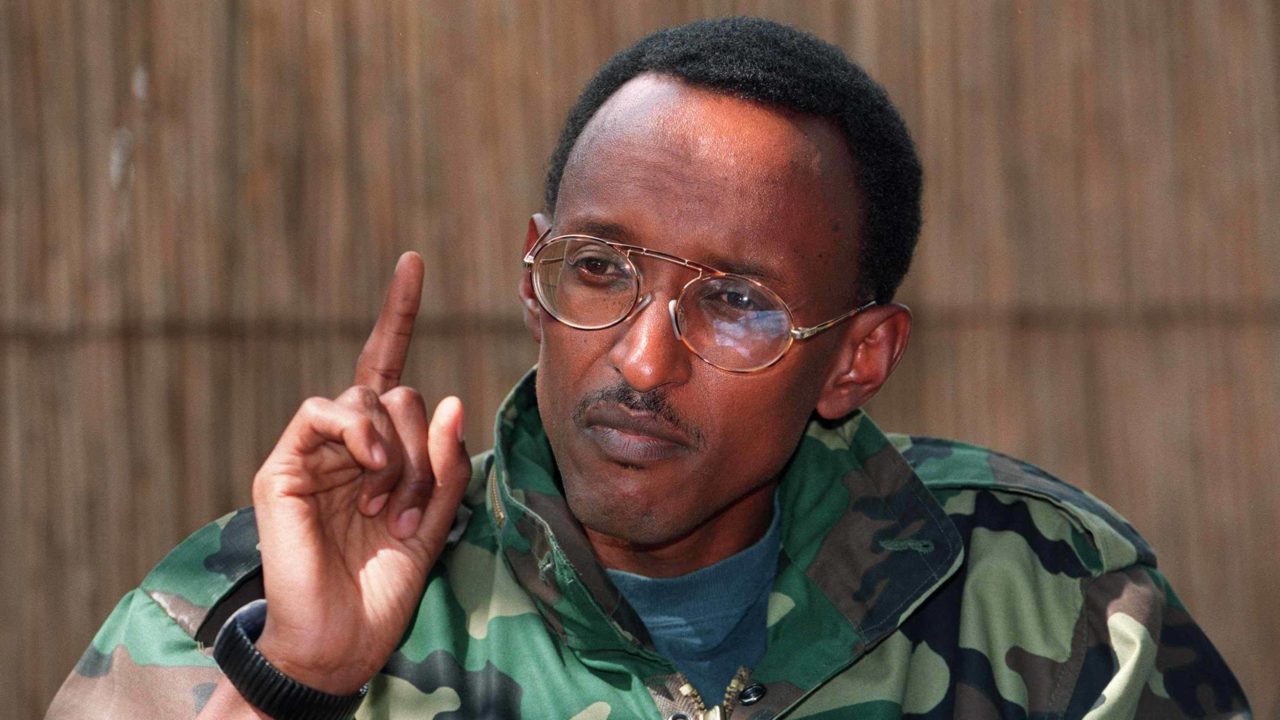
Paul Kagame
The internal logic of coups also illuminates the moral ambiguity inherent in their execution. Participants occupy dual roles: they are both betrayers and liberators, navigators of risk and architects of national destiny. The paradox is structural, not personal. While public narratives frame these actors heroically, political science analyses reveal calculated exploitation of systemic weaknesses. Coups are instruments of political engineering: they reorder incentives, reallocate authority, and, in some cases, restore stability—but rarely establish self-sustaining democratic norms.
These patterns repeat across Asia and the Middle East. In Syria, the Ba’athist interventions mid-20th century illustrate the same structural mechanics: military insiders, possessing intimate knowledge of command structures, executed a series of coordinated manoeuvres to replace regimes with minimal popular participation. In Pakistan, the 1958 and 1977 coups likewise exemplify the centrality of military proximity, institutional exploitation, and strategic timing. In each case, coups emerge not from mass consent but from elite orchestration within closed systems.
A comparative lens underscores why insiders are indispensable. Popular uprisings are unpredictable and diffuse; they rarely possess the capacity to simultaneously control coercive forces, communications, and legitimacy narratives. Insiders, by contrast, benefit from pre-existing authority, networked influence, and structural knowledge. The historical trajectory of coups—from Uganda to Rwanda, Burkina Faso to Egypt—confirms that successful interventions are seldom accidental. They are the product of strategic calculation, often executed with surgical precision by actors who have studied the architecture of power and patiently waited for its vulnerabilities to manifest.
“History teaches us that leadership is tested when institutions fail and courage becomes the defining resource.” — Jerry Rawlings
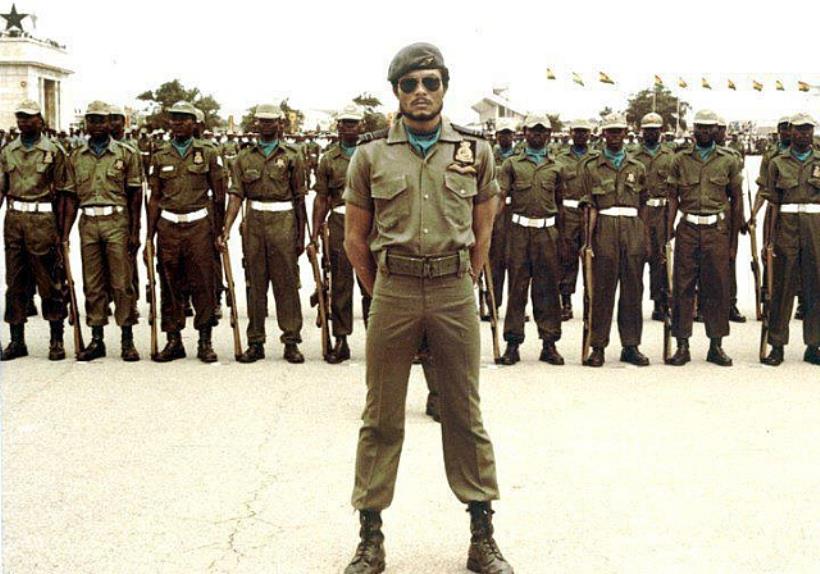
Jerry Rawlings, a showman president of varied ideologies
Yet the very mechanisms that enable successful coups contain seeds for subsequent entrenchment. New leaders, having bypassed constitutional or electoral pathways, frequently justify the circumvention of democratic norms on grounds of efficiency, stability, or moral imperative. Levitsky and Way identify this as a recurring pattern in semi-authoritarian states: initial interventions to correct systemic failure evolve into delegative governance structures. The liberator, having seized power through internal mastery, becomes guardian of the state, capable of repeating the very abuses initially condemned.
In effect, coups illustrate the structural tension between legitimacy and legality. They validate the principle that proximity to power is both privilege and peril. Political actors within the inner circle possess the ability to orchestrate transformative change precisely because they are entrusted with authority, yet this trust inherently contains the possibility of betrayal. O’Donnell’s framework of delegative democracy captures the outcome: the state is efficiently governed, but institutions designed to constrain authority remain underdeveloped or deliberately weakened. The liberator paradoxically establishes conditions that allow future leaders to replicate their own ascendancy through similar breaches of normative order.
“Liberation does not guarantee democracy; it guarantees opportunity for change.” — Gamal Abdel Nasser
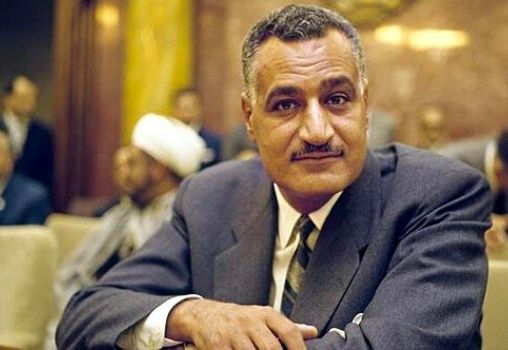
Gamal Abdel Nasser
The cyclical logic is evident. Coups are historically necessary interventions in blocked systems; they dismantle illegitimate power and occasionally restore equilibrium. They are executed through elite betrayal, but the betrayal itself is a structural inevitability. Once successful, the new regime must navigate the tension between consolidating authority and fostering institutional resilience. Too often, the calculus favours consolidation, producing a political culture in which power is both necessary and self-perpetuating. The lessons are clear: coups highlight systemic vulnerabilities, reveal the intimate dynamics of trust and betrayal, and underscore the difficulty of translating liberation into sustainable democracy.
In sum, the study of coups reveals a universal axiom of governance: those closest to power hold the keys to both salvation and subversion. Across Africa, the Middle East, and Asia, history consistently demonstrates that transformative political action emerges from insider networks capable of identifying structural loopholes, orchestrating controlled interventions, and framing narratives of legitimacy. While the immediate consequences often produce celebrated liberators, the long-term effects on democratic consolidation remain ambivalent. The ethical and institutional challenges posed by coups persist, reminding scholars and policymakers alike that political salvation, when executed from within, carries both promise and peril.
“The betrayal that liberates is also the betrayal that sets the stage for future authority. Understanding this duality is essential to understanding power itself.” — Huntington (paraphrased)
Ultimately, coups are not merely violent seizures; they are the materialisation of a structural truth: that authority, when concentrated and opaque, is vulnerable to the most intimate actors. They illuminate the interplay between trust, power, and institutional fragility, and they reveal why liberation, paradoxically, always arrives from inside. In the architecture of power, the insider is simultaneously the threat, the saviour, and the author of history. Understanding coups requires more than recounting military manoeuvres; it demands recognition of the systemic forces, structural loopholes, and strategic calculations that consistently make the betrayed the liberator, and the liberator the architect of enduring authority.
Torch Medi Africa



