Written By | Fashion and Design Desk
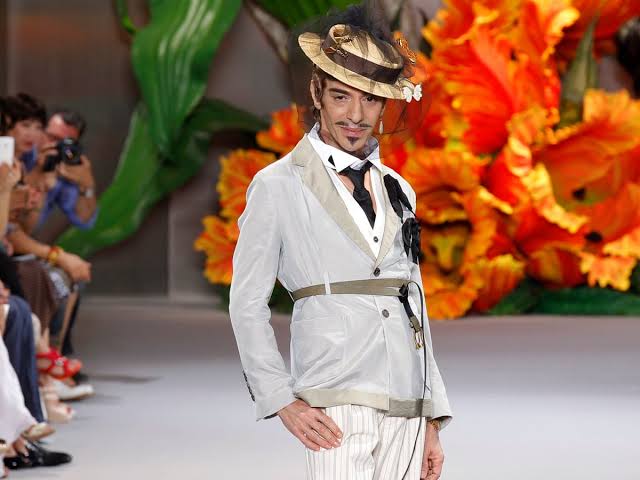
Anna Wintour is betting the 2027 Met Gala on the redemption of a designer convicted of hurling antisemitic slurs at strangers. Not everyone is ready to RSVP.
NEW YORK
Every spring, the Met Gala theme drops with the same predictable rhythm: mild curiosity, a flood of red-carpet speculation, and a couple weeks of chatter before the fashion world moves on to the next thing. This year was different. When Anna Wintour and the Metropolitan Museum of Art's Costume Institute revealed that its spring 2027 exhibition — and by extension, the theme of next year's gala — would be "John Galliano: Horizons," the announcement didn't just generate buzz. It reopened a wound the fashion industry has spent fifteen years trying not to look at directly.
The Costume Institute's decision to build an entire exhibition around Galliano puts the British designer in genuinely rarefied company. It marks only the third time in the gala's history that the museum has dedicated a show to a living designer, joining Yves Saint Laurent in 1983 and Comme des Garçons' Rei Kawakubo in 2017 — a list that instantly signals just how seriously the Costume Institute rates Galliano's influence on the craft of fashion itself. The 2027 Met Gala is set for Monday, May 3, with celebrity co-chairs and the official dress code still to be announced.
A Legacy Nobody Disputes — and a Past Nobody's Forgotten
There's little argument within fashion circles about Galliano's technical genius. Across stints at Givenchy, Dior, Maison Margiela and his own namesake label, he built a reputation as one of the most theatrically inventive designers of his generation — a couturier who treated runway shows as full theatrical productions and reshaped how the industry thought about spectacle, silhouette, and storytelling. Wintour's own statement on the announcement leaned hard into that reputation: "There is no one more deserving of an exhibition of this scale than John Galliano. His body of work — at Dior, Givenchy, Margiela, his namesake label and more — combines erudition and creativity, darkness and light, the past, the present, the future all smashing together in a brilliant way."
But Galliano's résumé carries an asterisk that's impossible to design around. In 2011, he was convicted by a Paris court of "public insults" based on origin, religion, race or ethnicity after two separate incidents at La Perle, a Paris bar, in which he directed antisemitic and racist abuse at patrons — including, according to widely reported accounts, declaring "I love Hitler" while intoxicated. Dior fired him within days of the footage surfacing. Galliano has since said he has no memory of the incidents, attributing his behavior to a battle with alcoholism and drug addiction that spiraled during that period of his career, and he has spent much of the past decade attempting a slow, carefully managed return to fashion's good graces — a rehabilitation Wintour herself is widely credited with championing, having worked to give him another chance roughly ten years ago.
The Backlash — and the Museum's Answer to It
The reaction to the announcement was immediate and split sharply along generational and professional lines. Critics online questioned why an institution as prestigious as the Met would choose to spotlight a designer whose public disgrace involved explicitly antisemitic language, especially given fashion's broader, ongoing reckonings with representation and accountability. Some pointed out the discomfort of celebrating "erudition and darkness and light" in a statement that seemed to aestheticize, rather than confront, the ugliest chapter of Galliano's career.
The Costume Institute appears to have anticipated exactly this response. According to reporting on the exhibition's planning, curator Andrew Bolton and Wintour have met privately with prominent Jewish community leaders and rabbis in New York to hear concerns directly ahead of the show's opening, and the museum has stated publicly that the exhibition itself will "directly address the rupture caused by his antisemitic, racist, and anti-Asian conduct in 2010 and 2011" rather than sidestep it. Whether that framing satisfies critics — or reads as institutional cover for honoring a brilliant but compromised figure — is likely to remain one of the most debated questions in fashion over the next nine months.
Why the Fashion Industry Is Watching Closely
The stakes here extend well past one exhibition. The Met Gala functions as fashion's single largest annual stage, and the Costume Institute's theme selections have historically doubled as referendums on which values the industry wants to project to a global audience. Choosing Galliano forces uncomfortable, public conversations about redemption, accountability, and who gets a second act in an industry that has, at various points, been criticized for both excessive gatekeeping and convenient amnesia. It also puts every A-list attendee in an unusually pointed position: showing up to the 2027 gala will, whether intended or not, read as a statement on the debate itself.
There's also a commercial dimension. Met Gala themes reliably shape a full season of red-carpet dressing, editorial spreads, and retail trend cycles. Brands and stylists will now spend the better part of a year deciding how — or whether — to visually reference Galliano's aesthetic without wading into the controversy attached to his name.
What This Means for Fashion Fans
For consumers and fashion followers, "Horizons" is shaping up to be the most consequential Met Gala theme in years — not because of the clothes it will inspire, but because of the conversation it's already forcing. Expect the run-up to May 2027 to include far more scrutiny of Galliano's history than is typical for a Costume Institute announcement, along with real pressure on the museum to demonstrate that its promise to "address the rupture" is substantive rather than cosmetic.
Whether "Horizons" ultimately reads as a genuine reckoning with a complicated legacy or as fashion's most extravagant instance of selective memory will depend largely on execution — something audiences, and likely a few empty seats at next year's gala, will be watching for closely.



