GOMA, Democratic Republic of Congo
It started, as these things so often do, with a handful of feverish patients in a remote corner of Ituri Province who nobody thought much about at first. Three months later, it is the largest Ebola outbreak the Democratic Republic of the Congo has ever recorded — and the second-largest anywhere on Earth, trailing only the catastrophic 2014-2016 West Africa epidemic that killed more than 11,000 people and terrified the entire planet.
As of the World Health Organization's latest count on August 14, the numbers are staggering: 4,665 confirmed cases and 2,184 deaths, spread now across six provinces of the DRC — Ituri, North Kivu, South Kivu, Tshopo, Haut-Uele and, as of August 13, the newly affected Bas-Uele. The outbreak has already crossed an international border into Uganda. A U.S. citizen working for a humanitarian organization in the DRC caught the virus and had to be medically evacuated to Germany for treatment. And on August 18, the WHO's Emergency Committee is due to reconvene to decide whether the crisis has gotten so far out of hand that even tougher global measures are needed.
This is not ordinary Ebola. And that distinction is the reason doctors on the ground are so rattled.
THE STRAIN THAT DOESN'T PLAY BY THE RULES
Most people who think of Ebola picture the Zaire strain — the version responsible for the West Africa epidemic and the one for which the world spent a decade building a genuine arsenal: the Ervebo vaccine, monoclonal antibody treatments like Inmazeb and Ebanga, and hard-won protocols that have made even large outbreaks survivable for a majority of patients.
This outbreak is different. It's caused by the Bundibugyo virus, a rarer, less-studied cousin of Ebola first identified in Uganda in 2007. Only three outbreaks of Bundibugyo virus disease have ever been documented, and unlike its Zaire relative, there is currently no approved vaccine and no approved treatment for it anywhere in the world. Doctors are, in effect, fighting blind.
The numbers bear out just how brutal that gap is. In the current outbreak, the crude case fatality ratio has run as high as 44% at points during the epidemic — meaning nearly half of everyone who contracts the disease dies. Historically, Bundibugyo outbreaks have carried fatality rates between 25% and 50%, comparable to or worse than many Zaire strain outbreaks even with modern supportive care.
Patients typically present with a grim and familiar cluster of symptoms: high fever, crushing muscle and joint pain, headache, abdominal pain, nausea, vomiting and diarrhea, often followed by dramatic weight loss. Just over half of confirmed cases in past outbreaks reported some form of bleeding. Chillingly, researchers who studied earlier Bundibugyo outbreaks found that difficulty swallowing was one of the few symptoms disproportionately reported among patients who went on to die — a warning sign clinicians are now watching for closely.

WHY THE WORLD DECLARED AN EMERGENCY
The World Health Organization declared this outbreak a Public Health Emergency of International Concern — the organization's highest level of alarm — on May 16, 2026, making it only the third time in history that an Ebola outbreak has triggered that designation. The first two were the 2014 West Africa epidemic and the 2018-2020 outbreak in eastern DRC, both of which killed thousands before being brought under control.
A PHEIC declaration isn't just symbolic. It unlocks emergency funding, triggers coordinated international response mechanisms, and is meant to spur countries to strengthen border surveillance, screening, and cross-border cooperation — critical given that this outbreak has already leapt from the DRC into neighboring Uganda.
By early August, epidemiologists tracking the outbreak's trajectory made an even more alarming observation: this had become the fastest-growing Ebola outbreak ever recorded, outpacing even the explosive early growth curve of the 2014 West Africa epidemic. The DRC's Ministry of Health, together with the WHO and Africa CDC, has scaled up surveillance, contact tracing, treatment center capacity, and community engagement teams across the affected provinces — but the virus keeps finding new ground to cover, most recently pushing into Bas-Uele province in mid-August.

A DESPERATE RACE FOR A CURE THAT DOESN'T EXIST YET
With no licensed vaccine or drug for Bundibugyo virus disease, the WHO green-lit an emergency clinical trial that began enrolling patients on July 2. The trial is testing MBP134, an experimental monoclonal antibody cocktail developed by Mapp Biopharmaceutical — the same small biotech that produced ZMapp, the experimental drug given to American Ebola patients evacuated during the 2014 crisis — both on its own and in combination with remdesivir, the antiviral drug made famous during the COVID-19 pandemic and manufactured by Gilead Sciences. More than 1,000 patients are expected to eventually take part, and researchers say results are likely months away.
WHO Director-General Dr. Tedros Adhanom Ghebreyesus has been blunt about the stakes. "Even without approved therapeutics, people are recovering from this disease, but of course, we could save many more lives with safe and effective therapeutics in our toolkit," Tedros said as the trial launched.
Separately, WHO officials confirmed in mid-August that talks are advancing on launching a companion clinical trial for an experimental Bundibugyo vaccine — a candidate that, if it works, could finally close the protection gap that has left responders using little more than isolation, contact tracing, and protective equipment to contain the virus's spread, the same blunt-force tools doctors relied on decades before Ervebo existed.
EXPERT PERSPECTIVE: A REGION ALREADY ON ITS KNEES
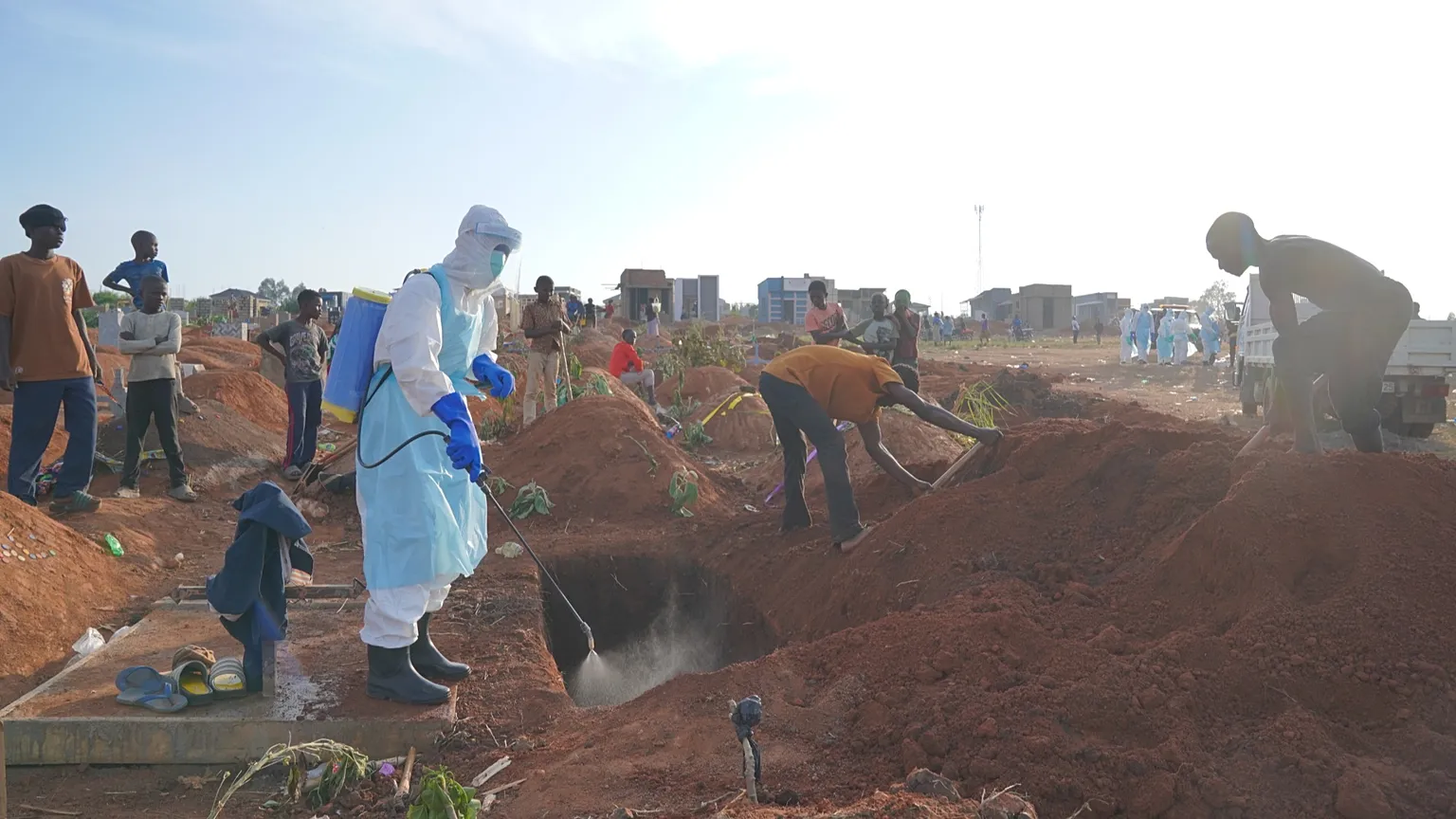
Public health officials and aid groups warn that the outbreak is unfolding in one of the hardest possible places to fight it. Eastern DRC has been racked for years by armed conflict, mass displacement, and a fragile health system, all of which complicate contact tracing, safe burials, and access to treatment centers. Humanitarian organizations including UNICEF and Oxfam have flagged that insecurity in Ituri and North Kivu has at times forced response teams to suspend operations in the very communities where the virus is spreading fastest, allowing chains of transmission to continue undetected.
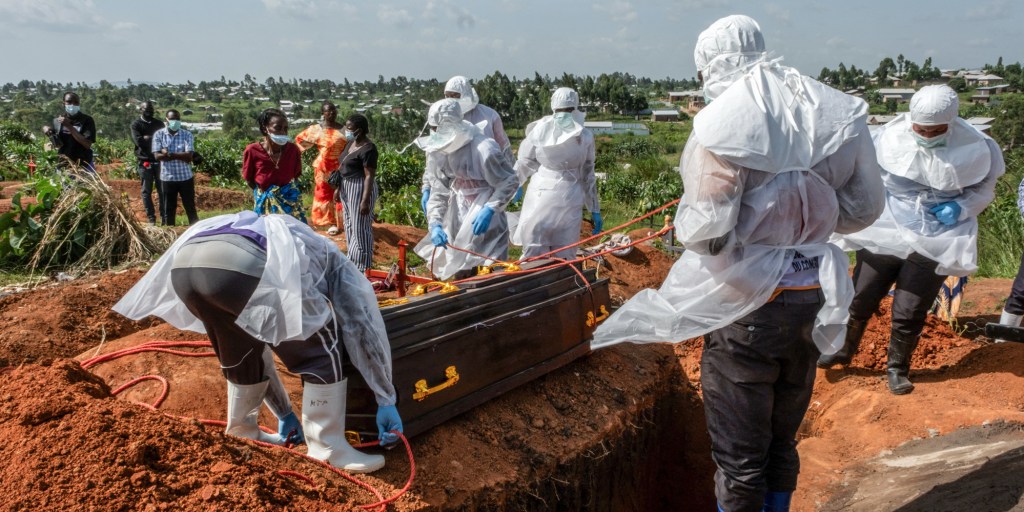
Health workers themselves have paid a steep price. Front-line clinicians, contact tracers and burial teams face some of the highest exposure risk of anyone in the response, a pattern seen in every major Ebola outbreak since the virus was first identified in 1976 — this is, notably, the DRC's 17th recorded Ebola outbreak overall, more than any other country on Earth.
WHAT THIS MEANS FOR YOU
For readers in the United States and other countries far from central Africa, the honest answer is that the immediate personal risk remains very low. Ebola does not spread through the air like flu or COVID-19; it requires direct contact with the bodily fluids of a symptomatic or deceased infected person, which is why hospital-acquired and burial-related transmission has historically driven so much of its spread in affected communities.
That said, global health officials stress that outbreaks like this one are everyone's business, not just a regional crisis, for a simple reason: viruses don't respect borders, as the medical evacuation of the infected American aid worker to Germany already demonstrated. The CDC has issued a health alert notice to American clinicians about the outbreak, urging doctors to ask patients with fever and a travel history to the DRC or Uganda about possible Ebola exposure — a routine but important step in preventing any case from slipping through undetected in a US hospital.
If you are planning travel to the Democratic Republic of Congo, Uganda, or neighboring countries, checking the latest CDC and WHO travel health notices before departure is strongly advised, as is avoiding contact with wildlife (fruit bats and primates are suspected natural reservoirs of Ebola viruses) and, obviously, avoiding any contact with people who are visibly ill.
For the millions of people actually living through this outbreak, the stakes could not be higher. Every week without an approved vaccine or treatment is another week where health workers are forced to rely on the same 1970s-era tools — isolation, quarantine, and painstaking contact tracing — that first-generation Ebola responders used decades before modern medicine caught up with the virus's more famous cousin.
THE BOTTOM LINE
This is now, by every measure epidemiologists track, the worst Bundibugyo Ebola outbreak in recorded history, unfolding in a country that has already seen more Ebola outbreaks than anywhere else on the planet. With case numbers still climbing, a sixth province newly affected, and the WHO's Emergency Committee reconvening on August 18 to weigh its next move, the coming days will likely determine whether the world's third-ever Ebola PHEIC becomes a story of a crisis contained — or one that, like its grim predecessor in 2014, spirals further before it finally breaks.
For now, doctors in Goma, Bunia, and dozens of smaller towns across six provinces keep doing what they can with what little they have: watching for the telltale fever, tracing every contact, and waiting on a clinical trial that could, months from now, finally hand them a weapon this virus has never had to face before.
This is a sensitive and evolving public health situation. Readers who want to follow verified updates should consult the WHO's Disease Outbreak News page and the CDC's traveler health notices directly.
Published By | Features Editor