Nairobi, Kenya
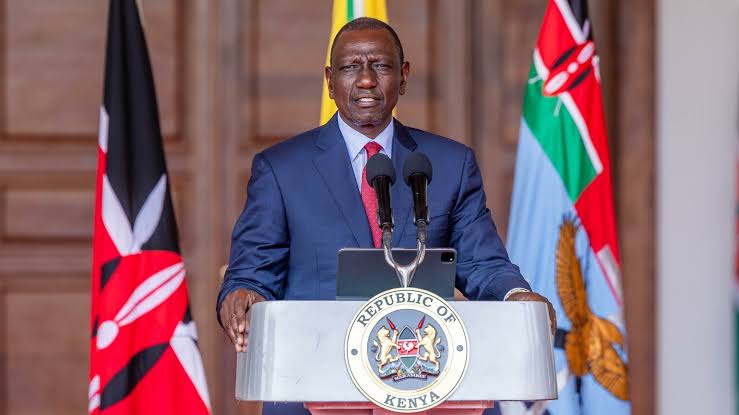
President William Ruto stood in Emurua Dikirr, in Narok County, on Wednesday and made a promise that has become a near-weekly ritual for Kenyan officials this year: that the government would not tolerate armed gangs disrupting political life. "As for the issue of goons, we will deal with it," Ruto told residents during a development tour that included the inspection of a modernized market and the laying of a foundation stone for a technical college hostel. "We want peace in this area. We want unity among the people here so that we can plan and pursue development together. We do not want hostility, conflict or chaos."
The remarks would be unremarkable coming from most heads of state ahead of an election. What makes them notable in Kenya's case is the widening gap between the government's public reassurances and a growing body of evidence — from a violent by-election last month to open finger-pointing between the president's own security officials — that the country's political class is already struggling to contain organized, gang-driven violence more than a year before the 2027 general election.
The by-election that would not stay local
The immediate backdrop to Ruto's remarks is the Ol Kalou parliamentary by-election, held July 16 in Nyandarua County after the death of the constituency's sitting member of Parliament. The result itself was lopsided: Sammy Douglas Kamau Waweru, running for the Democracy for the Citizens Party, won with 35,440 votes against 5,450 for Samuel Muchina Nyagah of Ruto's United Democratic Alliance, according to figures announced by the Independent Electoral and Boundaries Commission's returning officer, Antony Njiraine — a margin of nearly 30,000 votes.
The margin was not what made Ol Kalou a national story. The voting day itself was, according to multiple local outlets, marred by violence: armed men traveling in unmarked four-wheel-drive vehicles fired tear gas near polling stations, while other men armed with sticks moved through crowds intimidating voters. Rigathi Gachagua, the DCP's leader and Kenya's former deputy president, accused security agencies of using excessive force during the vote and alleged that two people were killed and women were sexually assaulted — claims that have not been independently verified by police or election observers but that Gachagua's allies have used to frame the government's conduct in the by-election as a preview of what 2027 could look like nationwide.
Gachagua, who was removed from the vice presidency in 2024 after a fallout with Ruto and has since positioned himself as the president's most prominent rival for the Mt Kenya vote, wasted little time interpreting the result. He declared that the DCP's landslide marked "the political death of UDA in Mt Kenya," arguing that the ruling party had lost the region's support despite what his allies described as a heavy, state-backed campaign push. The vote has since become a proxy battle line for a fight that extends well beyond one constituency: control of the populous Mt Kenya region, a vote bloc that has historically decided Kenyan presidential elections and that Ruto, Gachagua, and Deputy President Kithure Kindiki are all now openly competing to claim.
A government divided on how serious the problem is
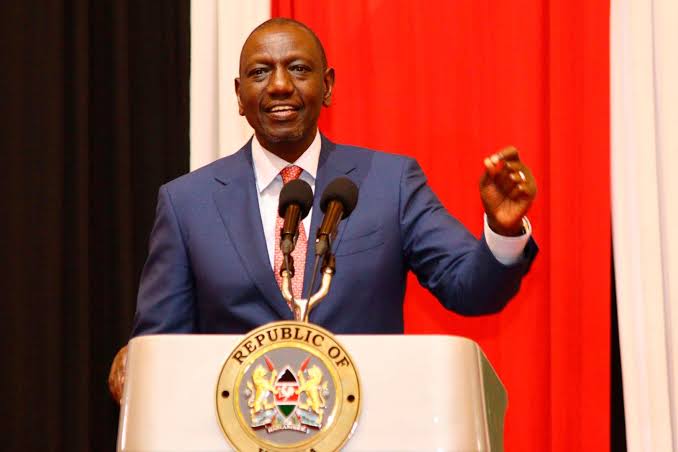
What has kept the story alive through August is not just the by-election itself but the increasingly public disagreement inside Ruto's own government over how to characterize the threat. Interior Cabinet Secretary Kipchumba Murkomen, speaking in Eldoret the Friday before Ruto's Emurua Dikirr appearance, flatly rejected the idea that Kenya faces a security crisis tied to gang activity. "Those trying to say this country is in a crisis because of goons are liars," Murkomen said, arguing that politicians were exaggerating isolated incidents because they lacked the ability to campaign competitively. "The crisis in the country is a bankruptcy of ideas of politicians unable to campaign," he said, using the Swahili term "sanya" — roughly, to hire or procure — to describe how he believes some politicians recruit gangs to fight rivals and then blame the resulting disorder on the state.
That framing sits uneasily next to statements from other senior security officials. Deputy Inspector General of Police Eliud Lagat has had to publicly deny that police officers are colluding with or supporting criminal gangs, while simultaneously acknowledging that "we have had challenges of goons and criminal gangs" and describing new strategies meant to contain them. Gabriel Tongoyo, who chairs the National Assembly's Administration and Internal Security Committee, went further than either Murkomen or Lagat, telling reporters that the proliferation of armed gangs is "almost entirely, if not all," being sponsored by politicians — "the man in tie and big offices," in his words — rather than emerging organically from criminal networks.
The contradiction is politically significant. A government that simultaneously insists there is no national crisis while its own police leadership concedes gang-related disorder and its own parliamentary security chair accuses politicians of sponsoring the violence is not presenting a unified position — and that incoherence is precisely what Gachagua and other opposition figures are using to argue that Ruto's assurances of peace cannot be taken at face value.
Why the stakes go beyond one by-election
Kenya's history with election-season violence is not abstract. The disputed 2007 election triggered weeks of ethnic and political violence that killed more than 1,000 people and displaced hundreds of thousands, a trauma that still shapes how Kenyans and international observers read every subsequent electoral cycle. More recently, the country lived through the 2024 Finance Bill protests and the broader 2025 wave of youth-led demonstrations — driven by anger over the cost of living, police brutality, and government accountability — that showed how quickly public frustration can escalate into sustained unrest even outside a formal election period.
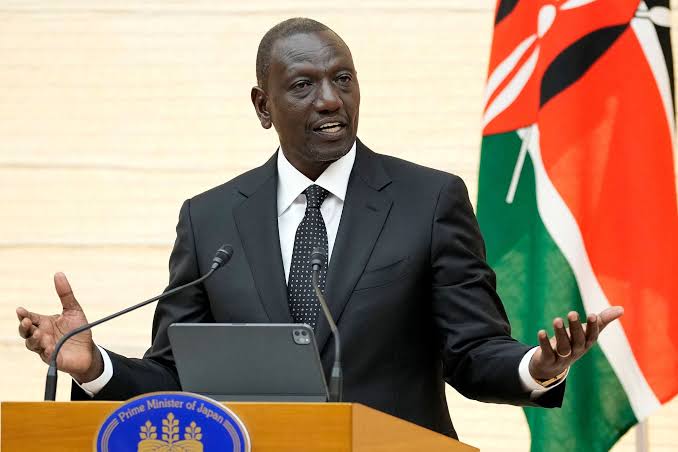
Against that backdrop, allegations of armed men disrupting a single parliamentary by-election in Nyandarua carry weight far beyond the constituency itself. If unresolved rivalries between security forces, ruling-party operatives, and opposition-aligned groups can produce masked men firing tear gas and allegedly assaulting voters in a low-stakes local contest, the fear among civil society groups and diplomats who track Kenyan politics is straightforward: what happens when the contest is the presidency itself, and every county in the country is voting on the same day.
The Ruto-Gachagua-Kindiki triangle compounds the risk. Gachagua was Ruto's running mate in 2022 before their alliance collapsed and Kindiki was elevated to the deputy presidency in his place — a shift that left Gachagua politically wounded but far from finished, particularly in his Mt Kenya home base. The DCP's Ol Kalou win suggests Gachagua retains real organizational strength in the region UDA needs to win reelection, which raises the incentive for all sides to contest not just votes but the streets and airwaves between now and 2027.
Economic grievance runs underneath much of this tension. Kenya's youth unemployment rate remains high, and the cost-of-living pressures that fueled the 2024 and 2025 protest waves have not eased substantially, leaving a large pool of young, underemployed men available for recruitment by whichever political camp is willing to pay them — a dynamic Tongoyo pointed to directly when he said gang sponsorship traces back to politicians "in tie and big offices" rather than to criminal masterminds operating independently. Civil society groups, including election-monitoring organizations that observed the Ol Kalou vote, have called for an independent, cross-party commission to investigate gang financing ahead of 2027, arguing that neither the Interior Ministry nor the police can credibly investigate allegations that implicate the political system they serve. So far, no such commission has been established.
What to watch next
Several signals will indicate whether Wednesday's assurances translate into anything concrete. First, whether the National Police Service opens and publishes findings from any formal investigation into the Ol Kalou violence, including Gachagua's allegations of two deaths and sexual assaults — allegations that, if substantiated, would represent a significant escalation from the disruption tactics Kenya has seen in recent by-elections. Second, whether Murkomen's dismissive posture toward "national crisis" framing hardens into government policy that downplays future incidents, or whether pressure from officials like Tongoyo pushes the Interior Ministry toward a more aggressive, cross-party effort to identify and prosecute gang sponsors. Third, watch the Mt Kenya region specifically: further by-elections, DCP organizing events, or UDA countermobilization there will serve as the clearest early indicator of whether 2027 is shaping up to be a contest decided by voters or, as critics now fear, contested in the streets first.
Published By | News Editor