BUSINESS
Nearly two decades after commercially viable oil was first confirmed in the Albertine Graben, Uganda's long-promised "first oil" is now within weeks of reality. TotalEnergies and the government are targeting late September 2026 for the country's first commercial barrel, with the export pipeline to Tanzania's coast reported to be more than 90 percent complete and the two flagship oilfield projects at or beyond the well counts required to begin production.
What Is Happening
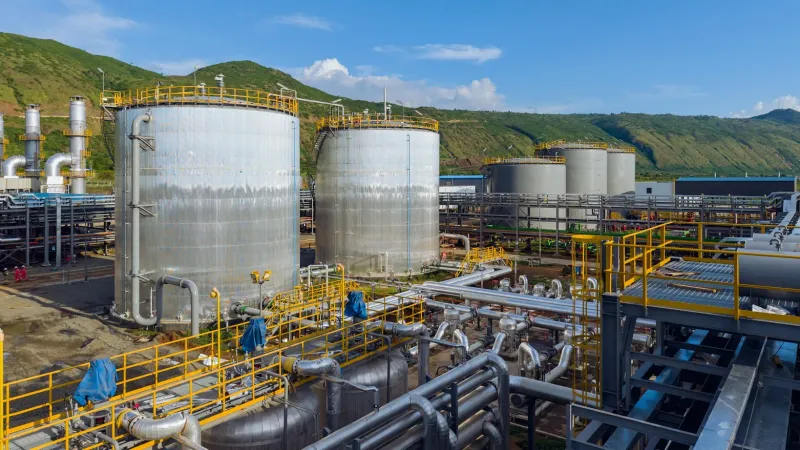
Officials and project operators now say Uganda is entering the "high-stakes" final phase of its oil development after years of delay. The Tilenga project has drilled 198 wells, comfortably clear of the 170 required for initial production, while the Kingfisher project has completed 21 wells against a threshold of 19. The Central Processing Facility at Kingfisher is reported to be effectively complete and undergoing commissioning. The 1,443-kilometre East African Crude Oil Pipeline (EACOP), which will carry crude from the Albertine Graben fields to the port of Tanga in Tanzania, has passed the 90 percent completion mark. Government and TotalEnergies statements now point to late September as the target date for the first barrel, a modest slip from earlier mid-2026 projections but a significant tightening compared with the years of repeated delay that preceded it.
The shift from "first oil expected in 2026" to a specific, near-term month is itself significant: Uganda's oil timeline has moved so many times since discovery in 2006 that skipping through five energy ministers and four finance ministers, as one recent retrospective put it, has become something of a running theme in local coverage of the sector.
Background and Context
Uganda confirmed commercially viable petroleum reserves in the Lake Albert basin in 2006, and the country has since raised its estimate of recoverable oil and gas resources to roughly 1.65 billion barrels, up from an earlier 1.4 billion. The project architecture rests on three pillars: the Tilenga upstream development operated by TotalEnergies, the Kingfisher development operated by the China National Offshore Oil Corporation (CNOOC), and EACOP, the export pipeline that will move crude to international markets via Tanzania since Uganda is landlocked.

Financing and construction of EACOP in particular have been dogged by controversy. On July 7, 2026, four Ugandan farmers filed a lawsuit in the High Court of England and Wales alleging that the pipeline's construction violated their human rights and Uganda's own environmental and constitutional protections, including the National Environment Act and National Climate Change Act. The claim, filed shortly before the pipeline was due to begin operations, argues EACOP could generate more than 370 million tonnes of CO2-equivalent emissions over its operating life and points to reports that more than 100,000 people have been displaced by the project, with some still awaiting adequate compensation. TotalEnergies and the Ugandan government have defended the project, and a Pan-African commentary published around the same time argued that a UK court should not be the venue for deciding Uganda's energy future. EACOP is majority-owned by TotalEnergies and is valued at roughly $5.6 billion; production from the fields it will serve is projected to continue for about 20 years.
Economically, the broader picture heading into first oil looks unusually positive for Uganda. The Business Climate Index rose sharply in the second quarter of 2026, climbing 20.1 points to 124.9, up from 104.8 in the first quarter, with firms in transport, trade and hospitality reporting improved expectations as activity picked up. Uganda posted a Balance of Payments surplus of $2.47 billion in the twelve months to March 2026 — the largest in fifteen years — while exports have hit record levels and the shilling has remained stable. GDP growth is projected at 6.8 percent for 2026, with some government forecasts putting growth as high as 10.2 percent in the 2026/27 financial year once oil production ramps up.
Who the Main Players Are
TotalEnergies, as operator of the Tilenga project and majority owner of EACOP, is the dominant commercial actor driving the September timeline. CNOOC operates the smaller but equally essential Kingfisher project. On the government side, President Museveni has been the project's chief political sponsor for two decades, while Finance Minister Henry Musasizi has been the public face of plans for how oil revenue will be spent, including a proposed sovereign wealth fund. Uganda's Ministry of Energy and Mineral Development and the Petroleum Authority of Uganda oversee regulatory and licensing functions. On the other side of the ledger, the Ugandan farmers pursuing the UK lawsuit, backed by international environmental and human rights organisations, represent the most organised opposition to how the project has been executed, even as they are not seeking to block Uganda's right to develop its oil resources outright.
Why It Matters
First oil is both an economic and a political milestone. Financially, the government projects oil and gas revenues of roughly 1.44 trillion Ugandan shillings in the 2026/27 financial year, with state revenues from the sector eventually averaging an estimated $1 billion to $2.5 billion annually depending on production volumes and global prices. Museveni has told Parliament that around $1.5 billion a year in government oil revenue could be strategically invested, and has proposed a sovereign wealth fund to prevent what he has called "frivolous spending," directing attention instead toward infrastructure such as the country's railway network. The government's five-pillar growth programme aims to expand Uganda's economy roughly tenfold, from about $50 billion to $500 billion by 2040, with oil revenue positioned as a central pillar of that ambition.
The sector has also already created substantial employment: officials cite close to 20,000 Ugandans in direct oil-sector jobs and more than 180,000 in indirect roles, with Ugandans holding 64 percent of management positions and 85 percent of technical roles across the projects — a local-content record the government has repeatedly emphasised as evidence the sector will benefit citizens rather than only foreign operators and investors.
At the same time, the unresolved UK litigation and long-standing concerns about displacement and compensation mean that first oil will not arrive without controversy. How the government and TotalEnergies respond to the farmers' claims, and whether compensation and environmental commitments are seen to be honoured, will shape the domestic and international narrative around the project for years to come.
What to Watch Next
The immediate marker to watch is whether the late-September target holds, given the sector's long history of slipped deadlines. Beyond that, attention will turn to how quickly EACOP moves from near-completion to actual crude flow once Tilenga and Kingfisher output starts reaching the pipeline. On the fiscal side, the 2026/27 budget's oil revenue projections will be tested against actual production and global oil prices in the months after first oil is achieved. The UK court proceedings brought by Ugandan farmers will also continue to develop and could produce a ruling or settlement that affects how the project is perceived internationally. Finally, how the government structures and governs the proposed sovereign wealth fund — and whether early oil revenue is visibly channelled into the infrastructure and development priorities Museveni has outlined — will be an early test of whether Uganda avoids the resource-management pitfalls seen in other oil-producing nations.
Published By | Business News Editor