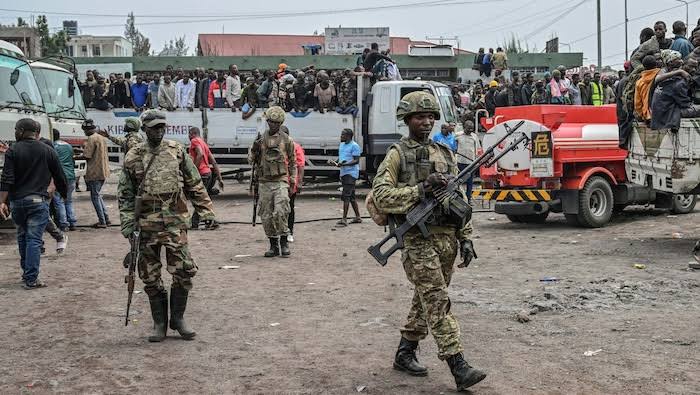
Goma/Kinshasa, DRC
More than a year after the United States brokered a peace agreement between the Democratic Republic of the Congo and Rwanda, and more than a year after Congolese officials and the M23 rebel movement agreed to a separate ceasefire in Doha, the two sides are fighting each other with attack drones over territory in South Kivu province — the clearest sign yet that the diplomatic architecture assembled in Washington and Qatar has failed to stop the war it was designed to end.
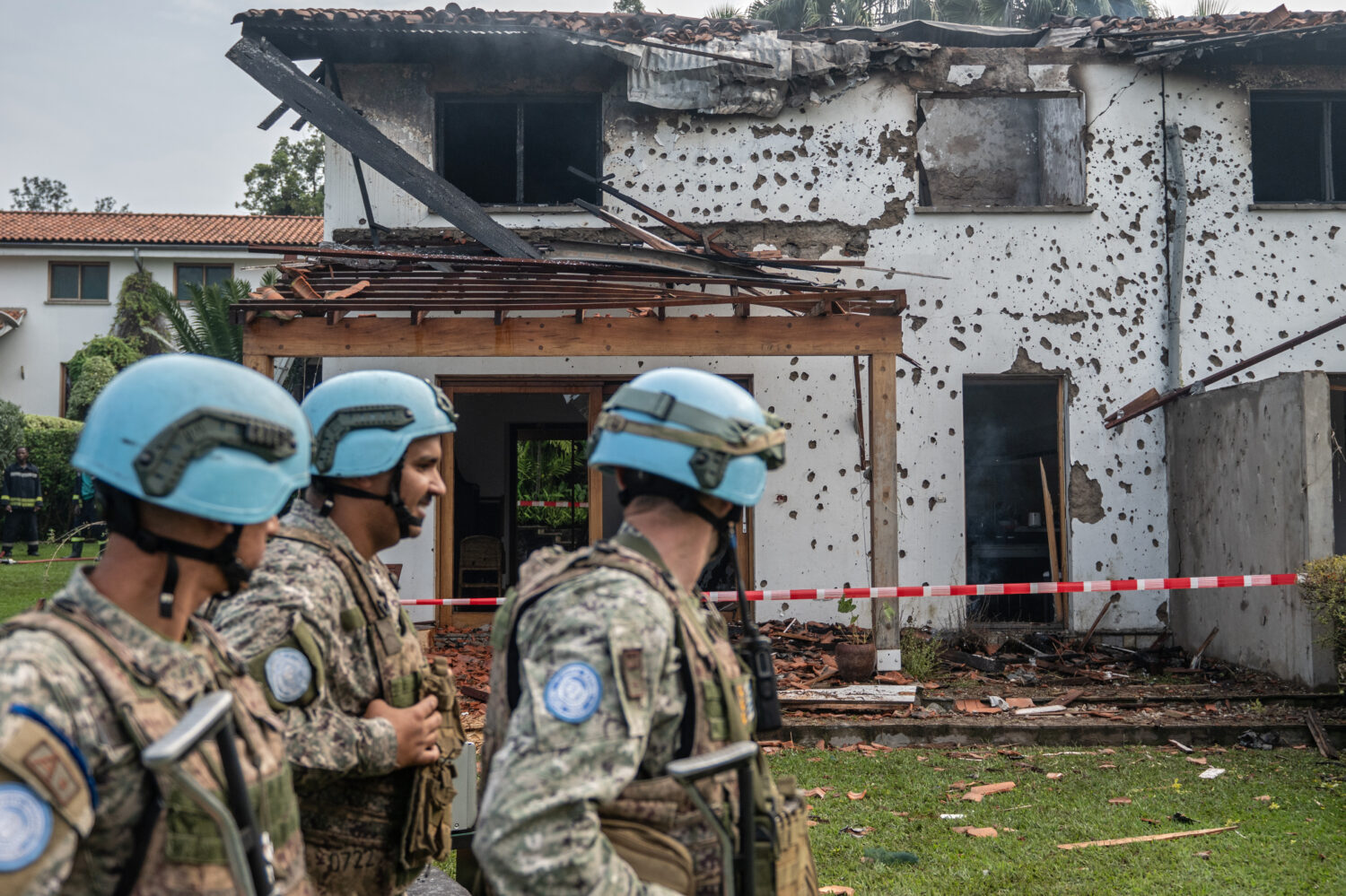
The United Nations human rights office said this month that at least 74 people had been killed and more than 80 wounded in the latest round of clashes in eastern Congo, part of an intensifying fight between the Congolese army (FARDC) and the Rwanda Defence Force-backed M23 movement in South Kivu's Fizi and Mwenga territories. UN High Commissioner for Human Rights Volker Türk said on July 9 that he was "appalled" by the toll on civilians, after intense fighting around the village of Mulima in Fizi on July 4 and 5 involved both sides deploying armed drones, heavy artillery and other explosive weapons in populated areas. "It is deeply troubling that despite the agreements reached as part of the ongoing peace processes, fighting continues unabated in eastern DRC — killing, injuring and displacing civilians and destroying livelihoods," Türk said.
A War That Predates — and Has Outlasted — Two Peace Frameworks
The current phase of the conflict began in 2021 and 2022, when M23 — a Congolese Tutsi-led rebel movement whose roots trace back to the aftermath of the 1994 genocide against Tutsis in Rwanda — resumed an insurgency against Kinshasa after a decade of dormancy. The group, which the United States, the United Nations and independent experts say is armed, trained and reinforced by Rwanda's military, has since seized large swaths of North and South Kivu, including the provincial capital Goma, displacing millions of Congolese in the process. The UN estimates that more than seven million people remain displaced inside Congo, the majority in the country's mineral-rich eastern provinces.
Two separate diplomatic tracks were supposed to end the fighting. In Washington on June 27, 2025, the DRC and Rwanda signed a U.S.-mediated peace agreement establishing a framework for troop withdrawals, the neutralization of armed groups and a regional economic integration plan tied to Congo's vast reserves of cobalt, coltan, gold and other minerals. Weeks later, in July 2025, Congolese government negotiators and M23 representatives signed a separate, Qatar-mediated declaration of principles in Doha that formally barred military attacks, territorial advances, and aerial or artillery bombardment by either side. On Dec. 4, 2025, Presidents Félix Tshisekedi of Congo and Paul Kagame of Rwanda met again in Washington to sign what the two governments called the Washington Accords for Peace and Prosperity, reaffirming the June agreement's terms under continued U.S. oversight.
None of the three signings has translated into a durable calm on the ground. Six days after the December Washington signing, M23 announced it had captured Uvira, the last major government-held settlement in South Kivu, prompting Tshisekedi to tell Congolese lawmakers that Rwanda had violated the peace accord it had just signed. In February, a separate ceasefire proposal brokered by Angolan President João Lourenço and set to take effect Feb. 18 collapsed within a day, with M23 publicly stating it did not recognize the Angolan-mediated track and remained committed only to the Doha process; the FARDC and M23 then accused each other of attacking positions in North and South Kivu on Feb. 18 and 19, with Kinshasa alleging Rwandan special forces had taken part directly in the fighting.

Fighting Shifts to South Kivu's Highlands
The latest escalation has centered on the highland territories of Fizi and Mwenga, where in mid-June, fighters from Twirwaneho — a local armed group allied with the broader AFC-M23 political-military coalition — fought Congolese forces backed by Burundian troops and pro-government Wazalendo militias for nearly a week around the town of Minembwe. That fighting gave way in early July to the clashes around Mulima that drew Türk's public rebuke, with both the FARDC and M23 employing drones for reconnaissance and strikes: Congolese forces have targeted M23 leadership and positions, while M23's own drone strikes have reportedly focused on the launch sites Congo's military uses for its aerial operations. Analysts tracking the conflict describe the growing use of both attack and suicide drones by both sides as a qualitative escalation from the artillery- and small-arms-dominated fighting of previous years, one that increases the risk to civilians living near contested front lines.
The International Contact Group for the Great Lakes, which includes regional and Western governments engaged in the peace process, issued its own statement expressing alarm at the drone escalation, warning that it undermines the very peace architecture its members have spent more than a year building.
Washington Turns to Sanctions Over Minerals
As the ceasefire process has stalled, the United States has increasingly used sanctions rather than diplomacy alone to pressure Rwanda. In June, the Treasury Department's Office of Foreign Assets Control designated the Gasabo Gold Refinery and a network of Rwandan mining companies — Bugambira Mines, Wolfram Mining and Processing, and Rwinkwavu Mining Corporation — along with two individuals, refinery chairman Jean Malic Kalima and managing director Bosco Kayobotsi, accusing them of laundering gold smuggled out of eastern Congo. Treasury alleged that at least 60 kilograms of gold — worth millions of dollars — flowed from eastern Congo into the refinery in early 2026 alone. The administration framed the sanctions as an effort to protect the Washington Accords by cutting off the mineral revenue it says has helped sustain M23's campaign, part of a broader pattern of U.S. sanctions this year targeting Rwandan military officials and companies linked to the conflict-minerals trade.
Rwanda has consistently denied that it commands or arms M23, characterizing the group as an autonomous Congolese Tutsi movement responding to legitimate security grievances, including the presence of the FDLR — a Hutu militia with links to the perpetrators of the 1994 genocide — operating in eastern Congo. Kigali has also cast U.S. and UN sanctions as one-sided, arguing they ignore the FARDC's own alliances with Wazalendo militias accused of abuses against civilians.
What Comes Next
The core problem facing every diplomatic track — Doha, Washington and the abortive Angolan initiative — is the same: none has produced a verifiable, enforced mechanism to stop fighting on the ground, and each new round of violence erodes confidence that the next agreement will fare any better. The Joint Oversight Committee established under the Washington framework met as recently as March to discuss "concrete steps," but even the committee's own communiqués have acknowledged what one September 2025 assessment bluntly called "slowness" in implementation.
For Congolese civilians in Fizi, Mwenga and the surrounding highlands, the practical consequence of stalled diplomacy is a war that has adapted to new tools — drones capable of striking targets far from traditional front lines — without any of the restraint the peace agreements promised. Whether the growing menu of U.S. financial sanctions can succeed where three rounds of signed agreements have not is the central open question hanging over the conflict as it heads toward its fifth year. Regional diplomats say further Joint Security Coordination Mechanism talks are expected in the coming weeks, but with M23 holding most of its territorial gains and both sides continuing to invest in drone capability, there is little on the ground in South Kivu to suggest the shooting will stop first.

Why the World Is Watching Congo's Minerals
Part of what distinguishes this conflict from other African wars competing for international attention is the economic weight of the ground being fought over. Eastern Congo holds some of the world's largest reserves of coltan and cobalt, minerals essential to smartphone batteries, electric vehicles and other technology on which global supply chains depend, along with substantial gold deposits of the kind at the center of the June Treasury sanctions. That economic dimension is precisely why the Washington framework paired security provisions with a regional economic integration plan: American officials have been explicit that formalizing mineral supply chains and reorienting them toward Western markets, rather than leaving them to armed groups and smuggling networks, is a central goal of the peace process, not a side benefit. It is also why critics on both sides of the conflict accuse outside powers of pursuing access to Congo's resources under the cover of peacemaking — a suspicion that has complicated Kinshasa's efforts to present the Washington and Doha tracks as serving Congolese, rather than great-power, interests.
The humanitarian toll compounds the political stakes. South Kivu alone has seen more than 850,000 people forced from their homes as fighting has resurged in the province, according to the UN refugee agency, with the Minembwe highlands fighting in February displacing over 200,000 civilians in a matter of weeks. That displacement has collided with one of Congo's worst public health emergencies in years: the country recorded 6,543 new cholera cases and 148 associated deaths in January alone, a jump of 39% and 66%, respectively, from December, with South Kivu accounting for roughly a third of all cases nationwide. Aid workers say persistent insecurity along main roads forces relief convoys into long detours around active front lines, delaying cholera treatment and clean-water delivery to displacement sites at the exact moment need is highest — a dynamic that has become self-reinforcing as each new round of drone and artillery exchanges pushes the humanitarian response further out of reach of the communities that depend on it.
Published By | News Editor