ABUJA, Nigeria
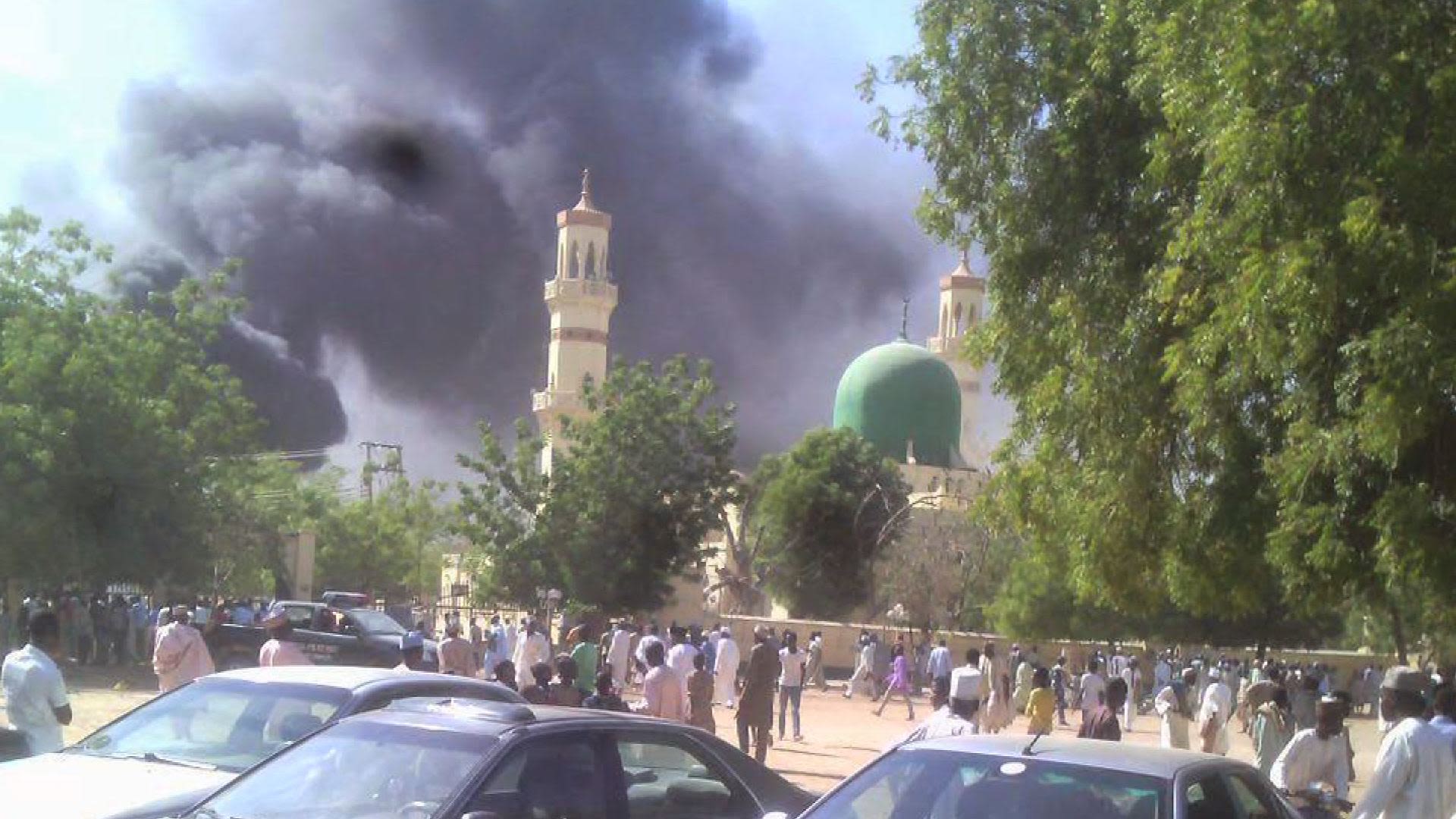
Gunmen stormed four mosques in Nigeria's Niger State during Friday prayers last week, killing close to 30 worshippers and abducting more than 60 others in a coordinated assault that has forced President Bola Tinubu to order a nationwide manhunt just as his campaign for a second term formally gets underway. The attack, among the deadliest mass-casualty incidents of the year, has reignited a debate that has dogged Tinubu's presidency since 2023: whether his government can protect ordinary Nigerians from an insurgent and criminal landscape that continues to metastasize across the country's north and Middle Belt, even as it asks voters to look past economic pain and grant it a second term.
The assault unfolded on Friday, Aug. 21, when heavily armed men descended simultaneously on mosques in the villages of Dekara, Kpenya, Sabon-Gida and Gidan-Zana, all in the Borgu Local Government Area of Niger State, near the country's borders with Benin Republic and the states of Kebbi and Kwara. According to Mohammed Abdullahi, chairman of the Borgu council, the attackers ordered worshippers out of the mosques mid-prayer and marched them into the surrounding forest. "From the records I have, those kidnapped were a little above 60. Those who were killed were close to 30," Abdullahi said in a telephone interview, adding that the military had since restored calm but that many residents had fled to safer areas. Gunmen also set fire to several homes, including the residence of Dekara's district head, Abubakar Umar, and later circulated a video online showing the captives, taunting survivors to identify their relatives among them.

It remains unclear which group carried out the attack. Local reporting indicates the Dekara axis has been under the influence of Ansaru, an al-Qaeda-linked faction that has expanded its footprint in Nigeria's north-central region, while elements of a Boko Haram franchise and the Lakurawa militant group have also been shifting into the area, blurring the lines of responsibility along Nigeria's northwestern and Middle Belt frontier. That ambiguity is itself telling: Niger State, once considered relatively insulated from the jihadist violence concentrated in the northeast and the banditry endemic to the northwest, has increasingly become a convergence zone for multiple armed groups, a shift security analysts have flagged for more than a year.
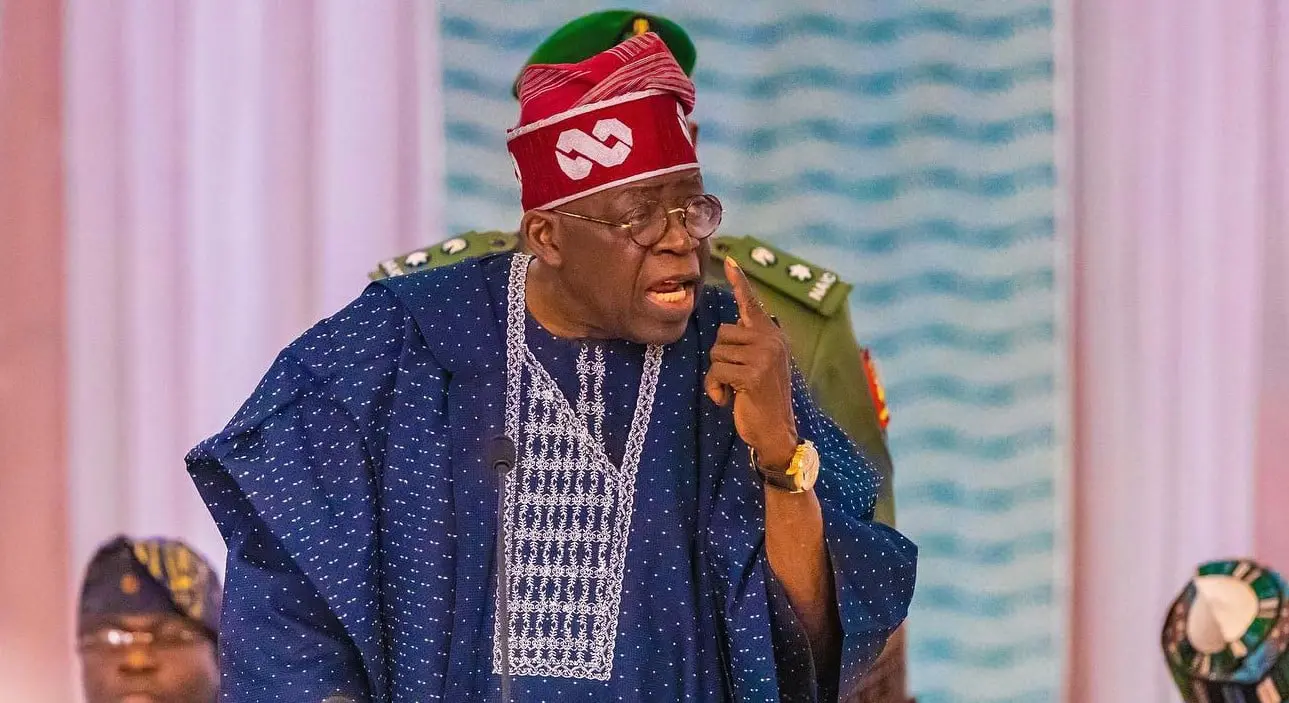
Tinubu responded on Tuesday through presidential spokesperson Bayo Onanuga, directing the armed forces, the Nigeria Police Force, the State Security Service and other intelligence agencies to launch what the statement called an immediate "coordinated rescue operation." "Those who carried out this cowardly attack on defenceless Nigerians are enemies of peace and enemies of humanity, who will not go scot-free," Tinubu said, extending condolences to victims' families and vowing that "the entire nation shares your anguish." He pledged that federal authorities would provide "all necessary support" to Niger State's government for recovery, relief and reinforced security, and ordered service chiefs to brief him regularly until every abducted worshipper is accounted for. Police have since confirmed a joint security deployment to the affected communities, and residents of Borgu have appealed for a sustained presence rather than a one-time show of force, noting that dozens of families have already crossed into Benin Republic or resettled in the town of New Bussa after attackers threatened to kill anyone who remained.
The Niger State attack lands at a politically combustible moment. Tinubu formally entered the race for a second term this month, and the early weeks of campaigning have been dominated by the twin grievances of economic hardship and insecurity — the same forces that have shadowed his three years in office. Since taking power in 2023, Tinubu has pursued a program of fuel-subsidy removal and foreign-exchange liberalization that economists and the International Monetary Fund credit with improving macroeconomic stability, but which has driven up the cost of living for millions of Nigerians. Speaking to Al Jazeera, Ilorin shopkeeper Shukurat Oyedele described a 21-liter bucket that cost 1,500 naira two years ago now selling for roughly 3,200 naira, forcing customers to delay purchases or buy in smaller quantities. "The government has to convince Nigerians that those gains will eventually translate into better lives, and give them a credible reason to wait for that to happen," Sekinat Ojeniyi, a senior analyst at the risk advisory firm Africa Practice, told the network.
Insecurity compounds that economic anxiety. Nigeria was recently ranked the world's fourth most terrorism-affected country in the 2026 Global Terrorism Index, and at least 1,100 people were kidnapped across the country's north between January and April of this year alone, according to figures cited by regional outlets tracking the crisis. Opposition figures have seized on the toll. Former Vice President Atiku Abubakar and former Anambra State Governor Peter Obi, both expected to again challenge Tinubu in 2027, have accused the administration of prioritizing political maneuvering over governance while bandits and jihadists operate with relative impunity in large stretches of the country. Anne Ochayi, a 31-year-old lawyer who commutes through Nigeria's Middle Belt, told Al Jazeera that insecurity, not economic policy, is her paramount concern heading into the vote. "We all live in fear," she said. "If this issue of insecurity persists, they can't convince me to vote for them."
Yet analysts caution against assuming that public anger over insecurity will translate automatically into electoral consequences for Tinubu. Cheta Nwanze, a partner at the Nigerian research firm SBM Intelligence, argued that the president's path to reelection depends less on persuading disillusioned voters than on the continued fragmentation of the opposition. With Atiku, Obi and other prominent figures so far unable to unite behind a single challenger, Nwanze said, "the mathematics favour Tinubu even with weak personal numbers." The ruling All Progressives Congress also retains a formidable organizational advantage, having controlled the federal government and built an extensive grassroots network since 2015 — an edge that matters disproportionately in a country where elections are often decided as much by local mobilization as by national sentiment. Ojeniyi framed the stakes even more broadly, suggesting the 2027 vote is "also a referendum on the quality of Nigeria's political opposition and, more broadly, on whether our democracy is producing meaningful choices for citizens."
The Niger State massacre is unlikely to resolve that debate on its own, but it sharpens the political terrain on which it will be fought. Every mass-casualty attack forces the Tinubu government into a defensive crouch, reciting condolences and security directives that critics say rarely translate into a durable change in the threat landscape. The government's framing of the assault — condemning the perpetrators as "enemies of humanity" while emphasizing federal solidarity with Niger State — mirrors its response to a string of earlier attacks over the past two years, including a mosque attack in Katsina State in 2025 and a wave of assaults in Kwara State earlier this year, underscoring how routine such statements have become even as the underlying security architecture struggles to keep pace with a fluid and multiplying array of armed actors.
What happens next will matter both operationally and politically. The scale of the rescue operation — and whether security forces can recover a meaningful share of the more than 60 worshippers still believed to be in captivity — will shape public perception of the government's competence in the near term. Nigerians will also be watching whether the attack prompts any structural response beyond troop deployments: expanded intelligence-sharing across state lines, additional resources for community policing in border areas like Borgu, or a renewed push for the kind of state-police reform that security experts have long argued Nigeria needs but that successive administrations have been reluctant to implement. For Tinubu, the test is not simply defending his economic reforms, as Al Jazeera's reporting has framed the broader campaign narrative, but demonstrating that his government can secure the basic safety of citizens attending Friday prayers in their own villages — a bar that, three years into his presidency, Nigeria's security forces have yet to consistently clear. With the 2027 election still more than a year away, incidents like the Borgu attacks are likely to recur, and each one will retest whether insecurity has become, at last, the electoral liability that opposition strategists have long predicted it would be.
Published By | News Editor