Written By | Evan Sande Ndahura
Sande Evan Ndahura is a Ugandan writer, poet, political thinker, and social commentator.
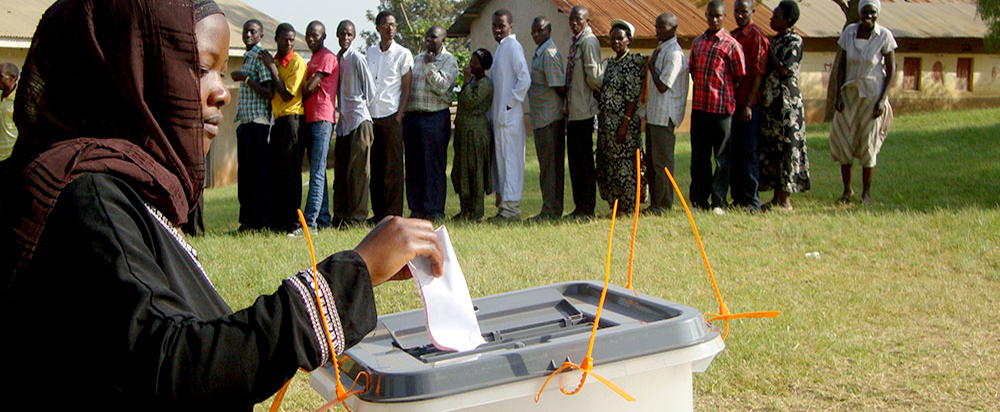
According to the Electoral Commission, President Yoweri Kaguta Museveni was declared the winner in the recent Ugandan general election with 7,946,772 votes (71.65%), while Robert Kyagulanyi Ssentamu (Bobi Wine) followed with 2,741,238 votes (24.72%). Other candidates received far smaller shares of the vote. Yet only about 52.5% of registered voters turned up to cast a ballot nationwide, a figure that has raised alarm among political commentators and civil society observers.
This turnout represents the lowest participation in a presidential and parliamentary election since the reintroduction of multiparty politics in 2005–2006, and it forces the country to confront uncomfortable questions about the legitimacy, inclusivity, and health of its democratic processes.
Why Did So Many Ugandans Stay Home?
1. Mistrust in the Electoral Process:
Many voters have increasingly expressed scepticism about whether elections produce genuine change or a real transfer of power. Repeated allegations of irregularities, lack of transparency, and a perception that outcomes are predetermined contribute to apathy.
2. Fear and Intimidation:
Campaign periods in Uganda have often been marred by violence, arrests, and repression, particularly targeting opposition rallies and supporters. Such insecurity can discourage turnout, especially among young and urban voters.
3. Technical and Logistical Failures:
In the 2026 election, biometric voter verification kits malfunctioned in several areas, forcing manual checks and long delays at polling stations. Additionally, an internet shutdown limited information flows and may have frustrated would-be voters.
4. Youth Disillusionment:
A large segment of Uganda’s population is young, yet many feel that elections do not address pressing issues such as unemployment, poverty, and lack of opportunities. For some, staying home is a form of protest.
Danger for Democratic Maturity
A turnout just over half of eligible voters has serious implications:
Weakened Mandate:
When nearly half the electorate abstains, the winning candidate’s legitimacy may be questioned—not just by opposition parties, but by citizens themselves. This can weaken the moral authority of government and entrench political apathy.
Undermined Representation:
Democracy thrives when diverse voices participate. Low turnout often reflects exclusion—whether real or perceived—and reduces the representativeness of elected institutions.
Erosion of Civic Culture:
If citizens come to view elections as futile, repetition deepens disengagement and erodes the idea that ordinary people have power over public policy and leadership.
Elite Perceptions and Voter Complacency
Many within Uganda’s political and economic elite demonstrate ambivalence toward mass participation because:
This elite disengagement signals a dangerous disconnect between leadership and the broader citizenry.
Turnout in Previous Elections: A Declining Curve
The trend of falling voter participation is well documented:
The overall pattern shows a persistent decline, with occasional small rebounds but a clear drift away from robust participation. These fluctuations are symptomatic of deeper systemic and political issues that cannot be remedied by election machinery alone.
Conditions Contributing to Fluctuating Turnout
Several persistent factors shape voter turnout trends in Uganda:
Political Suppression:
Restrictions on opposition, media, and civil society create an environment where many voters doubt that their participation leads to meaningful change.
Economic Strain:
Where citizens struggle with basic needs, electoral engagement can be deprioritised in favour of survival concerns.
Information Barriers:
Weak civic education and limited voter awareness about the stakes of elections contribute to disengagement.
Disillusionment with Promises:
When past electoral promises remain unfulfilled, voters become cynical about future participation.
Conclusion: A Democracy at a Crossroads
Uganda’s 52.5% voter turnout is more than a statistic; it is a barometer of a democracy in distress. When nearly half of eligible voters withdraw from the electoral process, the very foundation of representative government is weakened. If this trajectory continues, electoral outcomes risk becoming rituals devoid of substance—where a few decide for the many.
Reversing this trend demands more than logistical fixes; it requires restoring citizen confidence, protecting political freedoms, and fostering a civic culture that values participation as both a right and a responsibility.
For Uganda to mature politically, it must ensure that elections are meaningful, inclusive, and seen as instruments of real change—not instruments of perpetuated power.
About the Writer
Sande Evan Ndahura is a Ugandan writer, poet, political thinker, and social commentator. He is a Pan-Africanist who believes in liberation through a mighty pen rather than a gun. Drawing from his previously published work on governance, political education, and democratic accountability, Ndahura explores the intersection of civic participation and national development, with a particular focus on youth consciousness and electoral integrity in Africa.



