Written By |
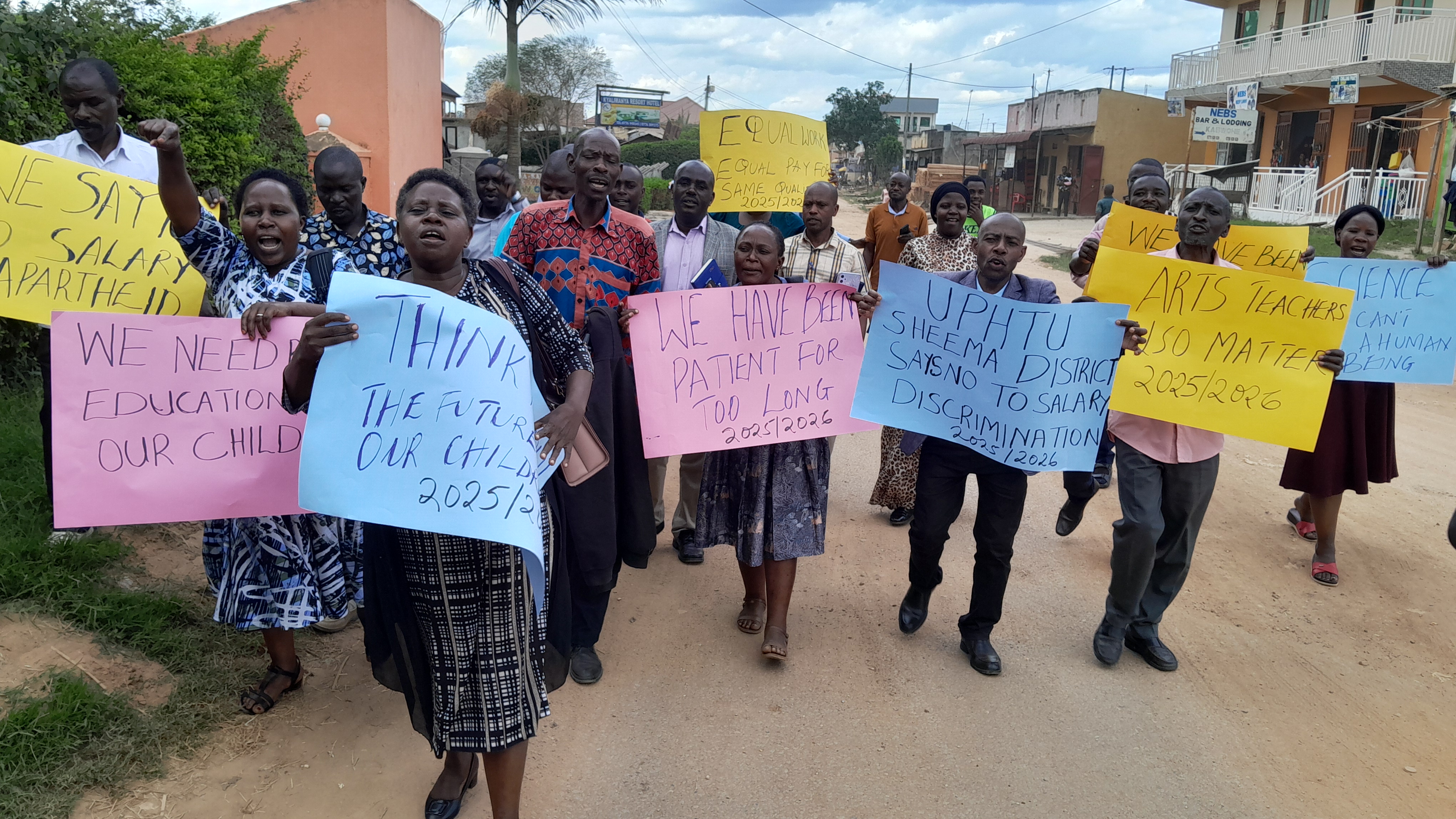
Teachers says students, particularly those studying arts subjects, feel uncertain about their future
By Our Reporter
Sheema - Arts teachers in Sheema District, under the Uganda Professional Humanities Teachers Union (UPHTU), have intensified their strike over poor remuneration and salary disparities compared to science teachers.
The teachers laid down their tools on May 22, 2025, protesting what they describe as the government's continued marginalization of arts educators.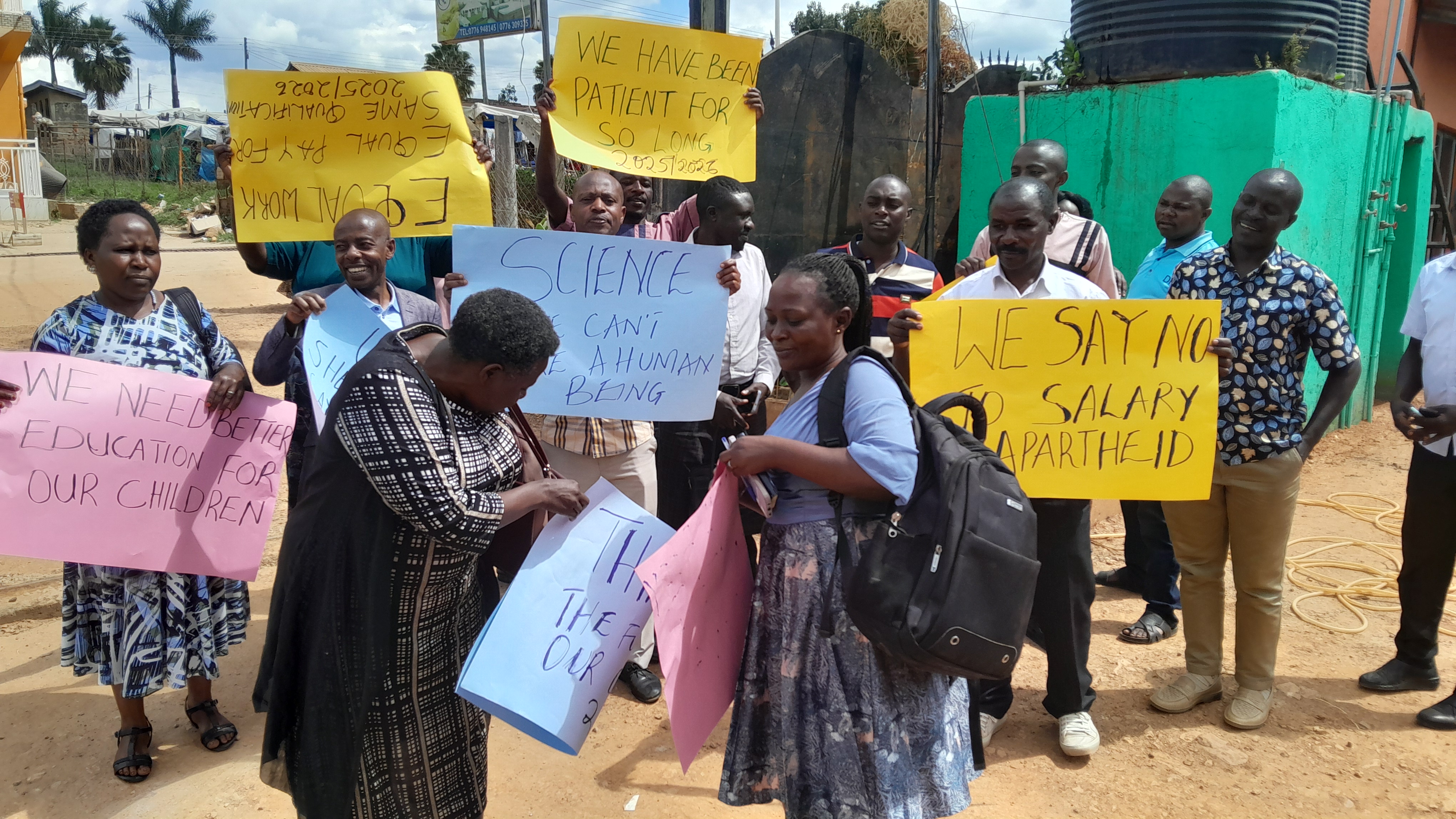
On June 12, 2025, the striking teachers took to the streets of Kabwohe Town in Sheema Municipality, demanding immediate government action. They held placards with messages such as "Think about the future of our children," "We need better education for our children," "Equal work, equal pay for the same education," and "We have been patient for too long."
According to Ahebwa Enock, the UPHTU Chairperson for Sheema District, arts teachers have received only a 26% salary increment, compared to 76% for science teachers.
"This disparity is not only unfair but demoralizing," Ahebwa said. "We are all qualified professionals, yet we are being treated unequally."
In a resolution passed during the demonstration, the teachers agreed to remain at home and abstain from all school-related duties—including teaching, coaching sports, and training students in music, dance, and drama (MDD)—until their demands are met.
"We shall not resume teaching unless our concerns are fully addressed," Ahebwa declared. "We demand a 77% salary increment. Diploma holders should earn at least UGX 2.2 million, while those with bachelor's degrees should receive UGX 4.5 million."
The teachers also called on the government to increase salaries for non-teaching staff on the government payroll, including school cooks, secretaries, bursars, and librarians. They argued that these support roles are critical to the smooth running of schools and deserve better compensation.
Musokye Henry, the UPHTU Publicity Secretary in Sheema District, expressed deep frustration over the government’s failure to honor the 2018 Collective Bargaining Agreement, in which it committed to gradually increasing teachers’ salaries.
"The government promised to improve our pay so that a teacher can support their family and meet basic needs," Musokye said. "But to date, they have turned a deaf ear. We feel betrayed."
He also highlighted the emotional toll on students, particularly those studying arts subjects, who now feel uncertain about their future.
"When we teach, we inspire students to dream big and believe they can achieve great things," he said. "But now, when you tell a student pursuing arts that they can succeed, they break down in tears. They’ve seen how the government has treated us, and they begin to lose hope."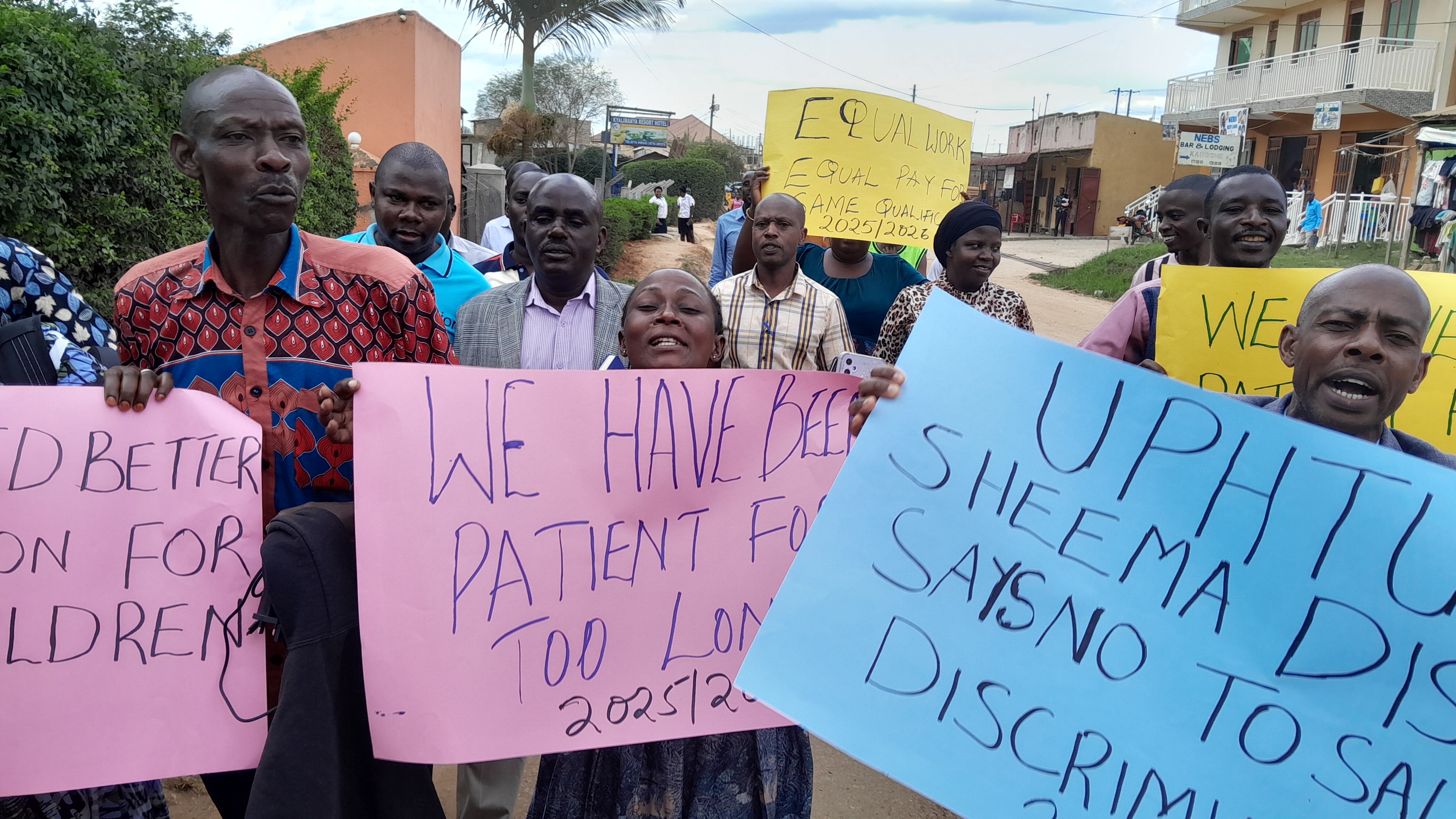
Teachers says students, particularly those studying arts subjects, feel uncertain about their future
Why are teachers protesting?
The strike stems from long-standing frustration over unequal pay between arts and science teachers. In July 2022, the government significantly increased salaries for science teachers, raising monthly pay for degree holders from UGX 1.2 million to about UGX 4 million. However, arts teachers with similar qualifications still earn UGX 900,000 to 960,000, creating a pay gap of more than four times.
Arts teachers from various secondary schools and tertiary institutions have since declared industrial action in protest of what they describe as systemic government neglect.
Teachers warned against intimidating colleagues
In neighboring Bushenyi District, the Resident District Commissioner, Emmy Ngabirano, cautioned striking teachers against intimidating colleagues who choose to continue teaching. Speaking to our reporter on June 11, 2025, Ngabirano acknowledged the teachers’ right to protest for better welfare but emphasized the need to respect the rights of others.
"The government is working hard to find a solution to this crisis," Ngabirano said. "But while we appreciate your grievances, no teacher should be harassed for choosing to stay in the classroom."
He urged the educators to balance their legitimate demands with the importance of maintaining access to education for learners.
Torch Media Africa



