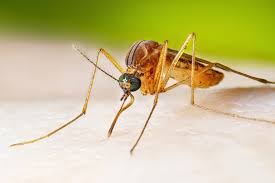
Atlanta, Georgia
It starts, if it starts at all, like nothing. A headache you blame on the heat. A low fever. Aching joints. A faint rash across the chest that comes and goes. Four out of five people who catch West Nile virus never feel a thing, and most of the rest assume they have picked up a late-summer bug and get on with their week.
For a small, unlucky fraction, something else happens. The virus crosses into the central nervous system. The headache becomes the worst of your life. The neck stiffens. Confusion arrives, then tremor, then in some cases a sudden, polio-like paralysis of a limb that may never fully return.
This year, that unlucky fraction is not small at all.
According to preliminary Centers for Disease Control and Prevention surveillance data current as of 1 September 2026, the United States has logged 407 human cases of West Nile virus across roughly 40 jurisdictions. Of those, 285 — about 71 per cent — are the neuroinvasive form, the version that attacks the brain and spinal cord. Twenty-three people are dead.
And the calendar is the problem. West Nile in America peaks in late August and September. The worst weeks of the 2026 season are, by every historical pattern, still ahead.
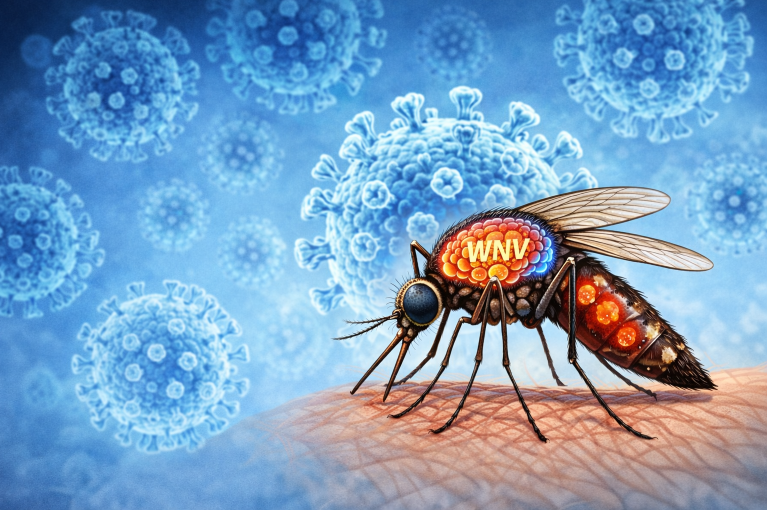
Five times the normal pace
Numbers on their own mean little. Context makes them frightening.
The CDC has described the 2026 season as running at roughly five times the usual number of cases for the point in the summer at which it was measured. It also began earlier than any season since 2004 — a year that ended with more than 2,500 cases and around 100 deaths nationwide.
The more uncomfortable comparison is 2003, the worst West Nile year the United States has ever recorded: 9,862 cases and 264 deaths. By 30 July 2003, only 44 cases had been reported to the CDC. By 28 July 2026, the count was 113 — roughly two and a half times the pace of the record year, at the same point on the calendar.
The trajectory since has not flattened. In mid-August the national tally stood at 181 cases across 29 jurisdictions with 11 deaths. Three weeks later it had more than doubled to 407 cases and 23 deaths.

By 30 July 2003 — the worst West Nile year on record — the CDC had 44 cases. By 28 July 2026, it had 113.
The proportion of severe cases is what worries clinicians most. In a typical year, roughly one in 150 infected people develops neuroinvasive disease, and most reported cases are the milder fever variety. This year 71 per cent of confirmed cases are neuroinvasive — a figure that partly reflects a genuine severity signal and partly reflects the surveillance system’s own blind spot, because mild cases go undiagnosed and unreported at far higher rates than hospitalised ones.
The CDC itself flags this in its ArboNET limitations notice: under-reporting is endemic to any system that depends on a doctor thinking to order the test, and non-neuroinvasive cases are the ones that vanish. Translation: the true number of Americans infected this summer is almost certainly many times 407.
Phoenix: the epicentre nobody expected
If there is a ground zero for 2026, it is Maricopa County, Arizona — metropolitan Phoenix, a place most people associate with the absence of standing water.
The county was posting alarming numbers before summer had properly begun. By 1 July 2026, Maricopa health officials had recorded 29 confirmed and probable locally acquired West Nile cases and five deaths. On the same date a year earlier, the figures were 24 cases and two deaths. Four Maricopa residents had died before Independence Day — a pace not seen in a West Nile season since the early 2000s.
By mid-August, Arizona alone accounted for 73 of the nation’s 181 reported cases: more than a third of the entire American burden, concentrated in a single desert metropolis, which had also recorded most of the season’s deaths.
Phoenix’s vulnerability is not a paradox once you look at the plumbing rather than the rainfall. Irrigation canals, retention basins, swimming pools, storm drains and green municipal landscaping in a city of nearly five million create exactly the warm, still, shallow water that Culex mosquitoes — West Nile’s primary carriers — prefer. Add sustained heat, which speeds up the virus’s replication inside the insect, and the desert becomes an incubator.
Chicago’s rainiest summer in years
Fifteen hundred miles away, a different mechanism produced the same result.
On 1 September the Chicago Department of Public Health confirmed the city’s first two human West Nile cases of 2026 — and its first death. It was also the first West Nile death recorded anywhere in Illinois this year.
CDPH Commissioner Garth Walker pointed directly at the weather. "2026 has seen the rainiest summer in Chicago in years, giving mosquitoes ample opportunities to breed," he said, adding the advice that public health officials have been repeating with rising urgency all season: "The best way to protect yourself from West Nile virus is to avoid mosquito bites and take measures to stop them from breeding around your home."
Dr Sameer Vohra, director of the Illinois Department of Public Health, was blunter about what the death signified. "The year’s first death in Illinois related to West Nile virus is a sobering reminder to take mosquito-borne illness seriously," he said. "While most people won’t experience serious symptoms, West Nile virus can lead to severe illness in high-risk groups such as older adults, individuals with chronic medical conditions and immunocompromised persons."
Two cities, two climates, two opposite weather stories — a parched desert and a drenched Midwest — and both ended up with the same virus and the same graves. That, more than any single statistic, is what has public health researchers uneasy.

The reason the seasons keep getting longer
West Nile arrived in the United States in 1999, in New York City. For most of the years since, it has behaved like a summer nuisance with an occasional lethal streak. What has changed is the length of the window in which it can operate.
Research modelling temperature suitability for transmission has found that the West Nile season has stretched by an average of nearly 25 days — beginning about four days earlier and, more significantly, ending roughly 20 days later. Longer seasons correlate with more virus in mosquitoes and more virus in people.
Analysis by Climate Central has found that the overwhelming majority of major U.S. cities — around 95 per cent — now experience more days per year with temperatures suited to mosquito-borne disease transmission than they did in 1970.
Mosquito seasons across the Mountain West have this year been reported as both longer and later-peaking than usual. It is a small shift on paper. In practice it means that the weeks in September and October when Americans traditionally stop worrying about mosquitoes are now weeks in which the virus is still circulating — and in which nobody is wearing repellent.
There is no vaccine. There is no cure.
Here is the fact that most surprises people when they hear it: after 27 years in North America, there is still no licensed human vaccine against West Nile virus, and no specific antiviral treatment.
Horses have a vaccine. People do not. Commercial development has repeatedly stalled on the economics — in an average year the reported case count is in the low thousands, which is a public health problem but a difficult business case.
Care for a hospitalised neuroinvasive patient is entirely supportive: fluids, pain control, ventilation if the breathing muscles fail, and time. Roughly one in ten people who develop neuroinvasive West Nile disease dies. Among survivors, fatigue, memory problems, weakness and depression can persist for months or years, and paralysis from West Nile poliomyelitis is frequently permanent.
Which leaves prevention as the only real medicine — and prevention, in this case, means not getting bitten.
What this means for you
The people at genuine risk of severe disease are identifiable, and if you are one of them, September is not the month to relax.
Risk climbs sharply with age. Adults over 60 are at substantially greater danger of neuroinvasive disease, as are people with cancer, diabetes, kidney disease, high blood pressure, a history of organ transplantation, or any condition or medication that suppresses the immune system.
The practical steps are unglamorous and they work. Use an EPA-registered repellent containing DEET, picaridin, IR3535 or oil of lemon eucalyptus, and reapply it. Culex mosquitoes bite most aggressively from dusk through dawn, so cover arms and legs in the evening. Fix torn window and door screens, which is the single most-skipped item on every list.
Then walk your own property once a week and tip out standing water — every bit of it. A bottle cap is enough for a mosquito. The usual suspects are plant pot saucers, birdbaths, clogged gutters, children’s paddling pools, tarpaulins, wheelbarrows, buckets, pet bowls and unused tyres. Neglected swimming pools are the worst offenders of all; report them to your local mosquito abatement district, which in most jurisdictions will act.
And know the line that separates a bad week from an emergency. Ordinary West Nile fever means headache, tiredness, body aches, sometimes a rash, and it passes. The symptoms that mean go to hospital now are a severe headache unlike your usual ones, a stiff neck, high fever with confusion or disorientation, tremors, convulsions, sudden muscle weakness — particularly weakness on one side — or vision changes. Neuroinvasive West Nile disease is a medical emergency, and the earlier supportive care begins, the better the outcome.
The season isn’t over
CDC surveillance data are updated every one to two weeks between June and December, and by the agency’s own admission they lag reality. State and local health departments frequently know more than the national dashboard shows. The 407 cases and 23 deaths on the books as of 1 September represent a snapshot of a picture that has been moving in one direction all summer.
History offers a warning about what the rest of a season like this can look like. 2003 was still counting into November and finished with 9,862 cases and 264 deaths. 2004, the last year to start this early, ended above 2,500 cases and around 100 deaths. Nobody is forecasting either figure for 2026 — surveillance, mosquito control and public awareness have all improved since then — but nobody is comfortable, either.
What is not in dispute is the shape of the curve. It started earlier than usual. It has spread across roughly 40 states. It is running at multiples of the historical baseline. It is skewing severe. And it has arrived at the point in the year when West Nile has always done its worst work.
There is no shot to take. There is no pill to swallow. There is a bottle of repellent, a torn screen worth fixing, and a saucer of water under a plant pot that will take you four seconds to empty.
This year, that is the whole of the defence.
Published By | Features Editor