Background
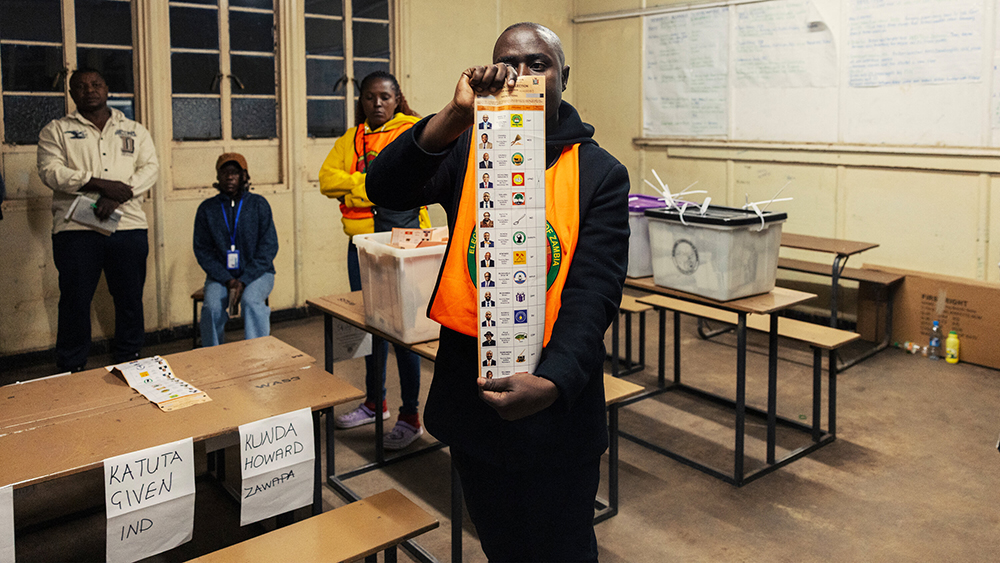
Zambia, a landlocked, copper-rich nation of roughly 22 million people in southern Africa, went to the polls on Thursday, August 13, 2026, in general elections combining presidential, parliamentary and local contests. About 8.7 million voters were registered to choose between incumbent President Hakainde Hichilema, seeking a second five-year term at the head of his United Party for National Development (UPND), and a challenge from Brian Mundubile, a former Speaker of the National Assembly now leading an opposition alliance built around the Socialist Party and other formations sometimes referred to as the Tonse-Pamodzi coalition.
Hichilema swept to power in 2021 in a landslide victory over then-President Edgar Lungu of the Patriotic Front, ending a decade of PF rule amid public frustration over corruption, a collapsing currency and a sovereign debt default. In office, his government negotiated a lengthy and difficult debt restructuring with bondholders and bilateral creditors including China, restored a program with the International Monetary Fund, and returned the economy to growth after the default. Those achievements have been central to his re-election pitch and to the relatively favorable view many international observers and investors hold of his administration.
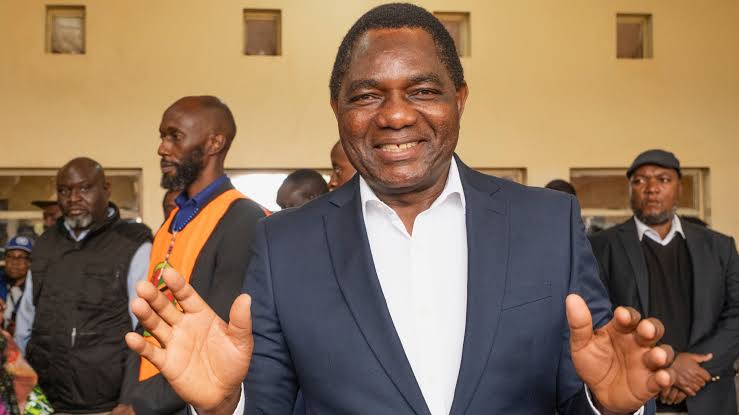
The economic recovery has been uneven, however. According to World Bank estimates, more than 70 percent of Zambians live on less than $3 a day, and rising food prices, unemployment and the everyday cost of living have fueled discontent that Mundubile's alliance sought to capitalize on. The campaign also unfolded against concerns about political freedoms: rights groups and opposition figures pointed to arrests of government critics, and, in the campaign's final stretch, controversy over the detention of journalist MacPherson Mukuka under Zambia's cyber-crime laws and the Electoral Commission's revocation of accreditation for at least one election observer.
International scrutiny of the vote was heavy. The European Union deployed a full Election Observation Mission led by Irish member of the European Parliament Michael McNamara, while the African Union and the Common Market for Eastern and Southern Africa (COMESA) jointly fielded a mission led by former Ethiopian Prime Minister Hailemariam Dessalegn Boshe, with observers posted across all ten of Zambia's provinces. Since its return to multiparty democracy in 1991, Zambia has built a reputation for largely peaceful transfers of power, including the 2021 handover from Lungu to Hichilema — a record that made this week's events especially jarring for a country long held up as a relative model of stability in a region that has seen coups and contested elections in Mali, Niger, Gabon and elsewhere in recent years.
Copper is central to why the outcome matters well beyond Zambia's borders. The country is Africa's second-largest copper producer, and rising global demand tied to the energy transition has made its mines a focus of renewed foreign investment since Hichilema took office and moved to renegotiate mining taxes and attract capital back into the sector. Any prolonged uncertainty over the election result carries the potential to spook the same investors his government spent the past five years courting.
Key Developments
Voting on August 13 proceeded without major incident, but the count that followed did not. On Friday, August 14, the Electoral Commission of Zambia (ECZ) announced it was suspending vote counting nationwide, citing attacks on election officials and the theft of marked ballot papers directly from ballot boxes at multiple polling and counting stations. "The violence is targeted at poll staff and in some instances has resulted in the theft of marked ballot papers in ballot boxes," the commission said in its statement announcing the halt.
The disruption was serious enough to draw a visible security response. Riot police and army vehicles were deployed to parts of the capital, Lusaka, including the main national vote-tallying center, as authorities moved to secure counting operations. Mundubile's camp went further, alleging that members of the military had taken direct control of vote-counting stations in at least one town and that boxes containing ballots had been removed from stations in several other locations — an allegation the government and electoral commission have not confirmed. Authorities separately said they had arrested several people, including some former senior government officials, accused of attempting to disrupt the electoral process.

The suspension lasted only a matter of hours. By Friday evening, ECZ chairperson Mwangala Zaloumis announced that counting would resume after consultations with law enforcement and a fresh review concluded that the immediate threat had been "contained." Parliamentary tallying, which had been halted alongside the presidential count, also restarted.
The first trickle of results, released just before midnight local time, showed Hichilema leading with 22,476 votes to Mundubile's 14,388 — but from only four of Zambia's 226 constituencies, far too small a sample to draw any conclusion about the national outcome. The ECZ said it would review the security situation again within 24 hours and had not said whether the disruption would delay the official announcement of a winner, originally expected on Monday, August 17.
Both camps moved quickly to stake a claim to the outcome even before meaningful results were in. Hichilema said his campaign was receiving "encouraging results" and urged his supporters to "remain peaceful and patient." Mundubile, for his part, claimed outright victory in the presidential race, saying his own alliance's parallel vote tabulation showed he had won, and asserted his alliance had also captured a majority of parliamentary seats — a claim the ECZ, which remains the sole body legally empowered to declare results, has not corroborated.
Reactions
The suspension and the competing victory claims have injected real uncertainty into what was, until Friday, expected to be a closely watched but procedurally unremarkable election in one of southern Africa's more stable democracies. International observer missions from the EU and the AU-COMESA delegation, which spent months preparing to monitor the vote and stressed their neutrality — EU chief observer McNamara said ahead of polling day that "who wins is a matter for Zambian voters, and Zambian voters alone" — had not yet issued a full public assessment of Friday's disruption, though their statements are expected to weigh heavily on how the outcome is received both domestically and abroad.
Domestically, reaction has split along largely partisan lines, with UPND supporters framing the violence as an attempt by the opposition to delegitimize a process Hichilema is favored to win, and opposition supporters pointing to the ballot thefts and alleged military involvement as evidence the vote itself cannot be trusted. Civil society groups in Lusaka have called for calm and for the ECZ to publish detailed, constituency-by-constituency information about where violence and thefts occurred, arguing that transparency is now essential to preserving public confidence in the result. Zambia's copper-mining sector and foreign investors, who have closely tracked Hichilema's economic reforms and the country's return to the IMF program, are also watching closely, given that a contested or violent transition could complicate the country's debt and investment relationships.
What's Next
Official results are still nominally due Monday, though the ECZ has left open the possibility that the disruption could push that timeline back as officials work through backlogged and disputed tallies from the affected constituencies. Much will depend on how the commission accounts for the specific stations where ballots were reported stolen or where counting was interrupted: whether those results can be reliably reconstructed, whether recounts or fresh tallies are required in the worst-affected areas, and whether the commission publishes a clear accounting of the scope of the violence.
The larger question is what a contested or narrowly decided outcome would mean for Zambia's democratic reputation and its economic trajectory. Hichilema has staked his re-election bid heavily on the country's debt restructuring and IMF-backed recovery; a chaotic or widely disputed result could unsettle bondholders and investors just as that recovery has started to take hold. For Mundubile and the opposition alliance, the coming days will test whether their claims of a parallel vote count and allegations of military interference can be substantiated with evidence the ECZ, international observers or Zambian courts find credible. Either way, what was billed as a routine test of Hichilema's economic record has become a more fundamental test of the durability of Zambia's 35-year run of comparatively peaceful elections.
Published By | News Editor