Written By | Jovita Hasto
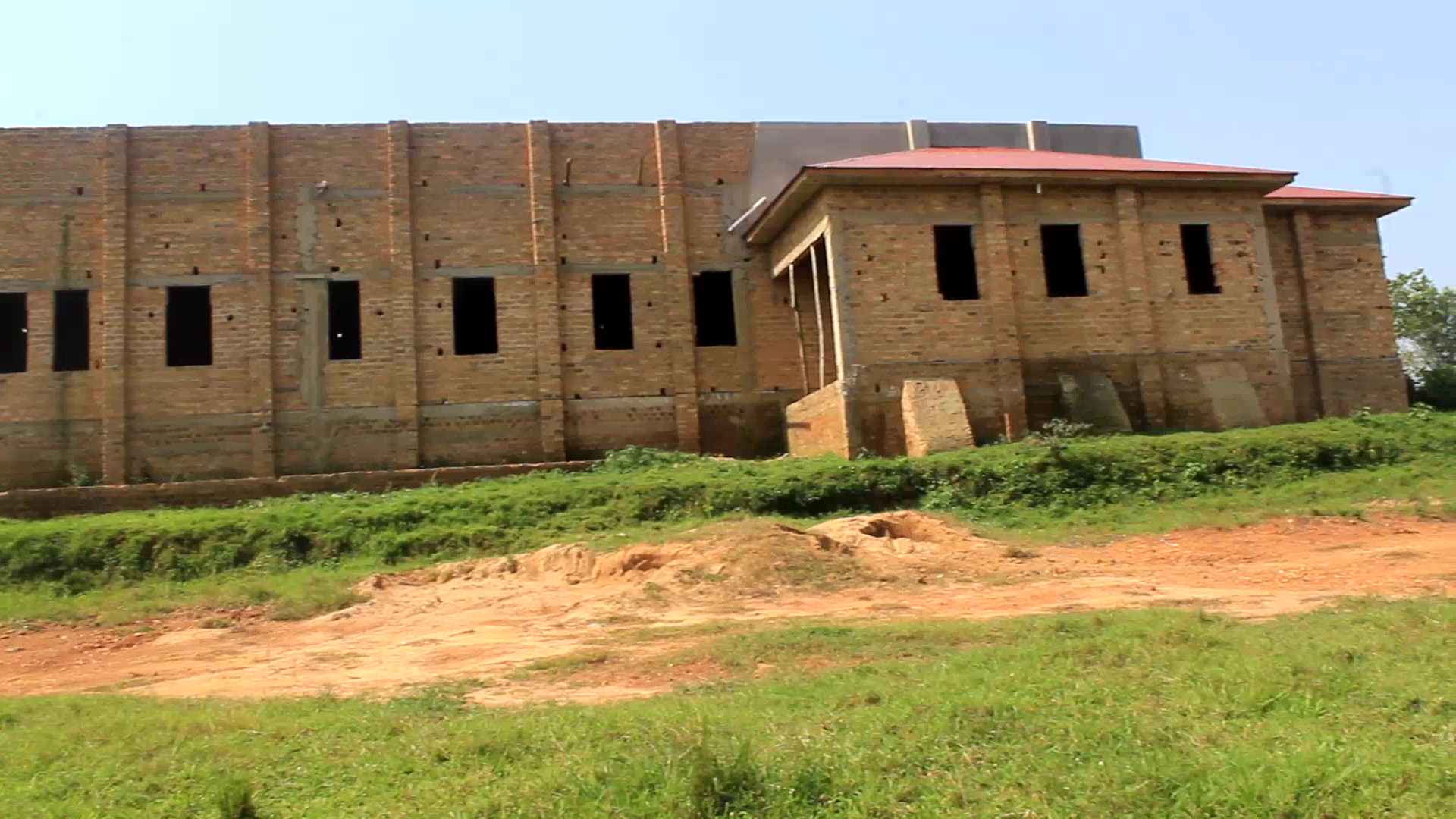
A community Hall for Ibanda Lords Community that is under construction in Mahega Cell, Kyekucu ward in Ibanda Municipality. [Photo: Jovita Hasto]
IBANDA
In Mahega Cell, Kagongo Division, Ibanda Municipality, a group calling itself the Ibanda Lords Community, commonly known as Baloodi, is constructing what it describes as a community hall, while its critics refer to the structure as a “parliament”. The construction is taking place on land the group says was freely donated by a local family. What exactly the Lords Community is, however, depends on whom you ask.
According to its members, it is a cultural and economic transformation movement aimed at transforming people from poverty and elevating them to “first-class citizens” through economic empowerment and knowledge on how to utilise land productively.
To some local leaders and security officials, however, it is a potentially deceptive group with characteristics they say resemble a cult, whose activities could eventually leave residents landless.
The group originated from the registered National Agribusiness Support Initiative (NASI), an organisation said to have been registered on April 15, 2021, by the Uganda Registration Services Bureau (URSB), with centres in Kaliro City, Kibuku City, Kiryandongo City and Serere City, where the Ibanda Lords Community operates.
‘The land was freely donated’
Ms Rahisa Andinda, the chief landlord under the Ibanda Lords Community, explained that the land where construction of the “parliament” hall is taking place was freely given to the community by her family.
She said the land ceased to be family property after all its documentation was handed over to the community.
“This community was handed an agreement and the land was therefore donated without force. It was our initiative to give out this land through my husband, who unfortunately passed away. It ceased to be our land and became the community’s land for all its activities. Therefore, the family has nothing to question about how this land is managed,” she said.
Ms Andinda said not all members surrender their land to the community. Some register their own land with the community after paying a membership fee but continue to use it as they wish.
She said the community provides training on profitable land use and promises future support, including fertilisers.
“There is nothing like grabbing land or taking other people’s land. To join, you also have to pay membership, like in any other group or institution. You pay Shs400,000, and we get to know the details of your land. From there, we give you knowledge on how to earn from your land and offer fertilisers for crop productivity,” she added.
The community has a leadership structure headed by a Lord Mayor in each community. The Lord Mayor is assisted by executive members elected by the members.
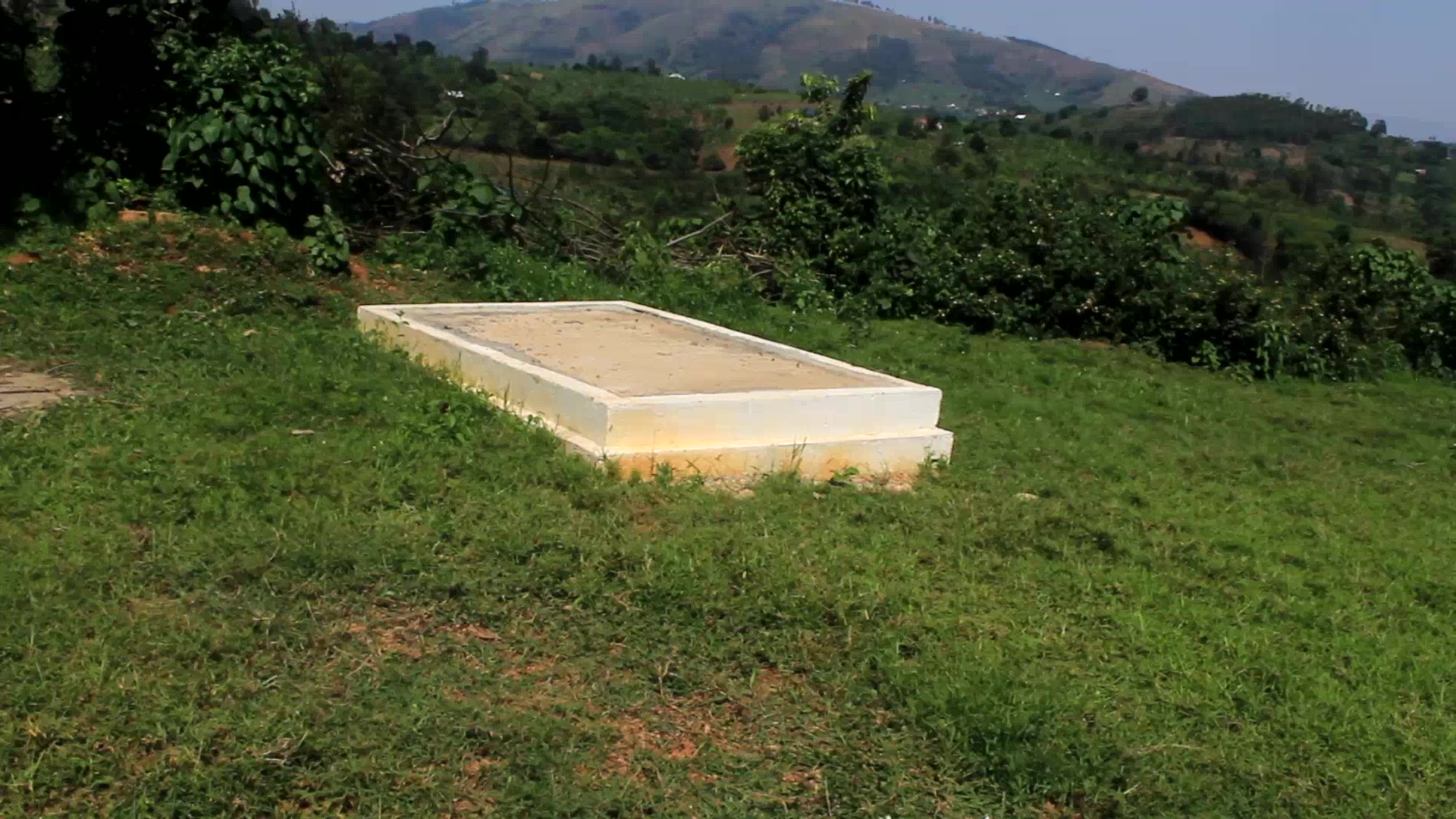
A grave of one of the deceased member of Ibanda Lords community who was laid to rest early this year, after weeks of cultural practices. [PHOTO: JOVITA HASTO]
‘Lords are people with land and knowledge’
In Ibanda, Dr Innocent Mujuni Birakwate, the National Spiritual Director of the Uganda Lords Community, explained that the term “Lords” refers to a hierarchy of people within the community.
He said the Lords are people who possess land and knowledge.
“Our name is not a new term to the people, like the House of Lords and House of Commons. Every country has people who can run systems. Landlords are people who have land and knowledge, and our leadership is constituted at the Lords level, where people with land and knowledge select leaders. We have a Lord Mayor and other executives, plus members. We are 60; thus, we have the Sixty Assembly Department. Every district has that leadership of the Lords, and then they converge with the central House of the Lords,” he explained.
For one to be initiated into the cultural group, they must own land, undergo training and voluntarily pay a membership fee of Shs400,000.
Dr Birakwate said the training is intended to empower members and provide them with knowledge about the principles of the Lords Community.
“The Lords start with training as a tool for empowering households with information and vision. Our doctrine differs from that of the colonialists. Through our leadership structure, we believe in African traditional society, and through our training, you get to understand that the white man brainwashed the Black race, yet we are intelligent,” he said.
Seeking economic sovereignty
Most of the work carried out within the Lords Community is voluntary, and most members are not paid, Dr Birakwate said. Those who receive payment, he added, are technical workers hired from outside the community.
The ultimate target, according to Dr Birakwate, is economic sovereignty.
“The essence of the Lords Community is to ensure that they have a World Bank. All these banks we have in the country are commercial. We don't have our own bank. The essence of the Lords is to ensure that people are aware of cooperation and cooperation. That is why we voluntarily engage in manual work like bricklaying. We also hope to come up with a national bank, and we shall formulate a national farmers’ bank as well,” he said.
‘We are in culture, not a cult’
On accusations that the group is a cult, Dr Birakwate was firm in rejecting the description.
“Outside in the community, they call us a cult, but for us, we are in culture, not a cult. What we are doing is social and cultural transformation. Culture is the way people evolve. For any activity to take place, we believe in culture, and that takes us to science, economics, civilisation, politics and finally business,” he asserted.
He explained that burying the dead is a social and economic activity that does not necessarily have to be performed by religious leaders, but can instead be handled by the culture or family.
He said deceased members are preserved for a week to allow members of the Lords Community from different areas to gather and send off the deceased.
The group conducts its own burial ceremonies and naming ceremonies, promotes local foods and encourages traditional greetings.
“We ensure that the bereaved family contributes nothing because we don't want them to lose twice. We organise our burials, where we march from a certain place until we reach the burial ground. It is not compulsory for the church or mosque to send off the dead. We invite other Lords from different cities who gather. We feed on local food, and when naming a person, we refer to our African culture. We take care of the person from birth to death,” he said.
Dr Birakwate explained that he joined the Lords Community with the aim of promoting economic and social transformation and generating wealth.
Leaders raise land concerns
That cultural explanation, however, has not calmed local political leaders, many of whom fear that residents could eventually become landless.
Mr Vereriano Tukesiga, the district councillor for Kagongo Division, said complaints were emerging from Kashangura and Kyeikucu wards in Ibanda Municipality over practices he described as unusual, raising concerns among local leaders.
“The issue of the Baloodi is about a group of people in Kashangura Ward and Kyeikucu Ward. They take people's land. A person surrenders land for them to take care of it, and if you die, they bury you on their land. In future, they will process land titles and take your land. We, as leaders, are worried about the issue which may arise in the future because this group of people may take people's land and our people may end up being landless,” he said.
He added:
“I urge people to be vigilant and seek guidance from leaders because we do not know how they operate. I don't know if it is a religion. I cannot tell. They don't pray, but they keep together, work and take care of people.”
Security concerns
Mr Godfrey Mbetegyereize, the Ibanda District Resident District Commissioner (RDC), said he had been tracking the group since 2024, when its members introduced themselves to his office as the National Agribusiness Support Initiative.
He said the organisation had evolved from an earlier group from Serere City following concerns raised by members of the public, which had also reached the highest security authorities in the district.
According to the RDC, the group presented an introductory letter from the Minister for the Presidency, Milly Babalanda, and former Internal Affairs Minister Gen Kahinda Otafiire, issued in 2021, stating that the organisation would execute business activities in line with Operation Wealth Creation to help lift people out of poverty.
However, after registering as a member himself, Mr Mbetegyereize said he came to realise that the group's activities differed from what had been presented to his office.
“Their intention was giving hope, and I trusted them. However, not everything that glitters is gold. I had also registered myself as a member after paying a Shs400,000 membership fee. Through intelligence and complaints, the community revealed a different picture,” he said.
He said members are asked to pay Shs400,000, which they are told will multiply and be reflected on a credit card that they do not receive.
“In other words, you cannot access that money. They tell people to bring their land titles, which they shall make profitable, and it can be cashed against the land title. They have big dreams of making Uganda a first-world country, and members shall be landlords through a certain system which is not visible. They shall be able to access the World Bank,” Mr Mbetegyereize said.
He added:
“They don't believe in religion; they believe in a traditional way of life. They even promote polygamy and styles of burial which are peculiar to them. They have many divergent and elusive, unrealistic objectives which show that they are likely going to con our people and confuse them, like what happened in Kanungu.”
He was referring to the 2000 Kanungu cult inferno tragedy.
According to the RDC, his office has submitted a report to his supervisors for analysis, saying authorities cannot wait for a tragedy to occur when action can be taken to address the concerns.
“Through intelligence, we have investigated to this point, and I have submitted a report to my supervisors for analysis. At one time, we shall close them. We called them to a security meeting and asked them to close, though they are building a hall which they refer to as parliament,” he stated.
For now, construction of the community hall in Ibanda continues, as does recruitment, leaving the district divided between those who see a path to wealth through culture and those who fear that the group's activities could eventually have serious consequences for residents, particularly over land ownership and control.



