Written By |
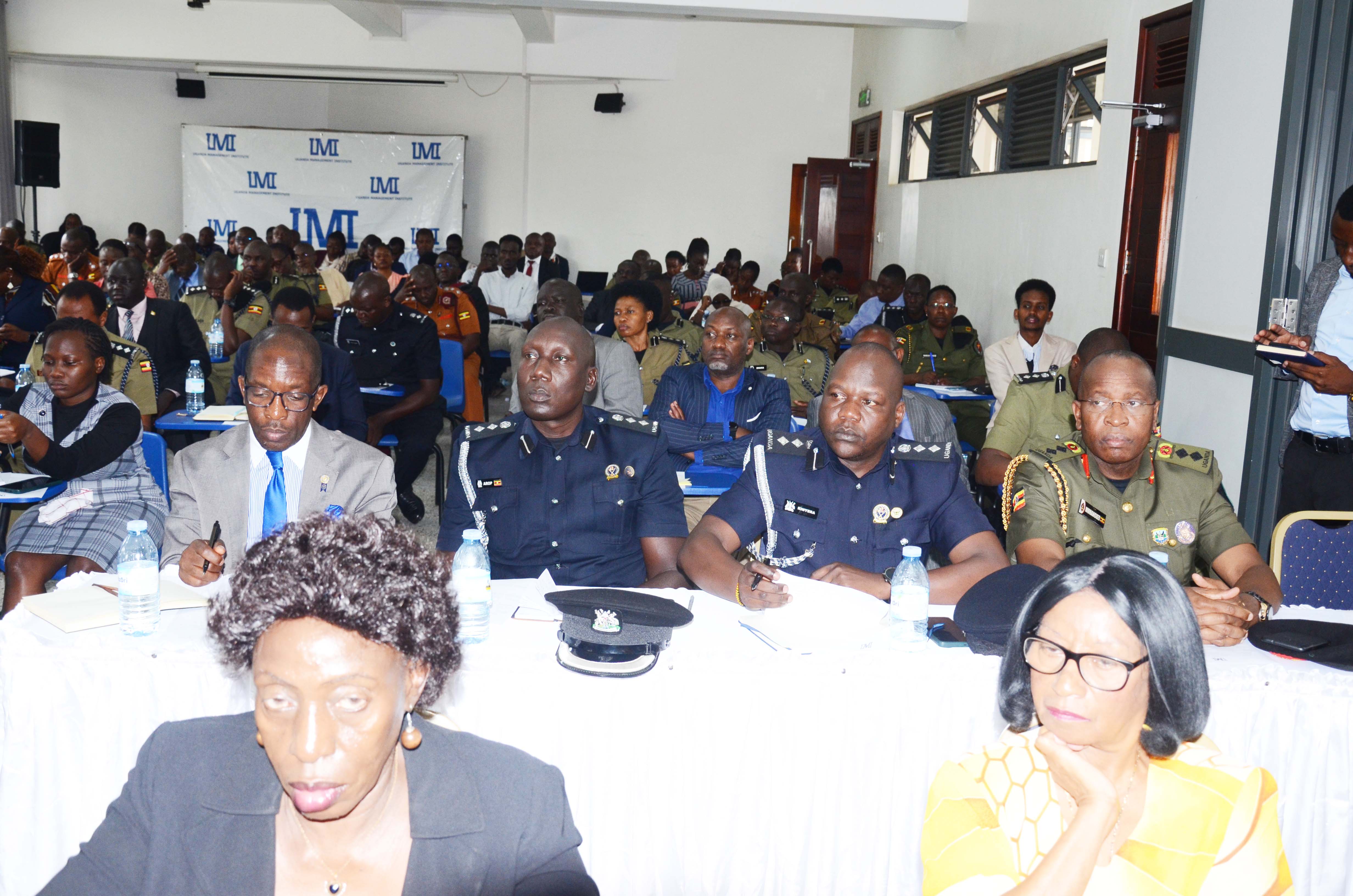
Security officers from Uganda Peoples' Defence Forces (UPDF) and the Uganda Police attending the Public Policy Dialogue on Peace and Security at UMI. (Photo by Milton Niinga)
By Milton Niinga
The Minister of State for Foreign Affairs, Henry Oryem Okello, has urged governments in the Great Lakes region to invest in preventive diplomacy as a strategy to address the ongoing conflict between the Democratic Republic of Congo (DRC) and Rwanda. He emphasized the need to prevent further escalation and foster lasting peace in the region. Preventive diplomacy refers to diplomatic efforts aimed at preventing disputes from escalating into full-blown conflicts.
The Great Lakes region of Africa has been marred by decades of conflict and instability, with countries such as the DRC, Rwanda, Burundi, and Uganda frequently affected.
“Preventive diplomacy includes a range of activities such as mediation, negotiation, and confidence-building measures. By addressing the root causes of conflict, it can help reduce tensions, build trust, and promote dialogue between nations,” Oryem said.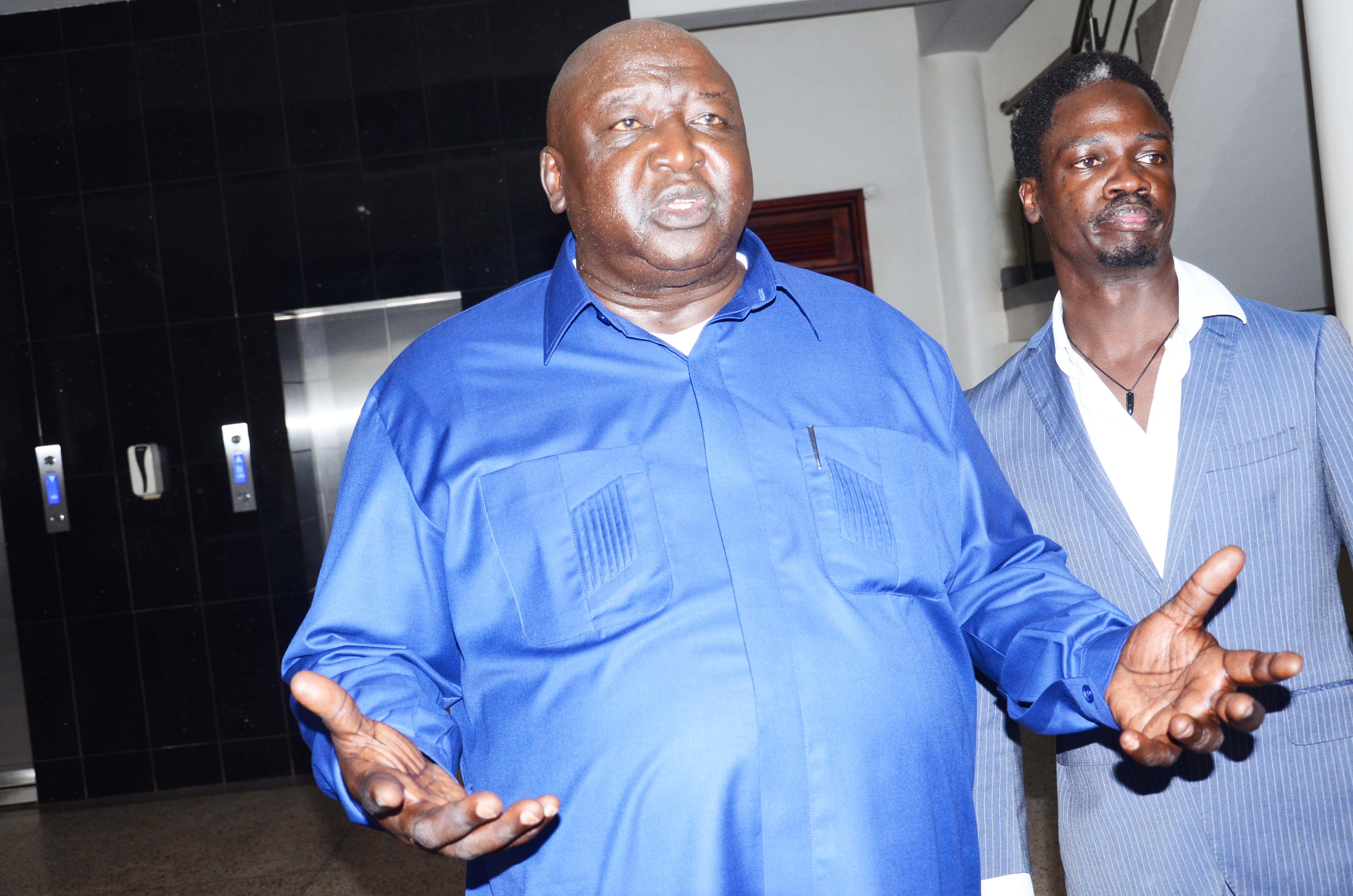
Minister of State for Foreign Affairs, Henry Oryem Okello addressing the need for preventive diplomacy which creates lasting peace in societies. (Photo by Milton Niinga)
Speaking as the Chief Guest at a Public Policy Dialogue held on April 30, 2025, at the Uganda Management Institute (UMI) Jubilee Building in Kampala, Oryem noted that the region remains complex and volatile, with numerous simmering tensions. “The DRC has been embroiled in a long-standing conflict with Rwanda, while Burundi continues to experience political instability and violence. Uganda is also affected by the presence of Allied Democratic Forces (ADF) rebels operating in the DRC,” he said.
Oryem added that the conflict has caused significant human suffering, displacement, and instability, with waves of refugees fleeing to Uganda whenever violence escalates.
The ongoing crisis, he said, is primarily driven by clashes between the Congolese armed forces and the Rwandan-backed M23 rebel group, which has resulted in mass displacement, violence, and competition over natural resources.
“The situation is further complicated by the involvement of various armed groups and the deliberate targeting of civilians. Millions have been displaced and are in dire need of humanitarian assistance—an issue that requires coordinated efforts by East African Community (EAC) partner states.”
The case for preventive diplomacy
Ambassador Simon Mulongo, a diplomat and security expert, speaking during a panel discussion, emphasized preventive diplomacy as vital to resolving the conflict in the Great Lakes region.
“Countries are drifting apart in international collaboration. Players in the EAC, African Union (AU), European Union (EU), and Southern African Development Community (SADC) often engage in peace negotiations driven by competing interests, to the detriment of local populations,” he said.
He added that while international actors participate in negotiations and peace processes, they often do so with preconditions and self-serving agendas.
“The ‘America First’ slogan exemplifies how global powers prioritize their own interests, often undermining collective diplomatic efforts—a geo-strategic issue that must be addressed for peace processes to gain legitimacy,” Mulongo stated.
Dr. Charles Kiiza, a lecturer at the University of Rwanda, noted that diplomacy in the context of the DRC-Rwanda-M23 conflict is under severe strain.
“Diplomacy is being undermined by a lack of mutual trust among regional players and perceptions of bias, which continue to derail efforts toward a unified approach to conflict resolution,” he said.
Kiiza also highlighted that multiple overlapping peace initiatives, such as the Luanda and Nairobi processes, have resulted in an incoherent and fragmented strategy for peacebuilding in the region.
Political analyst and Makerere University lecturer, Prof. Ndebesa Mwambutsya, emphasized the importance of addressing the root causes of conflict to prevent violence and instability.
“Preventive diplomacy promotes inter-state dialogue, which fosters mutual understanding and cooperation. By preventing conflict, we can save lives and avoid the immense costs of humanitarian crises and reconstruction,” he noted.
However, Ndebesa stressed that the international community must play a key role by providing both financial and technical support to diplomatic efforts, including mediation and negotiation.
“The international community should support confidence-building measures—such as joint economic ventures or cultural exchanges—to help build trust between nations,” he added.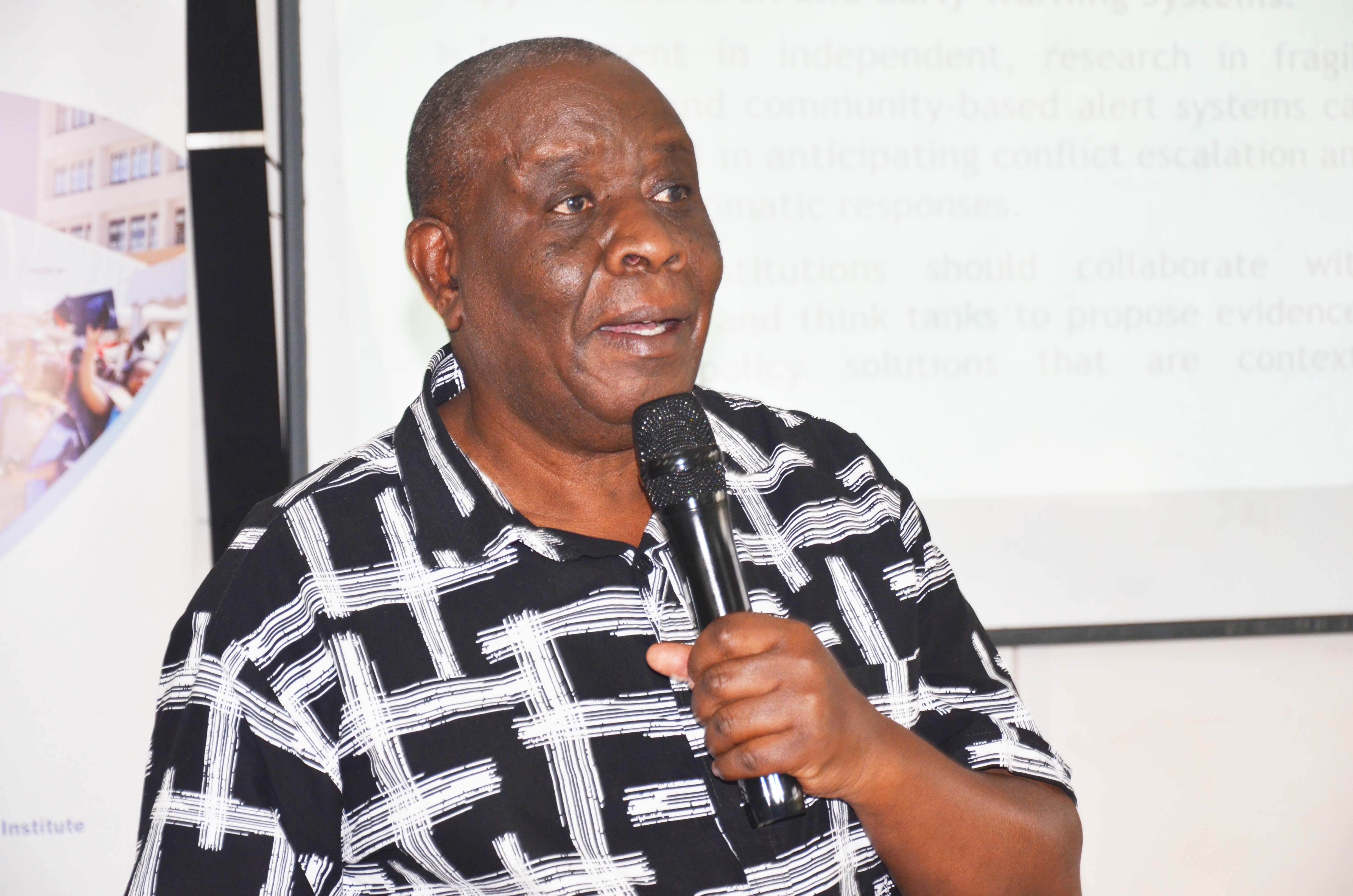
Political analyst and the Makerere University lecturer, Prof. Ndebesa Mwambutsya addressing the public dialogue on Diplomacy in addressing DRC M23 backed Rwanda conflict. (Photo by Milton Niinga)
Political analyst Charles Rwomushana expressed concern that diplomacy has lost its significance in the region due to a lack of genuine commitment to dialogue and reconciliation.
“I’ve studied the Great Lakes crisis, which is characterized by mass killings and displacement. Despite the region’s vast natural resource wealth, economic cooperation remains a missed opportunity,” he said.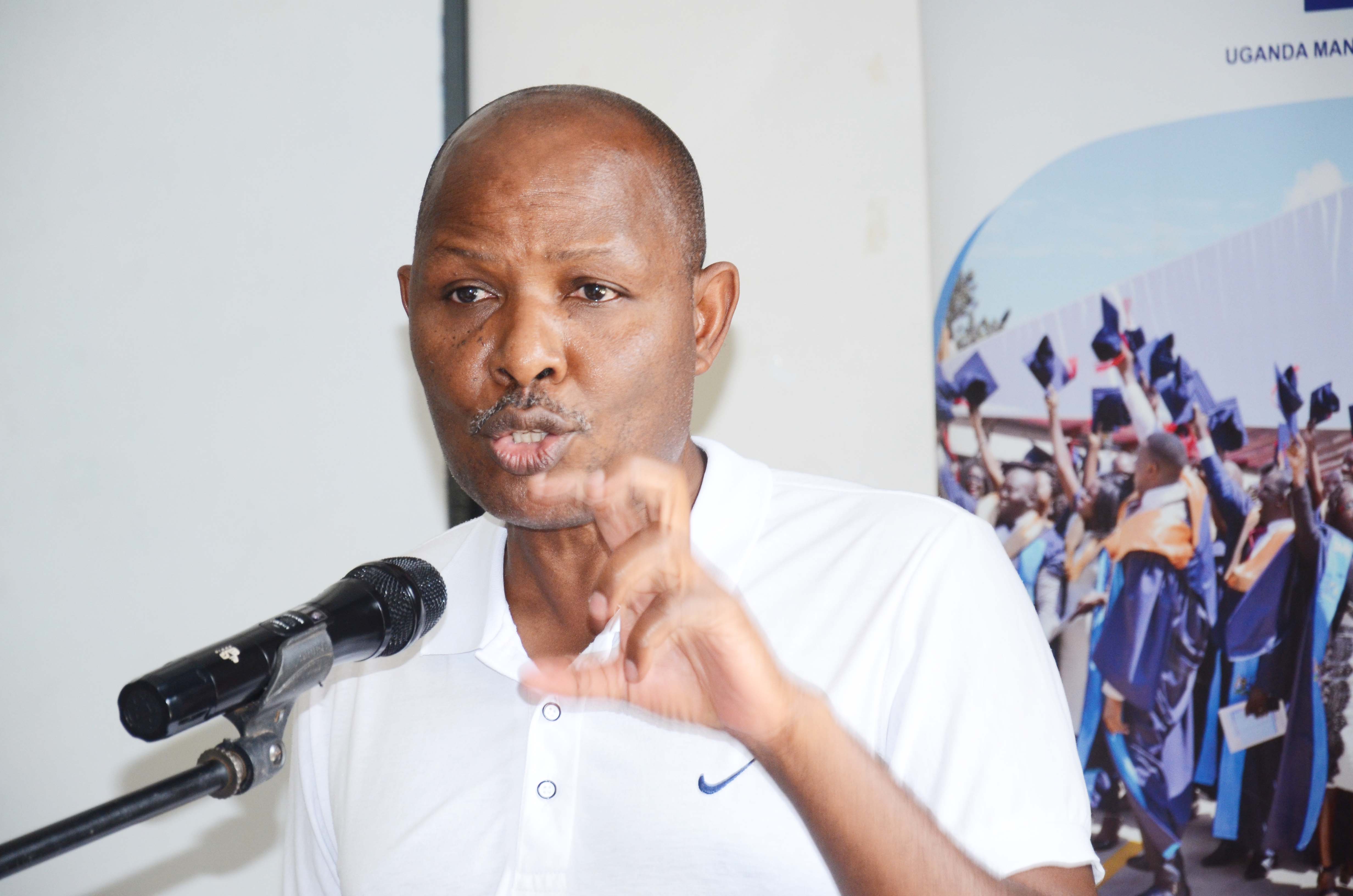
Charles Rwomushana, a political analyst said that diplomacy has lost meaning because it is never respected when it comes to dialogue and reconciliation. (Photo by Milton Niinga)
Dr. Michael Garukande Kiganda, a lecturer in public policy and governance, lamented the failure to leverage the region’s rich cultural heritage to foster understanding through cultural exchange.
“Africans must design homegrown solutions to political and economic challenges. Unfortunately, this has not been the case,” he said.
Garukande pointed to poor resource allocation and misuse as root causes of militarized politics and leadership entitlement, which in turn have created class divisions within society.
Journalist and political analyst Timothy Kalyegira argued that preventive diplomacy could help the DRC government recognize M23 combatants and the ethnic communities they represent as legitimate Congolese citizens.
“Diplomacy must involve building deliberate systems aimed at achieving long-term peace and cross-border coexistence to address historical injustices,” he concluded.
Torch Media Africa



