Written By | BK Mugizi

Heavy security deployment at the factory premises
BUSHENYI
Shareholders of Igara Growers Tea Factory Limited (IGTF) have elected and confirmed a new board of directors to steer the company for the next three years, despite an attempted administrative halt by the Uganda Registration Services Bureau (URSB).
The Annual General Meeting (AGM), held yesterday at the factory premises in Kyamuhunga Town Council under heavy security deployment, consolidated several delayed assemblies into a single sitting after previous attempts had been disrupted.
Shareholders approved board members who had earlier been selected during zonal meetings in accordance with Sections 163, 164, 165 and 166 of the Companies Act, Cap. 106, which grants shareholders the authority to appoint directors and company auditors.
The newly confirmed board comprises Leonard Beinomugisha (Bitereko Zone) as chairperson, Aloysius (Kanunka Zone), Emmanuel Muhebwa (Igara Zone), Kasapuri Leonidas (Muguma Zone), and Eva Banyenzaki as the female representative.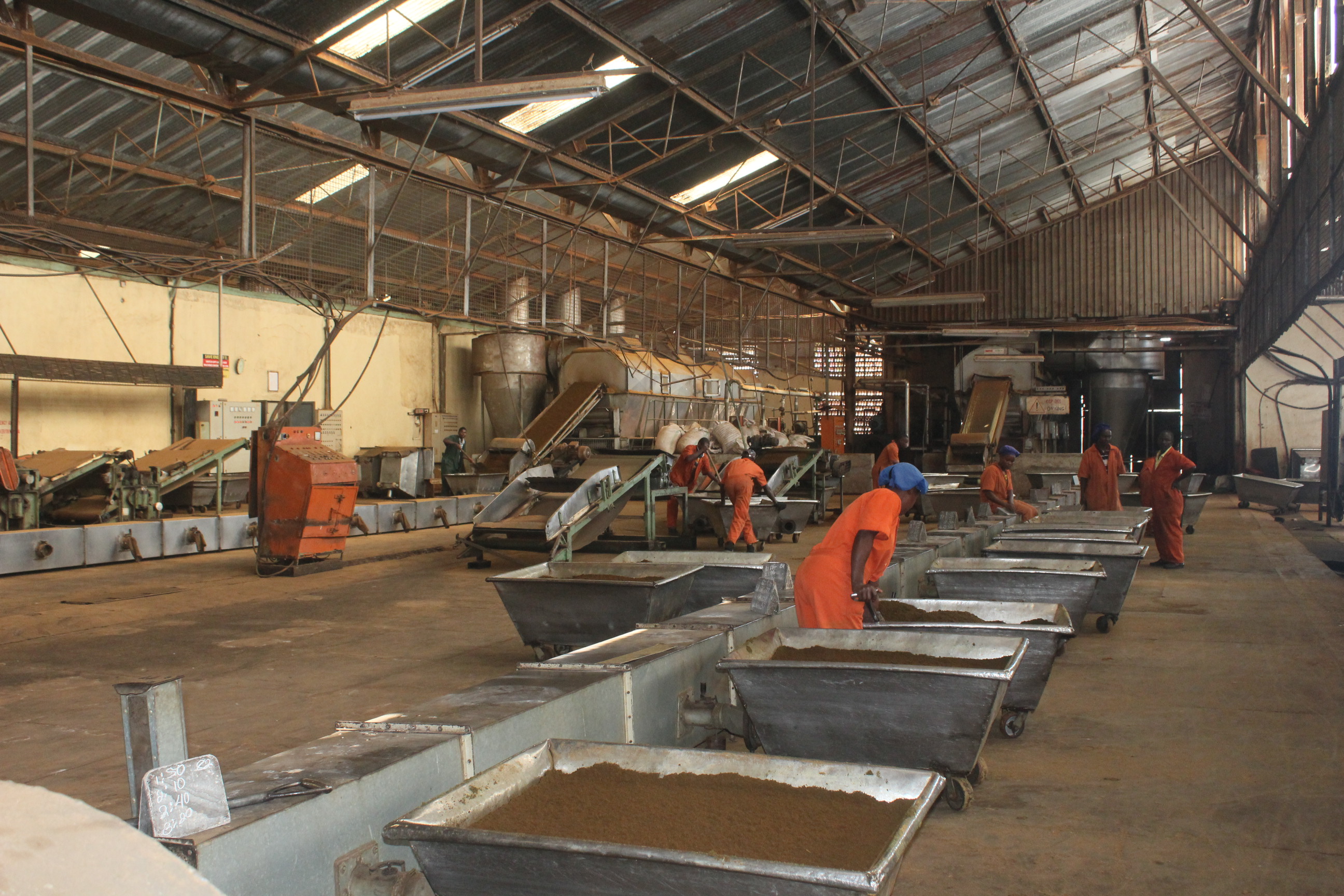
Workers at Igara tea Factory in Bushenyi district
Nyakashaka seat left vacant
Shareholders also authorised the board to temporarily appoint a sixth director to represent Nyakashaka Zone after the confirmation of Ronald Rwankangye was deferred.
Company Secretary Kenneth Mutabaruka told the assembly that Rwankangye had been suspended by the board in 2023 over allegations that he had no personal green leaf production despite having been elected in 2021.
Although Rwankangye challenged the decision in court, the case was dismissed, leaving the position vacant pending further action.
New board promises turnaround
Addressing shareholders shortly after his confirmation, Board Chairperson Leonard Beinomugisha unveiled an initial recovery strategy focused on reducing operational costs and increasing tea production.
He said the company had been forced to combine three AGMs into one because of COVID-19 disruptions, poor performance in the tea business, financial constraints, and prolonged legal disputes over the company's leadership.
"Holding multiple AGMs together is not ideal, but it was necessary because of the financial decline the factory has experienced over recent years," Beinomugisha said.
Shareholders demand action against endless court cases
During the meeting, shareholders challenged the incoming board to take legal action against individuals they accused of repeatedly dragging the company into court.
Savio Tumuramye, a shareholder, argued that the company had suffered significant financial and operational setbacks because of prolonged litigation.
"The factory continues to lose valuable time and money in court battles. Those who take the company to court and lose should compensate the factory for the damages," Tumuramye said.
Beinomugisha agreed that the prolonged disputes had damaged the company's finances and reputation.
Board defends decision to proceed despite URSB directive
Responding to concerns over proceeding with the AGM despite URSB reportedly directing the company to halt the meeting pending a ruling expected on July 1, 2026, Beinomugisha said management had not received any official communication stopping the meeting.
He maintained that a recent court ruling had cleared the way for the assembly.
"We were guided by a court ruling that allowed the company to convene the meeting at its convenience," he said.
However, he declined to comment on the pending petition before the URSB Registrar and instead appealed for reconciliation among the different shareholder factions.
"We need dialogue and unity to rebuild this cooperative instead of continuing legal battles," he said.
Awaiting audit to unlock Shs152 billion bailout
Beinomugisha said the company was ready to receive inspectors from the Office of the Auditor General (OAG), whose assessment will determine its eligibility for a promised government bailout package worth Shs152 billion.
According to the chairperson, having a fully constituted board was necessary to meet governance requirements ahead of the audit.
The anticipated government intervention is expected to support more than 7,000 smallholder farmers linked to Igara Growers Tea Factory, alongside 22 other struggling tea factories across the country.
He urged farmers to continue maintaining their tea gardens as they prepare for the anticipated recovery.
Lessons from Kayonza factory recovery
Guest speaker Grace Kyomugisha, Board Chairperson of Kayonza Growers Tea Factory, urged members to remain patient as reforms take shape.
She said Kayonza had overcome similar challenges, including debts, tax enforcement, salary arrears, and delayed payments to farmers for green leaf deliveries.
"We reduced labour costs, adjusted our operations to match the available tea volumes, and negotiated cash advances to keep farmers supplying green leaf," she said.
Kyomugisha called on the government to expedite the promised financial support to restore economic activity in tea-growing communities.
Prof. Tarsis Kabwegyere Speaking during the Annual AGM of Igara tea factory
Farmers demand payment of arrears
Several workers and farmers who attended the AGM warned that continued tea deliveries would depend on the payment of long-standing salary and green leaf arrears.
Workers said seven months' worth of unpaid wages remained outstanding and appealed for the anticipated bailout package to prioritise clearing these obligations.
Factory projects Shs35.39 billion in revenue
Despite the challenges, the assembly received financial projections for the next financial year.
Finance Committee Chairperson Naboth Nuwagaba reported that the factory targets collecting 36 million kilograms of green leaf in 2026, with equal contributions from the Igara and Buhweju catchment areas.
The factory plans to purchase green leaf at Shs350 per kilogram and projects gross revenue of Shs35.39 billion.
According to the projections, this is expected to generate a gross profit of Shs11.21 billion.
Meanwhile, local leaders warned that the prolonged downturn in the tea sector continues to affect livelihoods.
Kyamuhunga Town Council Mayor Moses Bikanya said declining tea prices over the past four years had triggered rising school dropout rates and loan defaults among households.
"Families are struggling and businesses are collapsing because tea incomes have reduced drastically," Bikanya said.



