Written By | Business Experts
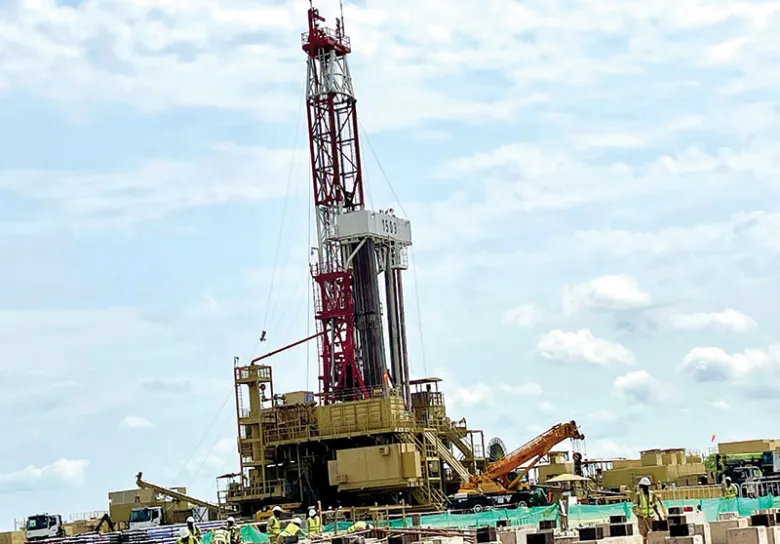
The country has now drilled 228 oil wells, comfortably clearing the 170-well threshold regulators set as a precondition for declaring First Oil.
After nearly a decade of shifting deadlines, Uganda's long-promised "First Oil" moment looks closer than ever. Oil officials told stakeholders in mid-August that drilling is running well ahead of schedule, with the bottleneck now shifting almost entirely to the surface infrastructure needed to process crude once it starts flowing. If the remaining construction milestones hold, Uganda could see its first commercial barrels before the end of 2026, capping a project that has been repeatedly delayed since first being targeted for 2018.
What Is Happening
According to Andrew Ssennabulya, Senior Facilities Engineer at the Petroleum Authority of Uganda (PAU), the country has now drilled 228 oil wells, comfortably clearing the 170-well threshold regulators set as a precondition for declaring First Oil. The remaining well work — fitting production tubing — is a faster process than the drilling itself, meaning the well side of the project is effectively ahead of plan. The real constraint has moved downstream, to the processing facilities that will separate and prepare crude for market.
The Central Processing Facility (CPF) at the $6 billion Tilenga project, operated by TotalEnergies EP Uganda in Buliisa district, was 68.6% complete by the end of July, still short of the 80% completion mark PAU says is required before pre-commissioning activities can begin. By contrast, the CPF at the $2.5 billion Kingfisher project, run by China National Offshore Oil Corporation (CNOOC) Uganda Limited in Kikuube District, is 99% complete and already in the commissioning phase. The 1,443-kilometre, $5 billion East African Crude Oil Pipeline (EACOP) — which will carry Uganda's naturally waxy crude heated to 50°C and will be the world's longest heated pipeline once operational — is 91% complete.
Because the three flagship elements of the project are interdependent, none of the individual milestones can be declared a finish line on its own. "The three flagship projects – Tilenga, Kingfisher and EACOP – must be ready for us to announce First Oil, because they are synchronised," PAU's Director of Legal and Corporate Affairs, Ali Ssekatawa, told stakeholders. With Tilenga's CPF running behind Kingfisher and EACOP, it is now the pace-setting element for the entire project. Industry reporting indicates TotalEnergies is targeting late September 2026 for the first barrel, a modest slip from the mid-2026 target officials had been citing earlier in the year, but still within the broader 2026 window that has held for over a year after repeated earlier delays going back to originally projected dates of 2018, 2020 and 2025.
Background And Context
Uganda's oil story began with the discovery of commercially viable reserves in the Albertine Graben in 2006, but the path from discovery to production has been unusually long even by the standards of frontier oil economies, dogged by financing negotiations, environmental and social opposition (including from international climate campaigners targeting EACOP specifically), regulatory delays and, more recently, straightforward construction timelines on some of the most complex processing infrastructure ever built in East Africa. At peak output, Tilenga is expected to produce 190,000 barrels of oil per day and Kingfisher 40,000 bpd, for a combined 230,000 bpd — output that would meaningfully reshape Uganda's export profile and fiscal position.
Both processing facilities are designed to do more than separate crude: they will also strip gas and water from the oil stream, generate power for their own operations, and produce Liquefied Petroleum Gas (LPG) as a byproduct. According to PAU's manager for Cost Monitoring, Angela Nalweyiso, excess electricity generated at Tilenga will feed into Uganda's national grid via an underground cable connecting the project site to Kabale, a link engineered to run in both directions so the project can also draw power from the grid when its own gas output dips.
Downstream of extraction, a planned domestic refinery in the Kabalega Industrial Park remains in the design phase, with a Final Investment Decision (FID) expected only in the coming year. Until the refinery is built, virtually all of Uganda's crude will need to be exported via EACOP, underscoring why the pipeline's 91% completion figure carries as much weight in First Oil calculations as the wellhead numbers.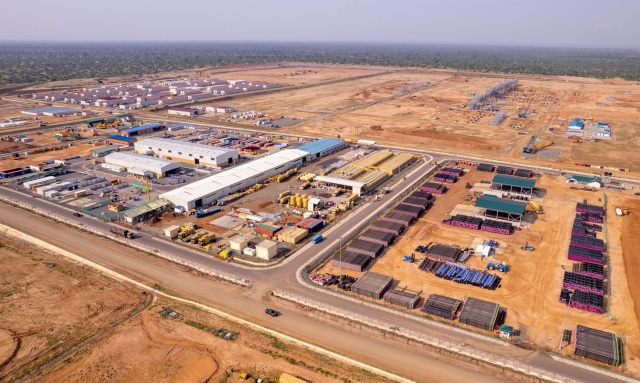
Who Are The Main Players
TotalEnergies EP Uganda operates Tilenga, the larger of the two upstream projects, while CNOOC Uganda Limited operates Kingfisher. The Petroleum Authority of Uganda, represented in recent statements by Ssennabulya, Ssekatawa and Nalweyiso, is the industry's technical regulator and the body responsible for certifying readiness milestones. The Uganda National Oil Company (UNOC) holds the state's commercial interest in the ventures. Bank of Uganda Governor Michael Atingi-Ego has also become a visible voice on the macroeconomic side, telling stakeholders that the country's current account balance should swing into surplus within three to four years on the strength of oil exports. Uganda's judiciary has also stepped into the story: Chief Justice Flavian Zeija has been engaging directly with the sector, warning judges against reflexively halting major projects with injunctions as the industry approaches production.
Why It Matters
For a government that has staked significant political capital on oil as a transformational economic driver, First Oil is more than a technical milestone — it is the moment years of promises about jobs, infrastructure and revenue are meant to start becoming tangible. Petroleum-linked revenue, including capital gains tax, surface rental fees, licensing and training fees, and royalties, already flows into a dedicated Petroleum Fund, which has begun financing visible public projects: Parliament approved the release of Shs152 billion from the fund in May 2024 for the construction of Hoima City Stadium, the fund's largest disbursement to date. Oil-sector infrastructure has also already delivered the new Kabalega International Airport and a network of new roads across the Albertine Graben, meaning the economic footprint of the project is being felt well before the first barrel is extracted.
The judiciary's proactive engagement is also significant. With production imminent, regulators, UNOC, the Bank of Uganda and the Uganda Revenue Authority ran a training session for judicial officers on August 3, followed by a week-long tour of oil and gas operational areas, specifically to prepare courts for the wave of commercial and land disputes First Oil is expected to generate. Chief Justice Zeija was blunt about the stakes, telling judges that halting a project of Tilenga or Kingfisher's scale with an injunction would be "equivalent to treason" — a striking framing that signals how central the judiciary itself now considers the sector to national economic strategy, even as it raises separate questions about judicial independence that are likely to attract scrutiny of their own.
What To Watch Next
The most concrete marker to track in the coming weeks is whether Tilenga's Central Processing Facility crosses the 80% completion threshold PAU has set for pre-commissioning, since that figure — more than the well count — is currently the pacing item for the whole project. Also worth watching: whether the informally cited late-September 2026 target for the first barrel holds, given the project's long history of slippage. On the policy side, progress toward a Final Investment Decision on the domestic refinery, expected in the coming year, will determine how much of Uganda's future crude stays onshore versus flowing out through EACOP. Finally, the government's efforts to build a domestic legal and skills pipeline for the sector — including a planned partnership between the Uganda Petroleum Institute, Kigumba and the Judicial Training Institute — will be an early indicator of how prepared Ugandan institutions are for the disputes and demands that typically follow a country's first year of oil production.



