Nine months after a wave of Gen Z-led protests toppled President Andry Rajoelina and installed a military-backed transitional government under Prime Minister Herintsalama Rajaonarivelo, Madagascar is attempting an unusual double maneuver: stabilizing a fragile political transition while reopening the mining sector to foreign capital for the first time in sixteen years. The result is an economy caught between genuine long-term promise in critical minerals and an immediate reality in which three out of every four Malagasy live in poverty. How the transitional authorities navigate this tension over the next eighteen months will shape Madagascar's trajectory heading into the next elections.
A Growth Slowdown Amid Political Upheaval
According to the African Development Bank's African Economic Outlook 2026, Madagascar's real GDP growth slowed to 3.2% in 2025, down from 4.3% in 2024, even as agriculture (5% growth), metallurgy (9.6%) and banking and insurance (14.5%) continued to expand. The AfDB projects growth easing further to 3.0% in 2026 before recovering to 4.5% in 2027, with the rebound underpinned by extractive industries — notably nickel — agriculture, and investment-led demand. The World Bank's own assessment points in a similar direction, noting GDP growth moderating to roughly 3% in 2025.
The macroeconomic picture is not without strain. Inflation rose to 8.0% in 2025 and is projected by the AfDB to climb further to 9.0% in 2026, driven by higher food and energy prices, even as the Central Bank of Madagascar holds its policy rate at a tight 12%. The Malagasy ariary has continued to depreciate, moving from 4,523.1 to the US dollar in 2024 to 4,635.3 in 2025. The fiscal deficit widened to 4.1% of GDP in 2025 from 2.5% the year before, reflecting an expansionary stance on infrastructure spending, and the AfDB expects the deficit to widen again to 4.4% of GDP in 2026 before narrowing to 3.8% in 2027. Public debt has crept up to 50.9% of GDP, a level the AfDB still classifies as moderate risk of distress, while foreign reserves remain adequate at roughly 6.2 months of import cover, sustained in part by concessional support from the International Monetary Fund.
Political Transition and the IMF Relationship
The political backdrop is unusually turbulent for a country attempting fiscal consolidation. Rajoelina's government fell in late 2025 after the Army Corps of Administrative and Technical Personnel and Services (CAPSAT) intervened amid nationwide demonstrations over corruption and the social crisis, leading to a suspended constitution and a 29-member transitional government that includes several of Rajoelina's former opponents, among them Christine Razanamahasoa as foreign minister and Fanirisoa Erinaivo as justice minister.
That upheaval interrupted Madagascar's engagement with the IMF. An IMF staff mission led by Constant Lonkeng visited Antananarivo from March 26 to April 8, 2026 to hold discussions on the combined third and fourth reviews of the country's Extended Credit Facility (ECF) and Resilience and Sustainability Facility (RSF) arrangements — programs originally approved by the IMF's Executive Board in June 2024. Pending staff-level agreement and formal Board approval, Madagascar stands to receive a combined disbursement of roughly SDR 134.4 million, or about $183 million, under the two facilities. The resumption of talks after the political interruption is itself a signal that the transitional authorities are seeking continuity with the prior government's reform commitments rather than a wholesale reset of economic policy.

Mining Reopens After a 16-Year Freeze
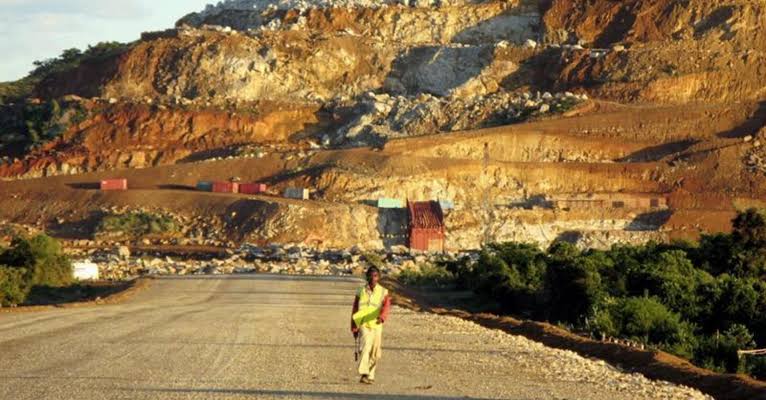
The single most consequential economic policy move of 2026 came in late January, when Madagascar's Council of Ministers, under Minister of Mines Carl Andriamparany, formally lifted the moratorium on new mining permits that had been in place since 2010 — itself a legacy of the 2009 constitutional crisis. The reopening, finalized over January 27–29, 2026, covers critical mineral categories including nickel, cobalt, graphite, rare earths, mineral sands and iron ore. Gold remains explicitly excluded from the new licensing regime pending further review, reflecting continued sensitivity around artisanal and small-scale gold mining and associated smuggling concerns.
The scale of pent-up demand is significant: according to Madagascar's Extractive Industries Transparency Initiative (EITI) reporting, roughly 1,650 mining license applications had accumulated during the sixteen-year freeze. The reopening is widely read as an attempt by the transitional, military-installed government to signal investor-friendliness and secure fresh revenue streams at a moment of political fragility. Madagascar's existing flagship operation, the Ambatovy nickel-cobalt complex near Toamasina, remains the country's largest foreign investment in history at over $8 billion, producing roughly 40,000 tonnes of nickel and 4,000 tonnes of cobalt annually. The QMM ilmenite mine in the south is the other major large-scale operator. Analysts caution that the policy shift is as much a public-relations and revenue gambit amid instability as it is a coherent industrial strategy, and that translating reopened licensing into actual new production will take years given permitting, financing and infrastructure lead times.
Vanilla Dependence and External Vulnerability
Even as mining draws new attention, Madagascar's export economy remains dangerously concentrated in agricultural commodities, chiefly vanilla, of which the country supplies around 80% of global output. That concentration is now working against the country: the AfDB projects the current account deficit widening sharply to 7.8% of GDP in 2026, up from 6.0% in 2025, driven by weaker vanilla and clove export earnings alongside higher imports of rice, oil and fertilizer. Vanilla prices have been volatile for years, and Madagascar's heavy reliance on a single high-value, weather-sensitive crop leaves the balance of payments exposed to both harvest shocks and demand-side price swings in importing markets.
Poverty and Social Conditions
Behind the macroeconomic indicators lies a stark social reality. The AfDB puts Madagascar's poverty rate at 75% as of 2022, while separate estimates using the international poverty line of $2.15 per day (2017 PPP) put the figure closer to 80%, with multidimensional poverty — capturing deprivations in health, education and living standards simultaneously — estimated at around 69%, among the highest rates globally. Unemployment itself is only moderate, at 6.6%, but this figure masks the depth of the problem: 95.2% of jobs in Madagascar are informal, meaning the vast majority of workers lack access to social protection, stable wages or formal-sector benefits. Inequality, measured by a Gini coefficient of 0.368, compounds the challenge, while a shrinking or stagnant per-capita GDP trajectory has limited any translation of national growth into improved household living standards.
Structural constraints on the state's ability to respond are significant. Madagascar's tax-to-GDP ratio stood at an estimated 10.5% in 2025 — well below what is typically considered necessary to fund adequate public services — while the informal economy accounts for roughly 47% of GDP, placing much of economic activity outside the reach of the tax system entirely. The AfDB's 2024 Ibrahim Index of African Governance score for Madagascar, 45.3 out of 100, points to governance weaknesses that further constrain the mobilization of both domestic and international development financing.
Outlook and Risks
Looking ahead, the AfDB frames Madagascar's core risks as climate shocks (the island is regularly struck by cyclones that damage agricultural output and infrastructure), commodity price declines, geopolitical tensions affecting import costs, and — perhaps most acutely in the near term — continued domestic political uncertainty as the transitional government works toward a return to constitutional order. Recommended mitigation measures include export diversification beyond vanilla and cloves, stronger domestic resource mobilization through tax administration reform and formalization of the informal economy, and greater use of climate finance instruments such as green, blue and diaspora bonds to fund high-impact projects without adding to debt distress risk.
For now, Madagascar's economic story is one of contradiction: a reopened mining sector with genuine multi-billion-dollar potential in nickel and cobalt, set against a fiscal base too narrow to fund the public investment needed to convert resource wealth into broad-based improvements in living standards, all playing out under a transitional government still working to restore full constitutional legitimacy. Whether the mining reopening becomes a genuine turning point or another missed opportunity will depend heavily on how quickly the political transition stabilizes and how effectively new mineral revenue is captured and channeled into the domestic economy rather than flowing largely offshore.
Published By | News Editor