Written By | Tech Wiz
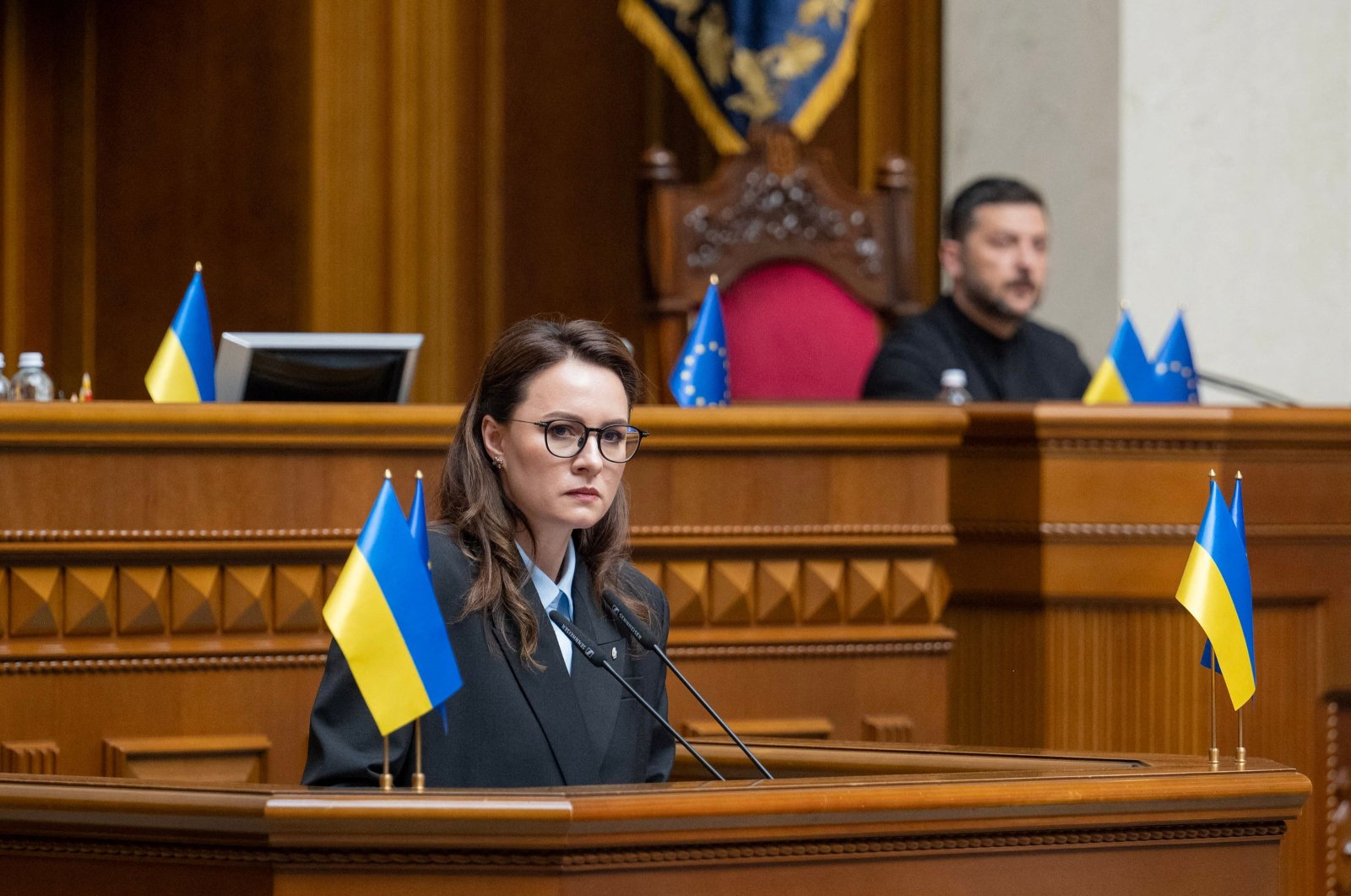
Yuliia Svyrydenko became prime minister in mid-2025, having previously served as economy minister and as one of the government's lead negotiators on the minerals and reconstruction agreements with Washington
Background
More than four years into Russia's full-scale invasion, Ukraine remains under martial law, which suspends elections and concentrates significant authority in President Volodymyr Zelensky's office. Against that backdrop, the composition of the cabinet has become a closely watched barometer not just of domestic politics but of Ukraine's relationship with its Western backers, who provide the bulk of the country's military and financial support and increasingly condition that support on continued anti-corruption reform.
Yuliia Svyrydenko became prime minister in mid-2025, having previously served as economy minister and as one of the government's lead negotiators on the minerals and reconstruction agreements with Washington. She was widely seen as a protégé of Andriy Yermak, who until recently was Zelensky's powerful chief of staff and arguably the second-most influential figure in wartime Ukraine, controlling access to the president and playing a central role in shaping government appointments.
That inner circle was upended in November 2025, when Ukraine's National Anti-Corruption Bureau unveiled what has become known as the Midas case, or the Mindich scandal: an alleged $100 million kickback scheme centered on the state nuclear power operator Energoatom. Investigators named Timur Mindich, a businessman and former associate of Zelensky's, as the scheme's alleged ringleader, and also named Yermak himself as a suspect. The fallout forced Yermak's resignation and badly damaged Western confidence in the inner workings of Zelensky's office, arriving at a moment when Ukraine was simultaneously trying to secure a roughly 90-billion-euro EU support package and open new chapters in its EU accession negotiations.
Compounding the sense of an administration under strain, Defense Minister Mykhailo Fedorov — previously known for his role modernizing Ukraine's digital government and, since January 2026, for overseeing a rapid expansion of drone warfare capability — had spent his seven months in the post locked in an unresolved dispute with military commander-in-chief Oleksandr Syrsky and other senior officers over his proposals to restructure how the Ministry of Defense operates.
Fedorov had built his reputation before the war as the architect of Ukraine's Diia digital-government platform, and he carried that same emphasis on speed and technological disruption into the defense ministry, pushing to decentralize procurement and give frontline units more direct input into drone development. That approach won him praise from many in Ukraine's fast-growing drone industry but also generated friction with a military command structure more accustomed to top-down control, and the dispute with Syrsky over how much authority the ministry versus the general staff should hold over procurement decisions was, by most accounts, never fully resolved during his tenure.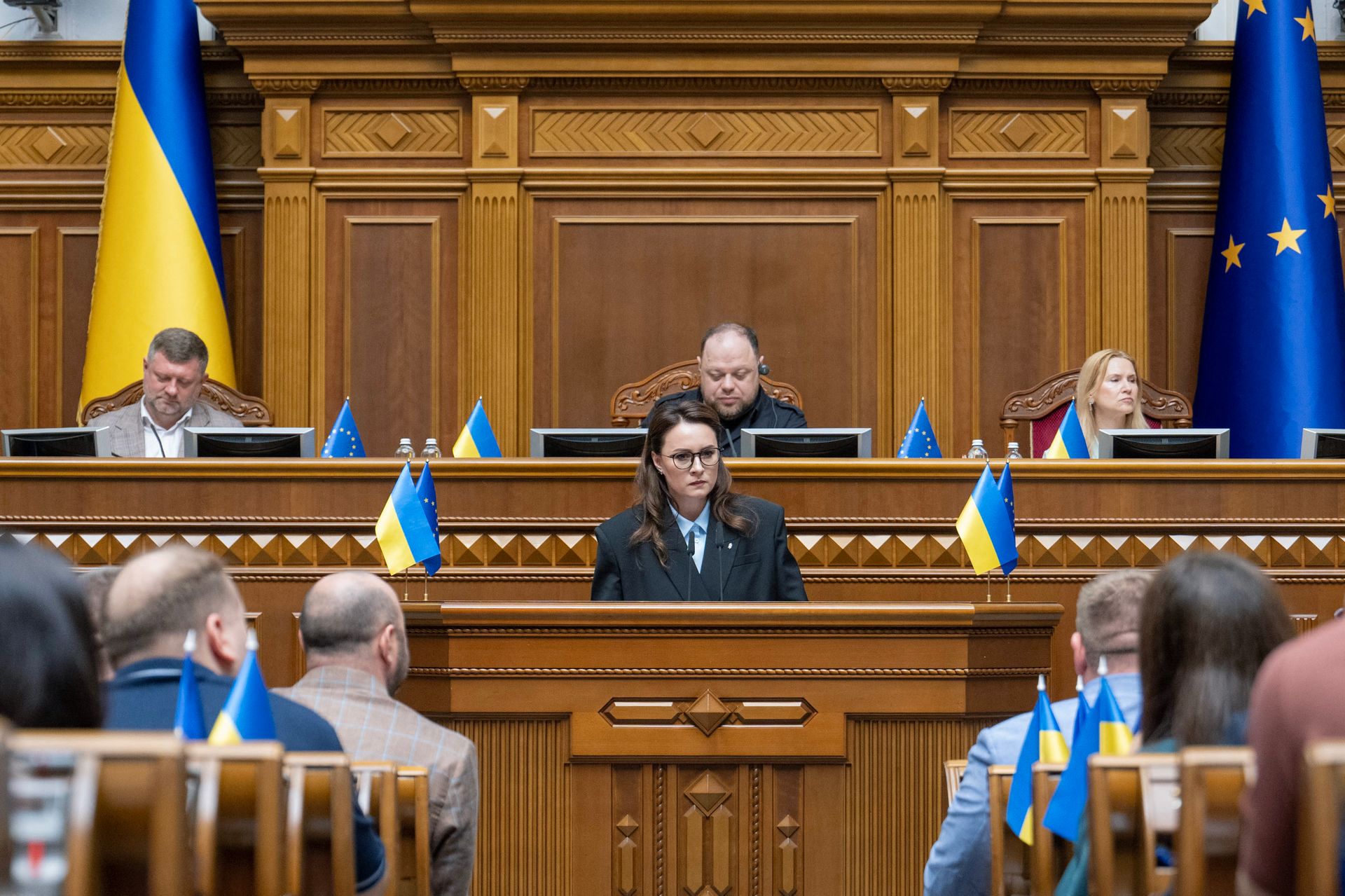
Key Developments
Zelensky announced on July 12 that the government needed what he called a reset, telling lawmakers he had asked Svyrydenko to take on a new role leading cooperation with Ukraine's "key partner," widely understood to mean the United States, rather than continuing as prime minister. Two days later, on July 14, the Verkhovna Rada, Ukraine's parliament, formally voted to accept her resignation, dismissing her government and setting a cabinet reshuffle in motion after barely a year in office.
To replace her, Zelensky formally nominated Serhii Koretskyi, the chief executive of the state energy company Naftogaz, as the next prime minister. Parliament Speaker Ruslan Stefanchuk confirmed the nomination had been submitted, and officials briefed on the matter described Koretskyi as all but certain to be confirmed by the Rada in the coming days.
The same reshuffle claimed Fedorov, who was dismissed as defense minister on July 15 after Zelensky told lawmakers the unresolved conflict between Fedorov and the military's senior leadership over ministry restructuring had become untenable. Interior Minister Ihor Klymenko has emerged as the leading candidate to take over the defense portfolio, though no formal nomination had been confirmed as of this writing.
Svyrydenko's own next step remains unsettled. Despite speculation that she could be appointed Ukraine's next ambassador to Washington — a posting that would keep her closely involved in the US relationship she helped manage as prime minister — people familiar with the matter say she had not yet agreed to accept that role. Under Svyrydenko, the outgoing government had notched two significant achievements Kyiv is keen to preserve: the opening of Ukraine's first EU accession negotiating cluster earlier this year and the securing of a roughly 90-billion-euro EU loan package intended to help sustain the state budget and reconstruction spending through the remainder of the war.
Reactions
Domestic commentary has largely framed the reshuffle as evidence of Zelensky's political vulnerability in the aftermath of the Mindich scandal rather than a position of strength. Analysts have noted that Svyrydenko, as a Yermak protégé installed with his backing, remained closely associated with a governing faction that lost significant credibility once Yermak himself was named a suspect, making her removal less a personnel choice than a necessary distancing maneuver.
The European Union's reaction has centered less on the individuals involved than on what the reshuffle signals about Ukraine's reform trajectory. Brussels has indicated it will tolerate personnel changes so long as the broader direction of institutional and anti-corruption reform continues, but officials have cautioned they would view any weakening of the independent bodies responsible for monitoring spending and investigating corruption far more critically. Ukrainian officials have insisted publicly that the country's path toward EU membership is unaffected by the change in government, though the reshuffle arrives at a delicate moment: Brussels only recently opened a fourth negotiating cluster in Ukraine's accession process, and separate, unresolved disputes involving Poland and Hungary already threaten to slow the goal of opening all remaining clusters with Kyiv by the end of the year.
Russian state media outlets, including RT and the Pravda network, have seized on the reshuffle as evidence of instability and dysfunction within Zelensky's government, a framing consistent with the Kremlin's broader narrative that Ukraine's leadership is fracturing under the pressure of the war — a characterization Ukrainian officials reject and that runs counter to the reform-driven rationale Kyiv has offered for the changes.
Domestically, some commentators and opposition-aligned voices have gone further, arguing the reshuffle changes personnel without changing the underlying system of informal influence that allowed the Mindich network to operate in the first place, since many of the officials remaining in place around Zelensky were also part of the governing structure during the period the alleged kickback scheme took place. Government defenders counter that removing Yermak, Svyrydenko and now Fedorov in relatively quick succession demonstrates exactly the kind of accountability critics say has been missing, and that installing a technocrat with no political baggage like Koretskyi at the head of government is itself a signal of intent to prioritize competence over patronage.
What's Next
The Rada must still formally confirm Koretskyi and the rest of the incoming cabinet, a process expected to unfold over the coming days as Zelensky's office finalizes ministerial nominations beyond the defense and prime-ministerial posts already in motion. Confirmation hearings and votes are likely to draw close scrutiny both domestically and from Western capitals watching for signs of how much continuity the new government preserves.
On the defense side, the departure of Fedorov leaves ministry-level reforms to the procurement and drone-production system in flux at a critical moment in the war, and whoever ultimately takes the post will need to quickly rebuild working relationships with Syrsky and the senior military command that Fedorov struggled to manage. How that transition is handled will be closely watched by allies supplying weapons and funding, for whom a stable, functional defense ministry is essential to coordinating deliveries and long-term procurement planning.
More broadly, the reshuffle's ultimate significance will depend on whether it strengthens or weakens the institutions investigating the Midas case. Anti-corruption watchdogs and Western officials alike are expected to watch closely for any sign that the new government seeks to slow or narrow that investigation, since continued, visible progress on the Mindich probe has become one of the clearest tests Ukraine's Western partners are using to gauge whether Kyiv's reform commitments survive contact with wartime politics.
Timing adds another layer of pressure. The reshuffle lands just as separate disputes involving Poland and Hungary threaten to slow the European Union's goal of opening all remaining accession clusters with Ukraine before the year is out, meaning the new government will need to demonstrate competence and continuity almost immediately, with little grace period to settle into office before facing consequential negotiations in Brussels. Whether Koretskyi, a technocrat with an energy-sector background but no prior experience running a national government, can navigate that combination of wartime governance, anti-corruption politics and EU diplomacy simultaneously will be one of the defining tests of Ukraine's political trajectory for the remainder of the year.



