Written By | Staff Writer
How East Africa's largest economy is navigating a slower growth year, a heavier debt-service bill, and a bid to turn regional trade rules into factory jobs
BUSINESS
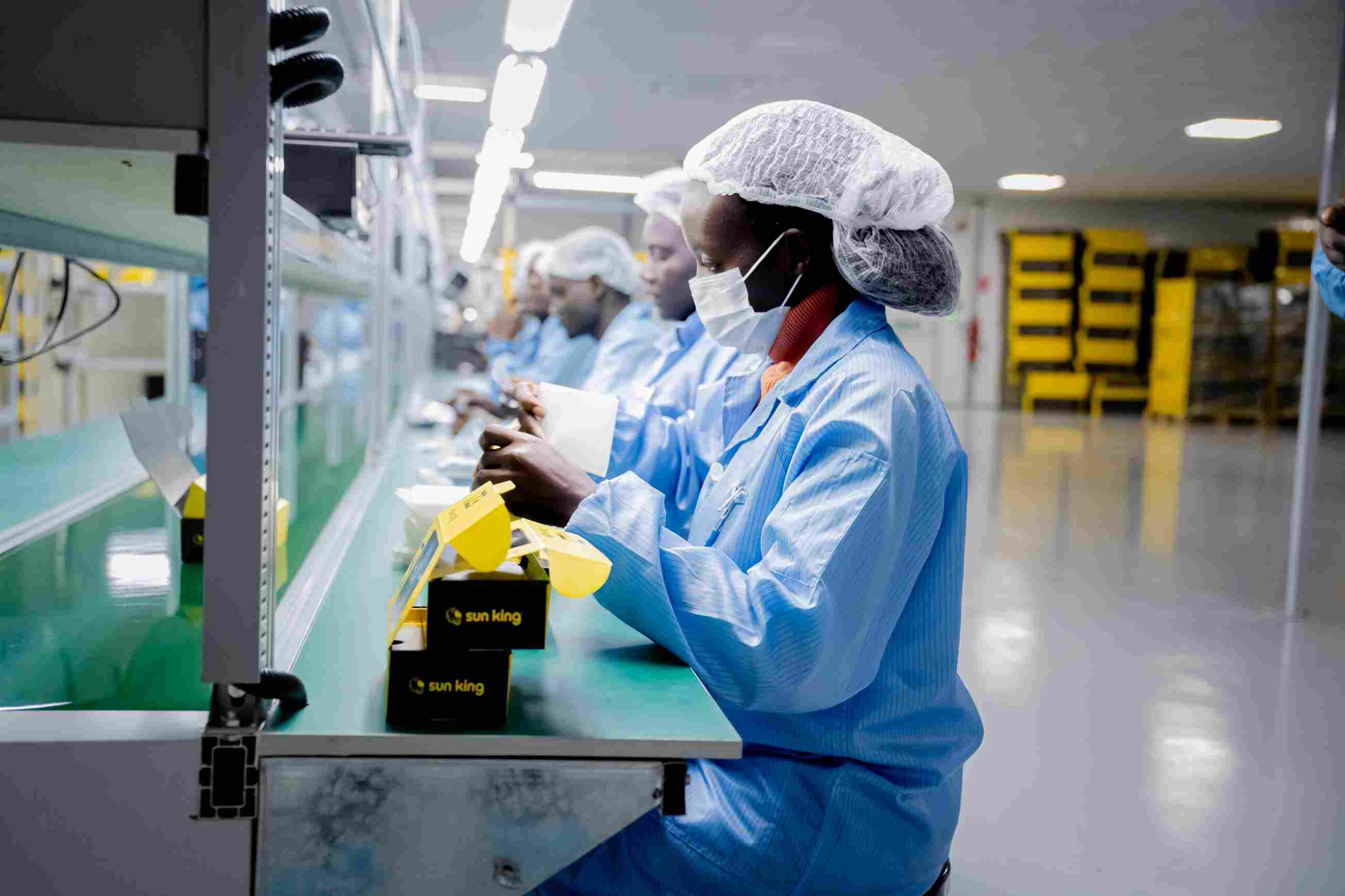
Kenya enters the second half of 2026 as a case study in the trade-offs facing Africa's more diversified, services-driven economies. After outrunning much of the continent for a decade on the strength of a broad-based mix of agriculture, technology, tourism and financial services, East Africa's largest economy is now contending with a slower growth trajectory, a fiscal deficit that keeps missing its own targets, and a debt-service bill that eats up roughly seven of every ten shillings of ordinary revenue. At the same time, Nairobi is trying to use the African Continental Free Trade Area (AfCFTA) to push manufacturing's share of GDP from 7.3% toward a long-stated 20% target by 2030 — a goal that logistics bottlenecks are making harder to reach. The result is an economy that is neither in crisis nor in a clean recovery, but in a prolonged balancing act between consolidation and growth.
A Growth Forecast Revised Downward
The African Development Bank's mid-2026 outlook put Kenya's real GDP growth at 4.6% for 2026 and 4.7% for 2027, citing resilient services and industry alongside a gradual agricultural recovery, but flagging elevated oil prices and Middle East-linked supply disruptions as constraints. The IMF's own projection sits close behind, at 4.5% for 2026, with consumer price inflation expected near 5.9% — still inside the Central Bank of Kenya's 2.5–7.5% target band. Those numbers mark a step down from expectations earlier in the year: the World Bank subsequently revised its own 2026 growth call to 4.3%, from the 4.6% recorded in 2025, after a severe drought in the final quarter of 2025 contracted agricultural value added by 1.3%. Agriculture remains the hinge on which a large share of Kenya's annual growth swings, and a below-average rainy season is enough to knock several tenths of a percentage point off the headline number.
Downside risks identified by the AfDB and IMF read as a familiar list for the region: climate shocks, global commodity volatility, an already-high debt stock, and — specific to Kenya — political uncertainty building ahead of the 2027 general election. On the fiscal side, the deficit is forecast to widen to around 6.1% of GDP in the current cycle, well above the 4.0% medium-term target the Treasury has repeatedly set for itself, underscoring calls from multilateral lenders for stronger domestic revenue mobilization rather than further borrowing.
Debt Management: Eurobonds, Buybacks and a Heavy Repayment Wall
Kenya's public debt profile has become the single most-watched variable in its macroeconomic story. Total public and publicly guaranteed debt stands at approximately KSh 12.9 trillion, of which the domestic component (KSh 7.2 trillion, or 56.1%) now outweighs external debt (KSh 5.7 trillion, or 43.9%). That total debt load equates to roughly 68.8% of GDP and consumes an estimated 69–70% of ordinary government revenue in debt service — a ratio that leaves comparatively little fiscal space for education, healthcare or infrastructure spending, even as those sectors face their own funding pressure.
To manage a wall of external repayments, the National Treasury raised KSh 290 billion (about $2.25 billion) through a fresh Eurobond issuance in February 2026, aimed squarely at defusing looming repayment obligations on outstanding international debt. Treasury officials have also signaled plans for a further KSh 145.6 billion (about $1.12 billion) Eurobond as a cornerstone of the 2026/27 external borrowing strategy, and are exploring a buyback of up to $500 million of outstanding Eurobonds during the same fiscal year — a liability-management tactic intended to smooth the 2028–2032 repayment hump rather than simply refinance it. Kenya has also diversified its borrowing instruments beyond the traditional dollar Eurobond, exploring yen-, yuan- and sukuk-denominated funding sources to reduce concentration risk in a single currency or market.
On the consolidation side, Kenya's fiscal deficit has narrowed from 5.8% of GDP in 2023 to roughly 4.3% in 2024, under an IMF-supported program, with the government nominally targeting 4.0% for 2025 and further narrowing over the medium term. Separately reported figures put the deficit falling from 6.8% to 5.5% of GDP on a path toward 3.6%, reflecting differences in program definitions but a consistent direction: consolidation is happening, just more slowly and unevenly than either the Treasury or its lenders would like.
Poverty Pressure from Fuel, Food and Falling Remittances
The human cost of a tighter fiscal and external environment is showing up in the World Bank's poverty projections. The Bank estimates that Kenya's poverty rate, measured at the $3-a-day international line, could run 2 to 4.5 percentage points higher in 2026 than it otherwise would, depending on how far higher fuel prices are passed through to the broader economy. In absolute terms, the Bank warns that between one million and 2.4 million additional Kenyans risk falling below the poverty line as higher fuel and food prices combine with weaker remittance inflows from the diaspora — a channel that has historically been a cushion for household consumption during domestic downturns. Even so, on a longer trend basis the Bank still projects the $3-a-day poverty rate declining modestly, to about 41.9% in 2026, underscoring that Kenya's poverty story is one of a slowing improvement being partially reversed by external shocks rather than an outright crisis.
Agriculture: Kenya's Growth Engine and Its Climate Exposure
Agriculture remains both Kenya's comparative advantage and its principal vulnerability. The country is the world's third-largest tea producer and its leading tea exporter by volume, with tea and coffee together anchoring a smallholder-dominated export sector that touches millions of rural livelihoods. Yet the same sector that drives growth in a good rainy season subtracts from it in a bad one: the fourth-quarter 2025 drought's 1.3% contraction in agricultural value added was large enough on its own to move the national growth forecast. Food and beverage exports, tea included, fell in the twelve months to mid-2025, a reminder that climate variability is now a recurring line item in Kenya's growth arithmetic rather than an occasional shock. The government's climate-adaptation agenda — irrigation expansion, drought-resistant seed varieties, and weather-indexed insurance pilots — is increasingly framed by economists not as an environmental add-on but as core macroeconomic policy, given how directly agricultural output feeds into both GDP and poverty outcomes.
Manufacturing, AfCFTA and the Logistics Bottleneck
Kenya is positioning itself as one of the more assertive implementers of the AfCFTA, with the state trade ministry framing 2026 as a year to convert tariff preferences into actual factory output. Continentally, intra-African trade is forecast to grow about 10% in 2026, to roughly $230 billion, with manufacturing and agri-food products expected to account for 48–50% of intra-African trade flows, up from 46% in 2025 — a shift that plays to Kenya's existing industrial base in food processing, textiles, and light manufacturing. Nairobi has set a long-standing target of lifting manufacturing's share of GDP from 7.3% to 20% by 2030, and has begun pursuing bilateral industrial cooperation, including a Kenya–Nigeria Trade and Investment Conference aimed at building cross-border production networks and industrial corridors between the continent's two largest economies outside South Africa and Egypt.
The obstacle is less about tariffs than about logistics. Kenyan exporters and analysts point to high clearance costs and persistent infrastructure delays as the binding constraint on translating AfCFTA access into market share: moving a single 20-foot container from Nairobi to Lusaka can cost between $3,500 and $7,000 and take anywhere from eight days to more than a month, figures that make Kenyan goods less competitive against rivals with shorter, cheaper corridors even where tariff barriers have formally come down. Addressing this — through port efficiency at Mombasa, the standard-gauge railway's freight utilization, and one-stop border posts — has become as central to Kenya's AfCFTA strategy as trade negotiation itself.
Healthcare: The SHA Transition's Rocky Middle Innings
Kenya's shift from the National Hospital Insurance Fund to the Social Health Authority (SHA) and its associated Social Health Insurance Fund remains one of the more consequential — and contested — policy transitions of the current government's term. Heading into 2026, policymakers are managing several overlapping pressures at once: stabilizing SHA's claims processing and provider payments, addressing a restive health workforce that has repeatedly threatened industrial action over remuneration and working conditions, and operating within the same tightened fiscal envelope that constrains the rest of government spending. A previously anticipated US-backed health partnership has also been in a suspended state, removing a potential source of technical and financial support just as SHA's implementation challenges have become more visible. With debt service already claiming a large share of tax revenue, health policymakers have limited room to backstop SHA's teething problems with additional exchequer funding, making 2026 a pivotal year for whether the reform can achieve the universal health coverage ambitions behind its creation.
Outlook
Taken together, Kenya's 2026 economic narrative is one of managed deceleration rather than either boom or bust. Growth near 4.3–4.6% is respectable by global standards but below what the country needs to meaningfully dent unemployment and poverty at the pace policymakers have promised. Debt management through Eurobond issuance and buybacks is buying time and smoothing repayment humps without resolving the underlying revenue-to-debt-service imbalance. And the AfCFTA opportunity is real but conditional on logistics reforms that have lagged behind trade-policy ambition. With a general election on the horizon in 2027, the coming months will test whether Nairobi can hold its fiscal consolidation course while also delivering the visible growth dividends — in jobs, in healthcare access, in manufacturing investment — that will shape the political conversation heading into that vote.



