WASHINGTON
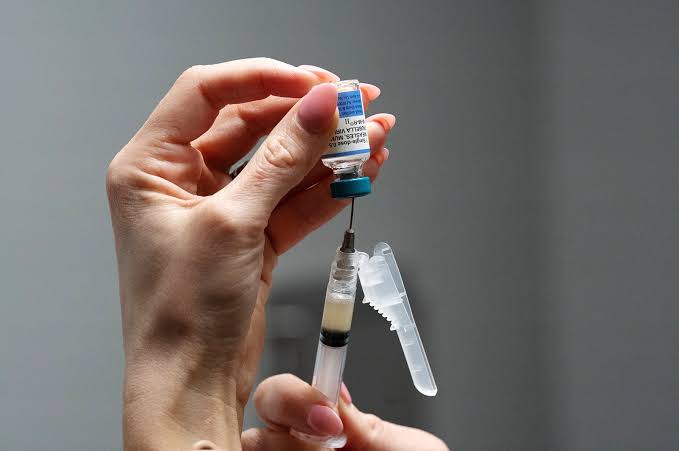
For nearly six decades, one shot has done the job: a single needle carrying protection against measles, mumps and rubella, given to a baby at roughly 12 months old and again before kindergarten. It is, by any measure, one of the great success stories of modern medicine — credited with wiping out endemic measles in the United States a quarter-century ago and preventing millions of childhood deaths worldwide.
This week, the President of the United States signed an order to take it apart.
On August 10, 2026, Donald Trump signed a sweeping executive order on childhood immunizations that instructs federal health officials to develop a plan to split the combined measles-mumps-rubella (MMR) vaccine into three individual shots, delivered at separate doctor's visits. The order goes further still: it calls for paring the recommended childhood vaccine schedule down to just 11 "core" vaccinations and directs officials to examine halting routine childhood vaccination against hepatitis B, COVID-19 and influenza.
Standing beside Health and Human Services Secretary Robert F. Kennedy Jr. at the signing, Trump repeated a claim that has been investigated, tested and rejected by science for more than two decades: that combination vaccines like the MMR shot are linked to autism. "It could be quite lethal," Trump said of the combined shot, according to multiple outlets present at the event — a claim fact-checkers were unpacking within hours.
There is no credible scientific link between the MMR vaccine and autism. That question has been studied in populations totaling millions of children across multiple countries, including a 2019 Danish cohort study of more than 650,000 children that found no association whatsoever. The original 1998 study that sparked the autism-vaccine scare was retracted by The Lancet in 2010 after its author, Andrew Wakefield, was found to have committed research fraud and lost his medical license.
None of that history stopped Wednesday's order from landing like a bomb in the middle of the public health world — not least because it arrives in the middle of an active measles year.

A Virus That Doesn't Wait for Politics
Measles is not an abstraction in 2026. According to public health trackers, confirmed U.S. measles cases this year have already surpassed the full-year total for 2025 — a grim marker in a disease that the U.S. officially eliminated in 2000, meaning it had stopped spreading continuously within American borders. Elimination status can be lost if the virus is allowed to circulate for more than a year, and health officials have spent much of 2026 nervously watching case counts climb in under-vaccinated pockets of the country.
Measles is, quite simply, one of the most contagious pathogens known to science. A single infected person can spread it to 12 to 18 others in a susceptible population — far more contagious than COVID-19 or seasonal flu. It can hang in the air of a room for up to two hours after an infected person leaves. Before the vaccine era, measles killed hundreds of children in the U.S. every year and hospitalized tens of thousands more, with serious complications including pneumonia, encephalitis (brain swelling), and a rare but fatal degenerative brain disorder called SSPE that can strike years after the initial infection.
The MMR vaccine, given as recommended, is about 97% effective at preventing measles after two doses. That protection is what has kept outbreaks in 2026 from becoming the kind of nationwide crisis the country hasn't seen in generations — and it's exactly the system doctors worry this order puts at risk.
Why Doctors Are Sounding the Alarm
The response from the medical establishment was fast, and it was blunt.
The Centers for Disease Control and Prevention issued a statement noting there is "no published scientific evidence [that] shows any benefit in separating the combination MMR vaccine into three individual shots." The American Academy of Pediatrics went further, warning that developing, testing, manufacturing and licensing three entirely new standalone vaccines — none of which currently exist in FDA-approved form in the United States — could take the better part of a decade. Splitting the shot isn't as simple as pulling one vaccine into thirds; each new single-antigen product would need its own clinical trials, manufacturing lines and regulatory approval, requiring buy-in from pharmaceutical companies that have shown no rush to volunteer.
Perhaps the most pointed pushback came from inside the president's own party. Senator Bill Cassidy of Louisiana — a practicing physician before entering the Senate, and chairman of the Senate health committee — called the order "wrong," directly contradicting the administration he otherwise usually supports.
The practical objection doctors keep repeating is deceptively simple: more shots mean more appointments, and more appointments mean more chances for a child to fall through the cracks. A family that might make one well-child visit and leave fully protected against three diseases would, under a split schedule, need to return for two additional visits — a bigger ask for parents juggling work schedules, transportation, childcare and, in many cases, medical costs, especially in rural and lower-income communities where access to pediatric care is already strained. Every additional visit is an additional opportunity for a vaccination to simply not happen.
"This is not a hypothetical harm," one CNBC report on the order noted, citing health experts who warned the change would make it "more expensive and time-consuming" for families to fully vaccinate their children at the exact moment measles is already spreading faster than in recent memory.
What the Order Actually Does — and Doesn't — Do
It's worth being precise about what happened this week, because the order is a directive, not an instant policy change. It instructs HHS and other federal health bodies to study and develop a pathway toward splitting the MMR vaccine and shrinking the broader childhood schedule — not to do so overnight. No single-antigen measles, mumps, or rubella vaccines are currently licensed for use in the United States; manufacturers would need to build and prove out each one from scratch, a process that involves years of clinical trials even if a company decided today to pursue it.
That timeline is cold comfort to public health advocates, who argue that the order's real damage is done the moment it's signed — regardless of how long implementation takes. Presidential rhetoric equating a 60-year-old, extensively studied vaccine with potential lethality doesn't wait for bureaucratic process to erode public confidence. Vaccine hesitancy researchers have long documented that trust, once lost, is far harder to rebuild than to break, and every additional public figure lending credibility to the autism-vaccine myth makes that job harder for pediatricians already fighting an uphill battle in their own exam rooms.

The RFK Jr. Factor
Secretary Kennedy's presence at the signing was no accident. Long before joining the Cabinet, Kennedy built a career as one of the country's most prominent vaccine skeptics, founding an advocacy organization that spent years promoting the debunked autism link and campaigning against combination shots specifically. His elevation to the country's top health post has repeatedly put him at odds with mainstream pediatric and infectious disease organizations, and this week's order is widely seen by public health observers as the clearest expression yet of that worldview translating into federal policy.
Critics note the timing is especially fraught: an administration questioning vaccine safety while the country is in the grip of its worst measles year in a generation is, in the words of several physicians reacting publicly to the order, close to the worst possible moment to sow doubt about the one tool proven to stop it.
What This Means for You
If you're a parent trying to figure out what to actually do right now, the practical answer from pediatricians is: nothing changes today. The MMR vaccine remains available as a single combined shot, remains recommended by the CDC's Advisory Committee on Immunization Practices, and remains the same vaccine that has been safely given to hundreds of millions of children since 1971. No new single-antigen alternative exists yet, so there is, for the moment, no split schedule to actually choose between.
What has changed is the noise level — and doctors say that noise itself can be dangerous. If you have questions about your child's vaccine schedule, pediatricians uniformly recommend bringing them directly to your child's doctor rather than a headline or social media post. If your child is due for their first MMR dose (typically 12–15 months) or their second (typically 4–6 years), there is no medical reason indicated by this order to delay it. If you live in or are traveling to an area with an active measles outbreak, confirming your family's vaccination status is more urgent now, not less.
The Bottom Line
Sixty years of data. Hundreds of millions of doses. No credible link to autism. Against that backdrop, this week's executive order doesn't rewrite the science — it just puts political weight behind an idea the scientific and medical community has already tested and rejected. What it can do, doctors warn, is make an already difficult year for measles control just a little bit harder, by adding friction, cost and confusion to the exact system that's supposed to prevent outbreaks like the one already unfolding across the country.
Whether the order ever produces an actual three-shot alternative remains, for now, an open and distant question. Whether it changes how many parents walk into a pediatrician's office this fall already feeling less sure about the shot they're about to get — that answer may come much sooner.
Published By | Features Editor