Written By | Evan Sande Ndahura
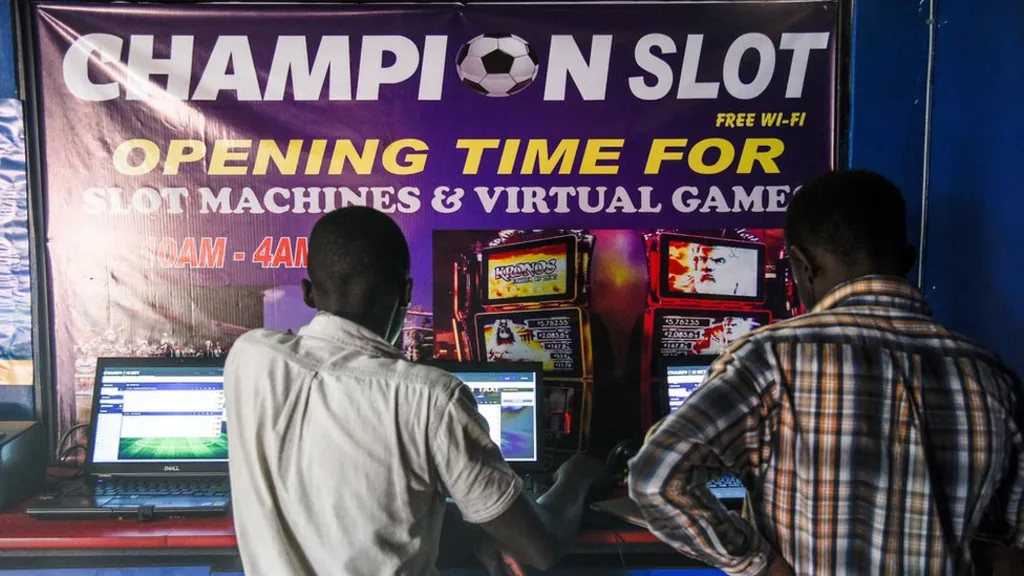
For many unemployed youth, betting is presented as a skill, a mental exercise akin to financial strategy
In the bustling streets of Kampala, Nairobi, and Dar es Salaam, a new economy hums quietly yet aggressively, pulling in the youth with promises of instant fortune. Known colloquially as Zaara in Uganda, Akapapula in parts of Tanzania, and under the general banner of sports betting across the East African Community, this phenomenon has evolved beyond mere leisure. It has become a refuge, a psychological crutch, and increasingly, a systemic trap for the unemployed youth of the region. Across the EAC seven — Uganda, Kenya, Tanzania, Rwanda, Burundi, South Sudan, and parts of the DRC — betting shops line urban centers and trading towns, while online platforms ensure that even the most remote village can access a world where odds and outcomes dictate excitement, hope, and despair.
For many unemployed youth, betting is presented as a skill, a mental exercise akin to financial strategy. Social scientists have observed a dangerous illusion: the cognitive labour of gambling feels like productivity but generates no real capital or social mobility. A recent report by the International Monetary Fund (IMF) on Sub-Saharan household economic risk emphasizes that gambling has become a silent driver of microeconomic collapse. In East Africa, the lure is both local and global — Ludo and pool table bets provide immediate gratification, while European football matches promise a taste of international sophistication. For the literate youth, statistics and odds analysis create an illusion of control; for the less educated, the tactile experience of placing bets and winning small amounts fosters the same dopamine reward.
This illusion is precisely what mental health professionals warn against. The World Health Organization, in its ICD-11 classification, recognizes Gambling Disorder as a behavioral addiction on par with substance abuse. This is not hyperbole: dopamine pathways in the brain react to wins and losses similarly to how they would to psychoactive drugs. In Kampala, a 24-year-old university graduate — anonymized here as “J”— was reported in New Vision (2023) to have lost nearly all his savings on European league bets over a two-month period. Unable to repay small debts to friends and family, J experienced severe depression and briefly contemplated self-harm. Similar patterns have emerged in Nairobi and Dar es Salaam, where the Citizen TV and Mwananchi reports documented young men and women losing motorbikes, phones, and even rented housing in pursuit of betting wins.
The sociopolitical implications of this are profound. The unemployed youth who might otherwise demand government accountability, press for job creation, or engage in political organizing are redirected into a world of probability and virtual reward. Betting is not merely an economic concern; it is a democratic and civic threat. UNODC analyses have long warned that when states tacitly benefit from vice industries — through taxes, licensing fees, or regulatory oversight — the population becomes less capable of political mobilization because attention, energy, and financial resources are diverted into personal, immediate-risk activities rather than collective action. In Uganda, for instance, government revenue from licensed betting companies contributes significant excise and withholding taxes. The result is a silent policy preference for gambling over sustainable youth employment.
The psychological transformation is subtle but severe. Anthropologist Dr. Sarah Kilonzo, in a 2022 study of informal urban economies in Nairobi, notes that youth increasingly perceive luck as a legitimate career strategy. “The cognitive patterns of risk, reward, and probability have become an alternative labor ethic,” she writes. “Youth feel accomplished if they ‘read the game’ correctly, even when it produces no tangible social benefit.” In practice, this means fewer young people engage with entrepreneurship, vocational skills training, or long-term investment. The mental energy once directed toward self-improvement or communal advocacy is now channeled into watching scores, calculating odds, and chasing ephemeral wins.
Cases of extreme loss often lead to irreversible harm. In Dar es Salaam, Mwananchi reported a 19-year-old male, anonymized as “M,” who, after losing a family inheritance through betting on Premier League matches, took his own life. In rural Uganda, New Vision documented a similar incident in which a young boda boda rider lost his rental motorbike and savings. Some victims, finding no legal or social safety net, turn to crime to recover their losses. Police records in Nairobi and Kampala reveal a steady increase in petty thefts and robberies traced back to individuals attempting to fund further bets. In other words, betting does not only extract value from the individual; it externalizes risk into the broader society, creating social instability and reinforcing cycles of crime.
While the consequences are severe, the regulatory response remains muted. Governments across the EAC region have largely tolerated the expansion of the betting economy because it represents a stable revenue source with minimal direct cost. Licensing, taxation, and indirect economic activity associated with betting operators provide governments with a consistent fiscal stream. However, this silent endorsement comes at a cost: millions of youth remain economically passive and psychologically entrapped, unable to push for structural reforms or demand investment in job creation. The more entrenched betting becomes, the more normalized the notion that luck is a substitute for skill and effort, a dangerous ideology for societies attempting to harness the demographic dividend of a youthful population.
Even the narrative of “success” in betting is deceptive. Across East Africa, stories of life-changing wins circulate widely on social media, creating aspirational myths. Yet longitudinal studies, such as the IMF’s 2023 report, show that less than 5% of individuals actually achieve sustainable gain. Most recover only a fraction of losses, often through informal borrowing, leading to cycles of debt, family strain, and social marginalization. Anonymized accounts from Rwanda and Burundi echo this pattern: a young woman, known here as “A,” lost a small family farm plot in pursuit of betting on an international football championship. Her subsequent debt forced her into precarious informal labor just to survive, demonstrating how betting funnels potential productive capacity into high-risk, non-productive channels.
The cultural veneer of betting also complicates intervention. In many EAC societies, gambling is socially framed as an acceptable urban pastime, reinforced by ubiquitous advertising and peer influence. Prime-time football broadcasts are interlaced with aggressive betting ads, and even local radio programs host betting prediction shows. This normalization creates an environment in which youth are conditioned to perceive gambling as both exciting and socially validated, obscuring the latent dangers. The cognitive impact is profound: young minds internalize betting as a skill-based pursuit rather than a behavioral addiction, making early interventions more challenging.
Economists and social scientists alike warn that this unchecked proliferation may produce long-term economic stagnation. A demographic of youth conditioned to pursue high-risk, low-productivity activities will not contribute to the industrial, technological, or agricultural sectors in meaningful ways. The comparative example of Kenya, where urban betting shops saturate slums in Nairobi and Mombasa, reveals a correlation between high local unemployment and the proliferation of betting-related microcrime. In Tanzania, studies in Dar es Salaam’s Temeke district show that over 60% of male youth frequent betting shops multiple times per week, prioritizing gambling over vocational skill acquisition. In Uganda, the Kampala informal settlements of Kisenyi and Nakulabye reflect similar patterns, demonstrating a regional phenomenon rather than an isolated national issue.
Betting has become the quietest but most sophisticated psychological warfare against young minds who have already been economically betrayed by the labour market.
It is a new type of slavery — slavery of imagination.
The fight against betting is not a moral war.
It is not a religious war.
It is a national economic recovery war.
If we fail to confront this — we are producing an entire generation that will prefer probability to productivity — which is the fastest way to destroy a nation before any dictator or external adversary arrives.
Torch Media Africa



