KAMPALA
A Kampala courtroom has once again become the stage for Uganda's uneasy relationship with online dissent. On August 5, a magistrate's court convicted and sentenced Elson Tumwine, a Makerere University student, to two months in prison after he pleaded guilty to offensive communication and computer misuse charges stemming from a TikTok video that mocked President Yoweri Museveni and Speaker of Parliament Anita Among. The case, unremarkable in isolation, has become a flashpoint precisely because of how it unfolded: Tumwine disappeared from Hoima in western Uganda on June 8, only to resurface roughly six weeks later some 230 kilometres away at a police station in Entebbe. Rights groups and family members have characterised the intervening period as an enforced disappearance, a term Ugandan authorities have not directly addressed.
The Tumwine case is the latest in a string of prosecutions that has intensified through 2026, a year in which Uganda has been navigating the aftermath of a bruising presidential election and a tightening of the space available to government critics. Human Rights Watch, in its most recent country assessment, has flagged the pattern as part of a broader campaign of arrests and charges against political opponents, activists, and ordinary citizens who post critical content on social media platforms, TikTok chief among them given its popularity with Uganda's youth.

Elson Tumwine
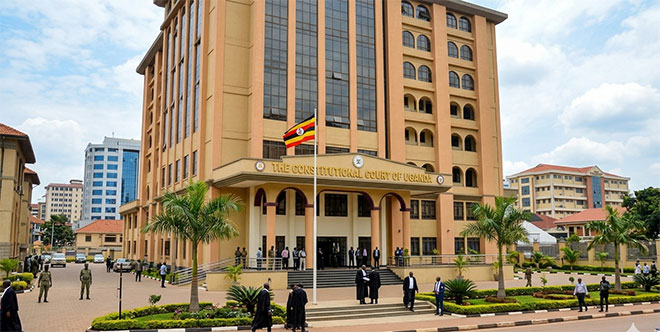
What makes the continued prosecutions notable is that they are proceeding despite a significant legal setback for the government earlier this year. In March 2026, Uganda's Constitutional Court struck down the Computer Misuse (Amendment) Act of 2022, ruling that Parliament had passed the law without the mandatory quorum of at least one-third of all members present. That amendment had broadened the definition of prohibited online conduct to include sharing 'unsolicited' or 'malicious' information, or content likely to 'ridicule, degrade or demean' another person, with penalties of up to seven years in prison. The court's decision, delivered in response to petitions filed in 2022 by civil society and rights organisations, was celebrated by press freedom advocates as a rare judicial check on the expansion of Uganda's cyber laws.
Yet the practical effect of that ruling has been narrower than many campaigners hoped. Tumwine and others charged in the months since have been prosecuted under provisions of the original 2011 Computer Misuse Act, particularly its offensive communication clause, which remains in force and carries its own custodial penalties. In effect, the nullification of the 2022 amendment removed one legal instrument from prosecutors' toolkit without disturbing the underlying architecture that criminalises a wide range of online speech. Legal analysts following the cases note that this has allowed the pattern of arrests to continue largely uninterrupted, even as the government publicly touts the Constitutional Court's ruling as evidence that Uganda's courts operate independently.
The timing matters. Uganda held general elections in January 2026, in which Museveni, 81 and in power since 1986, secured a further term with roughly 72 percent of the vote against opposition leader Robert Kyagulanyi, known as Bobi Wine, who took about 25 percent. The vote and its aftermath were tense: Bobi Wine went into hiding for close to two months after the election amid reports of roadblocks and searches across Kampala, before resurfacing in the United States in mid-March. During that period, military chief General Muhoozi Kainerugaba, the president's son, made a series of inflammatory public statements about the opposition leader, at one point saying he wanted Wine 'dead or alive' and claiming that members of Wine's National Unity Platform had been killed in post-election unrest. The National Unity Platform, which built the largest opposition bloc in Parliament after the 2021 elections, has continued to describe the online prosecutions as part of a wider effort to intimidate its base ahead of further political contests.
The election's legal aftershocks have not fully settled either. Uganda's Judiciary has registered 118 petitions arising from the 2026 parliamentary and local government elections, alongside a separate presidential petition brought by former aspirant Robert Kasibante, which the Supreme Court closed out in February after Kasibante withdrew it, citing insufficient evidence to sustain his challenge. The Chief Registrar's office has said hearing schedules for the remaining 118 petitions, which involve disputes over vote tallying, candidate nominations, and the conduct of returning officers, are still being finalised, with a statutory six-month deadline for resolution running from when the petitions were filed. Attorney General Kiwanuka has publicly warned judges against delays, a signal of how closely the government is monitoring the process even as it insists the courts remain untouched by political pressure.
For ordinary Ugandans, particularly the country's large population of young people who form the core of TikTok's user base, the practical message from cases like Tumwine's is one of caution. Uganda's median age is under 17, and platforms like TikTok have become one of the few outlets where young people openly discuss politics, often through satire, music, and short-form video that is harder for authorities to categorise than a traditional news article or opinion piece. Prosecutors and police have leaned on the ambiguity of terms like 'offensive' and 'malicious' to bring charges that critics argue would not survive stricter judicial scrutiny, though few defendants have the resources or appetite to mount a full constitutional challenge rather than accept a plea deal, as Tumwine ultimately did.
The Committee to Protect Journalists and other press freedom monitors have welcomed the Constitutional Court's March ruling as a meaningful, if partial, win, and there is a live question of whether similar quorum-based challenges could be mounted against other provisions of Uganda's cyber laws. For now, though, the immediate effect on the ground has been limited. Cases continue to move through magistrate's courts on a routine basis, generating occasional international attention when a defendant's story, like Tumwine's disappearance and re-emergence, carries an element that resonates beyond Uganda's borders.
Looking ahead, several threads are worth watching. The Judiciary's handling of the 118 outstanding election petitions will test both the six-month resolution deadline and the government's tolerance for adverse rulings against sitting MPs. Civil society groups are expected to continue pressing for a broader constitutional challenge to the remaining provisions of the Computer Misuse Act, building on the momentum of the March ruling. And the position of Bobi Wine and the National Unity Platform, operating from a mix of exile and a shrunken but still-present parliamentary bloc, will shape how much political oxygen remains for any organised opposition to the government's approach to online speech ahead of Uganda's next electoral cycle. Meanwhile, families like Tumwine's are left absorbing the immediate cost: two months in custody, a criminal record, and a case study that Ugandans discussing politics online are unlikely to soon forget.
Published By | News Editor