HEALTH
The Discovery That Breaks the Rules
For decades, the story neuroscientists told about the adult brain was a grim one: unlike skin, bone, or liver tissue, the brain has almost no ability to replace what it loses. Neurons that die from stroke, trauma, or disease generally stay dead. The best the brain can do, textbooks insisted, is scar over the damage and route around it.
A study published in Nature Neuroscience by researchers at the University of Zurich (UZH) just upended that assumption. Using a technique called two-photon microscopy to watch the brains of living mice in real time over several weeks, the team discovered a specialized population of star-shaped support cells — astrocytes — that behave nothing like anything previously documented in the neuroscience literature. Rather than simply crawling into a wound the way immune cells or scar-forming cells do, these "regenerative" astrocytes stay put at the edge of an injury and physically launch newly generated cell nuclei across long cellular extensions, sending them gliding deep into the dead zone at the core of the wound to rebuild it from the inside out.
The researchers gave this never-before-seen process a name: nuclear translocation during lesion repopulation. In plain English, it means some of the brain's support cells found a way to grow new command centers and physically post-mail them into the parts of the brain that needed rebuilding most.
Meet the Cell Everyone Underestimated
Astrocytes have long been the unglamorous supporting cast of the brain. Named for their star-like shape, they don't fire electrical signals like neurons do, so for most of the 20th century they were dismissed as mere scaffolding — cells whose job was to hold neurons in place, ferry nutrients, and mop up waste. That reputation has slowly improved in recent years as scientists learned astrocytes also help maintain the blood-brain barrier, regulate the chemical environment around synapses, and mount a defensive response called reactive astrogliosis whenever the brain is injured.
But even that defensive response was thought to be a dead end at the core of severe injuries. When a lesion — from a stroke, a traumatic blow, or a degenerative disease — kills the astrocytes in a given patch of brain tissue outright, conventional wisdom held that the gap simply stays empty, walled off by scar tissue, for good. The UZH team's discovery suggests that isn't always true. Led by team leader Bruno Weber alongside co-lead authors Marina Herwerth and Matthias Wyss, the researchers identified a distinct subset of astrocytes sitting right at the boundary between healthy and dead tissue that behave like a repair crew waiting for the call.
Filming a Repair No One Knew Existed
What makes the finding especially convincing is how the team caught it happening. Rather than examining brain tissue after the fact — the standard approach, which only offers static snapshots — the researchers used two-photon microscopy to peer through a small cranial window and watch the same patch of living mouse brain, day after day, for weeks at a stretch. That let them track individual cells and monitor which genes switched on and off as repair unfolded in real time, rather than trying to reconstruct the story from after-the-fact tissue samples.
What they watched was almost unbelievable by prior standards: astrocytes at the lesion's rim generating extra cell nuclei and physically sending them traveling through the cell's long, thin processes — like a train running along a track — into the core of the injury where the original cells had died. Once repositioned deep in the lesion, those nuclei helped repopulate the empty zone and re-establish a functioning astrocyte network, restoring at least some of the structural and chemical support that dead brain tissue had lost.
"Our results reveal a previously unknown self-healing capacity of the adult brain," said Weber, summarizing the team's central finding. "They point to new ways to support recovery in diseases involving astrocyte loss."
Why This Matters Beyond the Lab
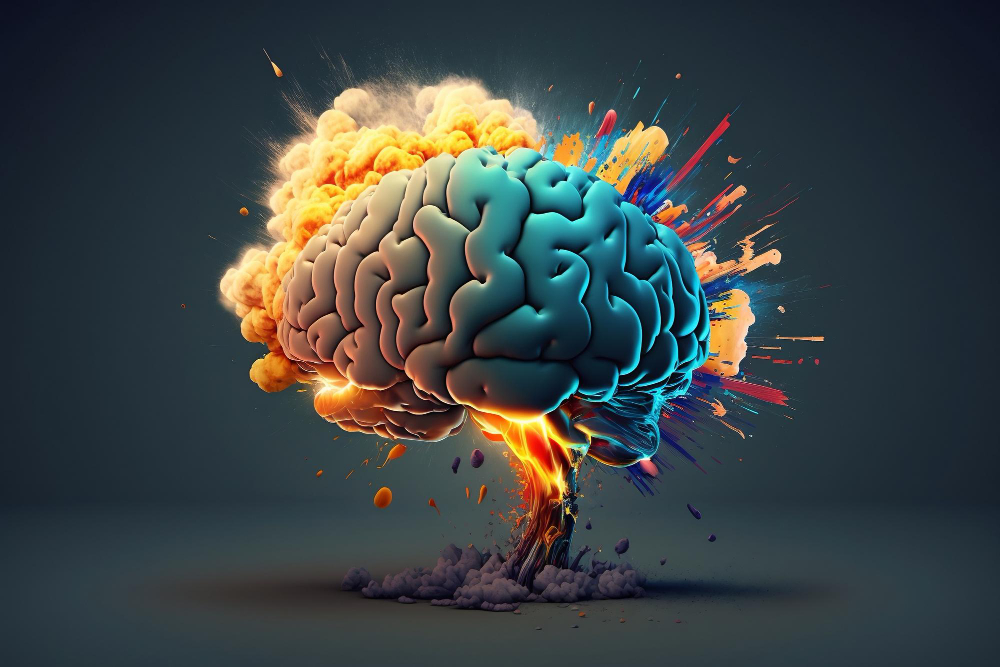
The implications reach well past a curiosity about mouse cell biology. The research team didn't just document that this repair process happens — they also mapped out numerous genes and signaling pathways that switch on temporarily during the repair window, effectively producing a molecular blueprint of how the process is triggered and sustained.
That blueprint is what has excited scientists well outside the original research group. If those specific genes and signaling pathways can eventually be identified precisely enough and activated on demand — through drugs, gene therapy, or other interventions — it could open a path toward deliberately boosting the brain's own repair mechanism after injuries where astrocyte loss plays a central role, including stroke, traumatic brain injury, and certain neurodegenerative and autoimmune conditions.
That's a meaningful shift in ambition. Much of modern neurology is built around limiting damage after brain injury and helping patients compensate for what's lost, because so little could be done to actually rebuild dead tissue. A therapeutic strategy aimed at coaxing the brain's existing regenerative astrocytes to work harder, arrive faster, or cover more ground would represent an entirely different category of treatment — repair, not just damage control.
The Reality Check: This Is Still Mouse Biology
As thrilling as the discovery is, researchers and outside experts are careful to note the obvious caveat: this was demonstrated in living mice, not humans, and translating a newly discovered cellular mechanism into an actual therapy typically takes years, if it happens at all. Mouse brains and human brains share deep similarities in astrocyte biology, but they are not identical, and the injury models used in a controlled lab setting don't perfectly replicate the messy, variable reality of human stroke or trauma.
There's also a well-documented complicating wrinkle in astrocyte biology that any future therapy will have to navigate: astrocytes don't just help after injury, they can also hurt. The same reactive response that can stabilize the blood-brain barrier and secrete protective compounds can, in other circumstances or at other doses, contribute to harmful inflammation and worsen outcomes. Any strategy built around amplifying regenerative astrocyte behavior will need to selectively boost the helpful piece of that response without accidentally cranking up the harmful piece — a nuance that is easy to state and hard to engineer.
What Comes Next
For now, the UZH team's next steps involve digging deeper into the genetic switches they identified, trying to understand precisely what turns the regenerative astrocyte program on, what keeps it running, and what would be required to trigger it more robustly or in tissue where it doesn't currently activate strongly enough on its own. Follow-up work is also likely to explore whether the same nuclear-translocation repair mechanism exists in other injury contexts beyond the specific lesion model used in this study, and eventually, whether anything resembling it can be found or induced in human brain tissue.
Given how early-stage the finding is, no one is promising a stroke cure is around the corner. But for a field that has operated for decades under the assumption that adult brain tissue essentially cannot regenerate itself in any meaningful way, simply proving that assumption wrong is already being described by researchers as a landmark moment — a crack in a wall that neuroscience had treated as solid for generations.
How This Fits the Bigger Regenerative Medicine Picture
The finding lands at a moment when regenerative medicine broadly is having something of a moment across many organ systems, not just the brain. Researchers elsewhere are experimenting with everything from lab-grown replacement tissue to biomaterial scaffolds designed to coax the body into rebuilding damaged structures on its own, rather than relying purely on external implants or transplants. What sets the UZH astrocyte discovery apart is that it didn't require any outside intervention at all — the mice weren't given a drug, an implant, or a stem-cell injection. The regenerative behavior was already happening, quietly, using the brain's own existing cellular toolkit. Scientists just hadn't had the imaging technology to catch it before.
That distinction matters for how quickly a discovery like this could eventually translate into therapy. Rather than starting from scratch to build an entirely new intervention, researchers now have a specific, naturally occurring biological process to study, amplify, and potentially redirect — a considerably shorter path than inventing regenerative capability that doesn't already exist in the body at all. It's the difference between teaching a skill from zero and coaching someone who already knows the basics to get better and faster at it.
What This Means for You
If you or a family member has been affected by stroke, traumatic brain injury, or a condition involving brain tissue damage, this discovery isn't a treatment you can access today — there is no drug, device, or protocol yet that harnesses regenerative astrocytes in humans. But it is a genuine reason for cautious optimism about where brain-injury research is heading, and a sign that the long-standing pessimism around the adult brain's inability to repair itself may not be the whole story.
For the broader public, the discovery is also a useful reminder of how much basic biology remains unmapped even in one of the most heavily studied organs in the human body. It took a specialized live-imaging technique, watching real brain tissue over real weeks rather than static snapshots, to catch a repair mechanism scientists didn't even know to look for. That's a strong argument for continued investment in basic neuroscience research — the kind that doesn't promise an immediate cure, but that occasionally rewrites what we thought we knew.
The Bottom Line
Somewhere at the edge of an injured patch of brain tissue, cells long dismissed as mere scaffolding are quietly building new command centers and shipping them into the wound to rebuild what was lost. Scientists just watched it happen for the first time — and now they're racing to figure out how to make it happen more, and eventually, whether it can happen in us.
Published By | Features Editor