Written By | Entertainment Desk
Netflix's Willy Wonka reality series arrives Wednesday with an AI recreation of Gene Wilder's voice — approved by his estate, and contested by almost everyone else
LOS ANGELES
There is a moment in the trailer for Wonka's The Golden Ticket where a voice that has not spoken since 2016 welcomes twelve contestants into a chocolate factory. It is unmistakably Gene Wilder's — the sly, slightly frayed cadence that made the 1971 Willy Wonka & the Chocolate Factory strange enough to outlive its own box office.
It is also, of course, not Gene Wilder. The voice was generated by the AI company ElevenLabs, with the written authorisation of Wilder's estate. The nine-episode competition series arrives on Netflix this Wednesday, September 23, timed to the 55th anniversary of the film — and it has already become the most argued-about unscripted title of the autumn, largely on the strength of a decision that happens in its opening seconds.
What the show actually is
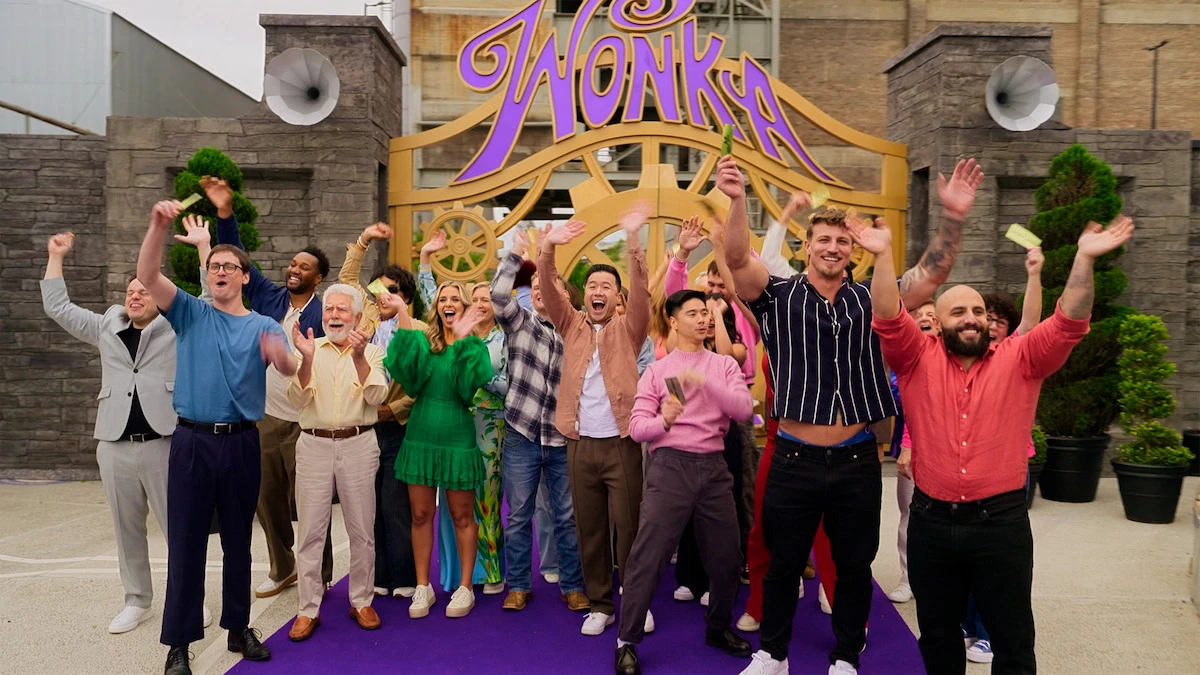
Strip away the controversy and the format is straightforward, in a good way. Twelve "Golden Ticket winners," each bringing a partner of their choosing, enter a physical recreation of Wonka's factory. Inside, they face a run of games, tests and temptations built to challenge them physically, mentally and — this is the part the producers keep emphasising — morally. The prize is described only as "Wonka's life-changing prize," elsewhere characterised as a lifetime supply of money.
The moral dimension is the interesting structural choice. Roald Dahl's 1964 novel is not really an adventure story; it is a sequence of punishments for greed, gluttony, vanity and entitlement, in which the winner wins by declining to grab. Building a reality competition on that spine means the show is at least nominally designed to reward restraint, which is close to the opposite of how the genre usually works.
Netflix awarded the series to Eureka Productions — the company behind The Floor — after a competitive pitch process that also drew Fremantle, Wall to Wall, Nobody's Hero and The Garden. Executive producers include Chris Culvenor, Paul Franklin, Rikkie Proost, David Tibballs, Alison Holloway and Emer Harkin. The release is staggered: the first seven episodes drop Wednesday, with a two-part finale following on September 30.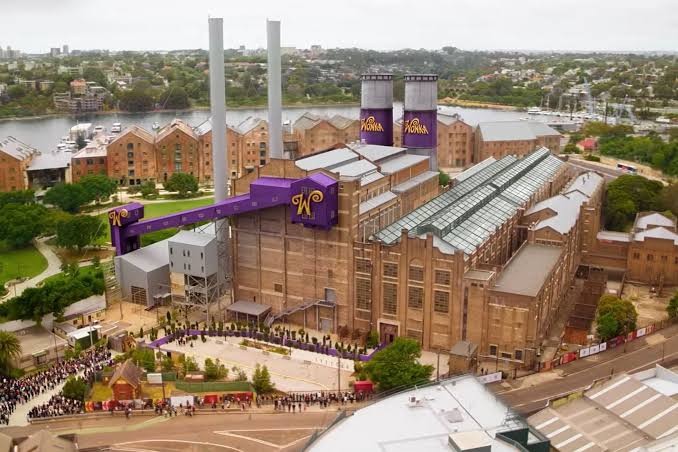
The estate's case
The permission came from Karen B. Wilder, the actor's widow, acting on behalf of the Gene Wilder Estate. Her statement is worth reading carefully, because it makes an argument rather than simply granting a licence.
"More than five decades after Gene brought Willy Wonka to life," she wrote, "people of all ages and backgrounds around the world continue to find joy, laughter and inspiration in his performance." The estate, she said, is "delighted" that the series celebrates the warmth and imagination Wilder brought to the role.
The position is coherent: the estate holds the rights, the estate knew the man, and the estate has decided that extending the performance honours it. Nobody involved is pretending Wilder consented, because he could not have. What is being asserted is that the people best placed to judge his wishes have judged them.
The objection
The counter-argument arrived within hours of the trailer and has not softened. Social media reaction was widely and sometimes viciously negative, with commenters calling the recreation "disgusting," "unacceptable" and "disrespectful." The Hollywood Reporter described the trailer's Wilder as "creepy." Variety framed it as Netflix recreating both the chocolate factory and the actor.
The objection is not really about whether the imitation is good — by most accounts it is uncannily good, which is precisely the problem. It is about a category the industry has not settled. An estate can license a likeness. It cannot license a new performance, because performance implies choices, and the choices here were made by a model trained on a dead man's recordings and directed by people he never met.
It also does not help that the context is a game show. Had the voice appeared in a documentary about Wilder, the argument would look different. Deployed as the host of a competition where couples chase a cash prize, the recreation reads to critics less like preservation than like inventory.
The precedent is not isolated. ElevenLabs has also produced an audiobook of Homer's Odyssey narrated by an AI clone of Michael Caine's voice — with Caine, crucially, alive and participating. The live-artist version of this technology is a licensing question. The posthumous version is something else, and Wednesday's premiere is the largest test of it yet.
What it means for what you watch next
For viewers, the practical significance is that this will be measured. Netflix does not commission a nine-episode anniversary tentpole to make a philosophical point; it commissions one to find out whether audiences show up. If The Golden Ticket performs, the economics of AI-recreated performers stop being theoretical, and a great many estates currently saying no will be asked again, with numbers attached.
If it underperforms, the reading will be murkier — reality formats fail for a hundred reasons, and executives will be free to blame the games rather than the voice.
There is a middle outcome that is arguably the most likely, and the most uncomfortable: the show does fine, most viewers stop noticing the voice by episode three, and the question quietly resolves itself through habituation rather than debate. Technologies rarely win these arguments. They usually just outlast them.
Wilder reportedly negotiated one famous condition before agreeing to play Wonka in 1971: he wanted to enter with a limp, then somersault, so the audience would never again be certain whether he was telling the truth. It was a note about control — an actor insisting on owning the ambiguity of his own performance.
Wednesday, that voice returns to the factory, saying lines he never chose, in a show he could not have imagined. Whether that is a tribute or a trespass is the argument. That it is happening at all is no longer in question.



