Written By | Sports Desk
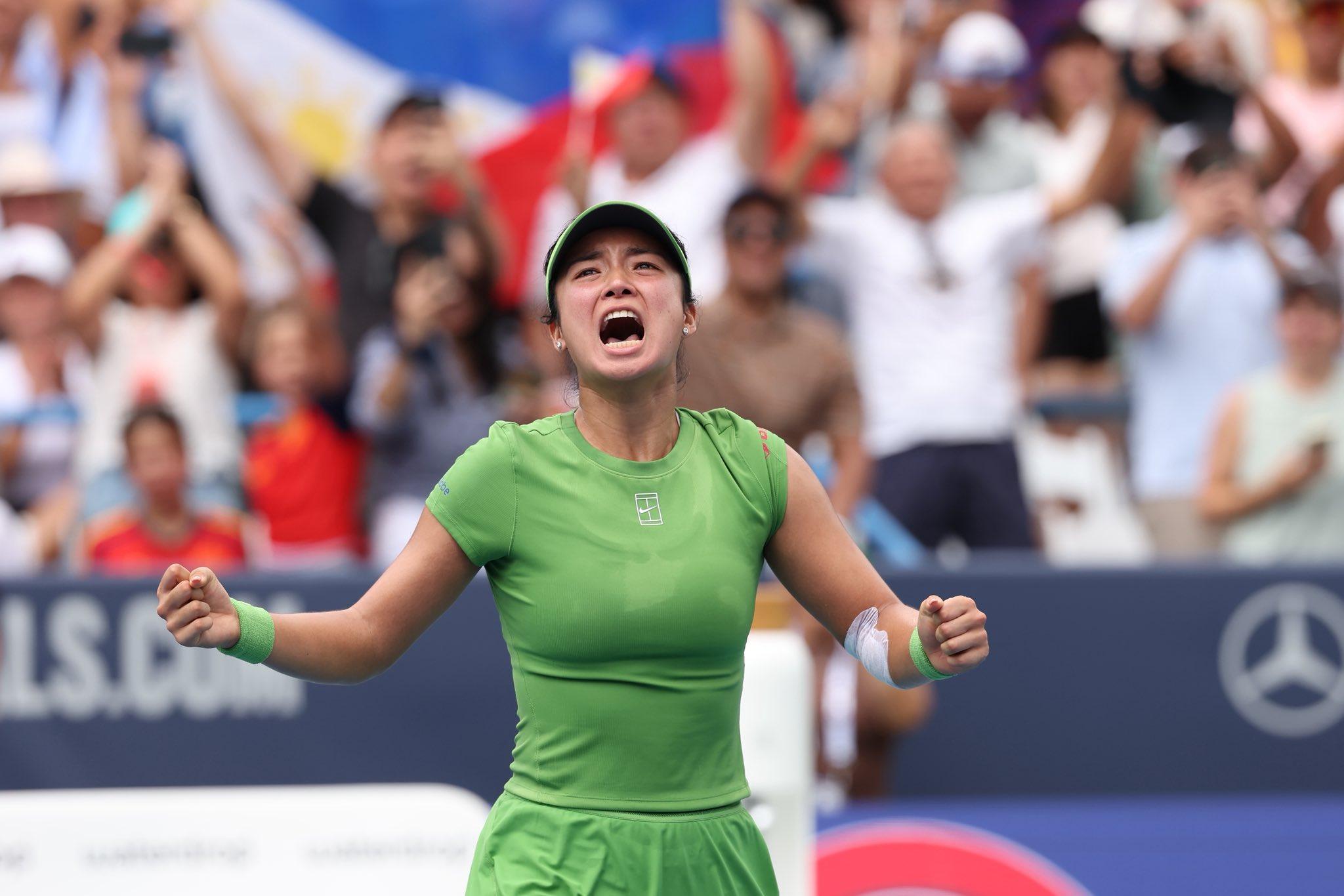
A rain-delayed final, a three-set escape act, and a nation's first WTA champion — the 21-year-old from Manila just rewrote what's possible for tennis in Southeast Asia
Washington, D.C.
Alexandra Eala had already dropped a set and been broken when the sky over Washington, D.C.'s Rock Creek Park finally gave out. It was Sunday evening at the Mubadala DC Open, the courts were flooding, and the 21-year-old world No. 28 trailed Jessica Pegula — the tournament's top seed and a former world No. 3 — by a set and a break in the final. Play was suspended for the night. Eala went to bed with the match, and in some sense her entire career trajectory, hanging in the balance. By the time she walked back onto the court on Monday afternoon, something had shifted. She won twelve of the last fourteen games. The final score read 4-6, 6-4, 6-0, and when the last ball landed, Alexandra Eala became the first tennis player from the Philippines — man or woman — to win a WTA Tour singles title.
It is the kind of sentence that sounds almost too tidy for how messy the road to it actually was: an overnight rain delay, a top-ranked opponent who had beaten her in each of their two previous meetings, and a country of more than 110 million people that has never before had a tennis champion to call its own.
The Rain That Wouldn't Stop
The Washington final had already been pushed from its original slot before it even started, and once it did get underway, the weather refused to cooperate. Pegula, playing some of the sharpest tennis of her season, raced through the first set and broke early in the second before storms rolled through the U.S. capital and forced organizers to halt play. For Eala, the delay could easily have compounded the pressure of trying to close out her first WTA 500 final. Instead, she came back a different player. Resuming at midday on Monday, she leveled the second set, then dismantled Pegula in the third in just under two hours of total playing time across both days, needing only an hour and forty-five minutes once play actually resumed. Pegula, who came into the week as the heavy favorite, won only two games after the restart.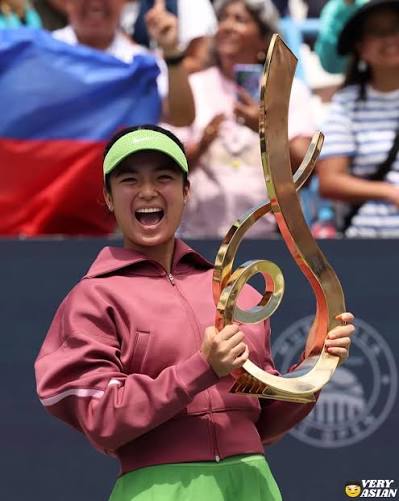
A Draw Full of Giants
What made the title even more improbable was the company Eala kept on her way there. Entering the tournament ranked 28th in the world, she needed to get through defending champion Leylah Fernandez, second seed Elina Svitolina, and third seed — four-time Grand Slam champion — Naomi Osaka just to reach the final. Beating any one of those three would have been a career-highlight win for most players outside the top ten. Eala beat all three in succession, then backed it up against a former world No. 3 in the final. It is the kind of draw that tennis players describe, only half-jokingly, as a gauntlet — and Eala walked out the other side of it as a champion.
The run instantly reframes how the sport views her. Eala has been tennis's most closely watched Filipino prospect for years, a product of the Rafael Nadal Academy system who broke through as a junior US Open champion before turning pro. Monday's title converts years of "potential" into a signature, tour-level breakthrough — precisely the kind of result that separates promising careers from historic ones.
“Not a Burden, It’s a Privilege”
In the moments after the win, tournament officials leaned into the symbolism as much as Eala herself did. During the trophy ceremony, the Washington Open's tournament director referenced the message printed on a Nike shirt Eala had worn during the week — a Filipino expression that translates roughly to "once it grows, it can't stop" — telling her directly, "You are growing right here before all of our eyes, and I know you can't be stopped." Filipino fans, who had turned out at Rock Creek Park in numbers organizers described as unlike anything they had seen for a non-American player, roared their approval.
Eala herself, when asked about carrying the expectations of an entire tennis-hungry nation that has historically rallied around boxing and basketball rather than tennis, pushed back gently on the framing. "It's definitely not a burden," she said. "It's more a privilege. I'm very privileged to be able to carry my flag and to represent everything that comes with that." Asked about the outpouring of support that followed her win, she added simply, "I feel so much love."
The Business of a Breakthrough
The title comes with tangible rewards beyond the trophy. Eala jumped eight spots in the rankings to a career-high world No. 20 — the first time she has cracked the top twenty — and collected a winner's prize reported by Philippine outlets at roughly 15 million pesos. That ranking boost matters immediately: it improves her seeding heading into the US Open later this month, potentially shielding her from a top-ranked opponent in the tournament's early rounds and giving her a real shot at deep runs in the sport's biggest events going forward.
It also reshapes the commercial picture around her. Sponsors and broadcasters in a country of avid, underserved tennis fans now have a genuine standard-bearer, and Philippine tennis federations are already talking about the ripple effects for grassroots participation — the same effect that first WTA or ATP champions have historically produced in countries newly arriving on the tour's map.
What This Means for You
You don't need to follow tennis closely to appreciate what happened in Washington: an unseeded-by-reputation 21-year-old, playing through a rain delay and a murderers' row of former Grand Slam winners, refused to let one bad set decide her tournament. That's a sports story that travels well beyond the sport itself, and it's part of why Eala's win is resonating so far outside tennis circles — clips of the trophy ceremony and her "privilege, not a burden" comment have been circulating widely across Southeast Asian social media since Monday.
For casual sports fans, the practical takeaway is simple: keep an eye on the US Open draw later this month. A newly minted top-20 player with this kind of momentum, and a first Grand Slam of true title contention within reach, is exactly the storyline that tends to define a major tournament's opening week.
It's not a burden, it's a privilege. I'm very privileged to be able to carry my flag and to represent everything that comes with that. — Alexandra Eala, after winning the Mubadala DC Open



