Written By | Evan Sande Ndahura

Evan Sande Ndahura is a Ugandan political and legal commentator, columnist, poet, and social justice advocate
For forty-two years, Muammar Gaddafi ruled Libya not as a constitutional leader but as a political anomaly—neither president nor monarch, yet absolute in authority. Having seized power through a 1969 coup, Gaddafi dismantled the modern state and replaced it with an improvised ideology of personal rule disguised as popular sovereignty. His so-called Jamahiriya claimed to empower the masses while, in practice, neutralising all independent political organisation.
Political parties were banned. Opposition was criminalised. The judiciary was subordinated. Parliament was rendered irrelevant. The military and intelligence services became instruments of regime survival rather than national service. Fear, not consent, was the organising principle of governance.
Internationally, Gaddafi oscillated between belligerence and opportunism—supporting insurgencies abroad, defying global norms, then later reintegrating into the international system when isolation threatened regime survival. These contradictions were not accidental; they are characteristic of personalist dictatorships that mistake tactical survival for strategic legitimacy.
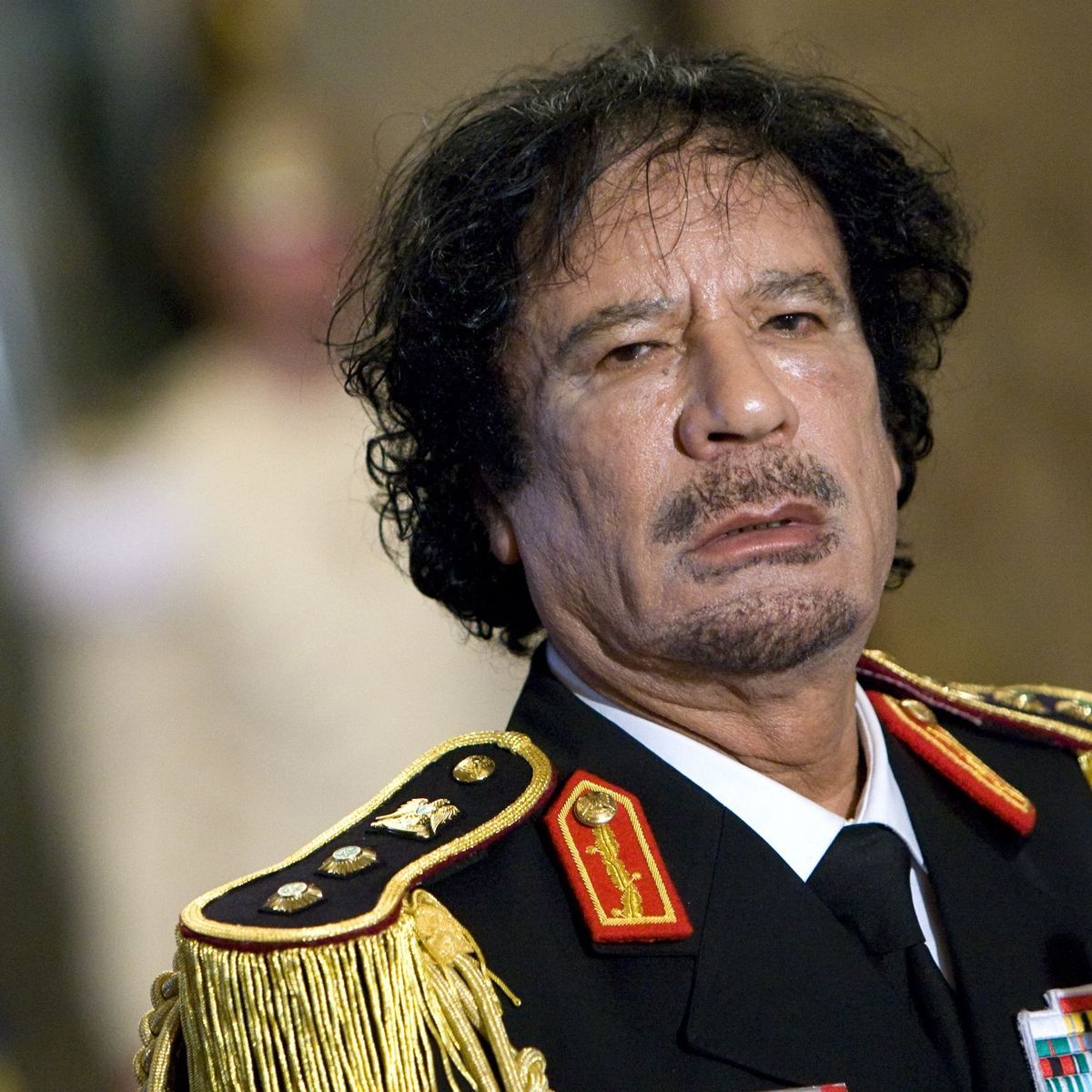
Gaddaffi
Development Without Freedom: A Fatal Miscalculation
Defenders of authoritarianism often retreat to a familiar argument: at least there was development. Indeed, Libya under Gaddafi registered notable social gains—expanded education, healthcare access, infrastructure, and comparatively high living standards funded by oil wealth. But political theory is unequivocal on this point: development divorced from political freedom does not produce stability; it postpones crisis.
Amartya Sen has long argued that development is not merely economic provision but the expansion of substantive freedoms. Where citizens are treated as dependents rather than rights-bearing participants, development becomes transactional charity, not social contract. Gaddafi’s Libya had services, but no citizenship. Benefits, but no accountability. Welfare, but no voice. That contradiction proved unsustainable.
The Collapse of a Regime—and a Dynasty
When protests erupted in 2011, the Gaddafi regime responded in the only language it understood: violence. That decision sealed its fate. What followed was not merely the fall of a ruler, but the total political annihilation of a family and a system.
Gaddafi was killed. Several of his sons—once marketed as heirs to power—were eliminated during the collapse. Saif al-Islam Gaddafi, long projected as a reformist successor, was politically neutralised, legally contested, and stripped of any credible national future. Whether alive or free became irrelevant; his political death was complete. This is the central lesson authoritarian regimes refuse to learn: when power is personalised, its collapse is total. There is no soft landing for dynasties built on repression.
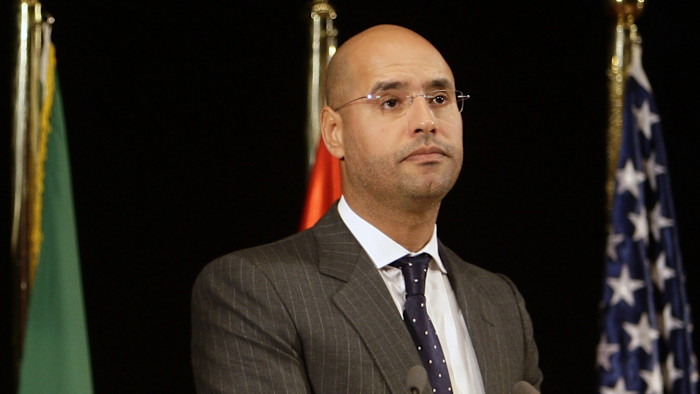
Gaddafi's son was recently killed!
Africa’s Authoritarian Cycle: A Repeating Tragedy
Libya fits a broader African pattern. From Mobutu’s Zaire to Mubarak’s Egypt, from Bashir’s Sudan to the Sahelian regimes now falling under military revolt, personal rule follows a predictable arc: consolidation, stagnation, repression, decay, collapse. Political scientist Juan Linz warned that personalist regimes are uniquely vulnerable because they destroy succession mechanisms. When leadership transition is criminalised, the future can only arrive violently. Achille Mbembe similarly observes that postcolonial autocracies collapse not from weakness, but from overcentralisation that suffocates renewal. No ruler, however cunning, outpaces this structural reality.
Uganda: The Question It Can No Longer Avoid
Uganda must read Libya not as distant history, but as a mirror. The danger is not merely long rule; it is long rule without institutional renewal. A system that conflates regime survival with national stability, that militarises politics, suppresses opposition, and flirts with dynastic succession is not building continuity—it is engineering rupture.
Libya teaches Uganda several uncomfortable truths:
1. Time in power does not equal historical entitlement
2. The gun can silence opponents but never manufactures legitimacy
3. Dynastic ambitions provoke resistance, not loyalty
4. When institutions are hollowed out, collapse spares no one—not even family
5. Fear sustains regimes temporarily; it radicalises societies permanently
Gaddafi’s power could not save his children. It could not secure his legacy. It could not negotiate him a dignified exit. Power that destroys institutions ultimately destroys those who wield it.
Beyond Uganda: A Continental Warning
This lesson extends beyond Uganda—to Cameroon, Equatorial Guinea, Eritrea, and all regimes that confuse endurance with inevitability. The refusal to open political space does not freeze history; it compresses it, ensuring that when change comes, it comes destructively. As Hannah Arendt warned, violence may destroy power, but it can never create legitimacy. And legitimacy, once exhausted, cannot be restored by force.
Conclusion: History Does Not Negotiate With Arrogance
Libya did not fall because Gaddafi failed to build roads or schools. It fell because he refused to build institutions capable of surviving him. Uganda—and all long-standing regimes—must confront this reality honestly: states that are stronger than their leaders endure; states subordinated to leaders eventually implode.
Reform is not weakness. Transition is not betrayal. Institutional renewal is not surrender. The real danger lies in believing that history has been defeated. It never has.
------------------------
Author’s Biography
Evan Sande Ndahura is a Ugandan political and legal commentator, columnist, poet, and social justice advocate. His writings focus on governance, constitutionalism, democracy, and the political economy of power in Africa. He is widely published on issues of judicial accountability, electoral justice, human rights, and institutional reform, with particular emphasis on Uganda’s political and legal systems. Ndahura writes from a Pan-African critical perspective, interrogating the failures of state institutions and the lived realities of ordinary citizens under entrenched systems of power. He believes that the liberation of Africa will occur through a mighty pen, not the gun.
Torch Media Africa



