Background
Northwestern and north-central Nigeria have spent recent years under siege from what security analysts now describe as a highly organized criminal economy built on mass abductions, village raids and ransom negotiations, distinct from the Islamist insurgency of Boko Haram and its offshoots that has dominated Nigeria's northeast for over a decade. Armed groups often referred to locally as "bandits" have entrenched themselves across Kaduna, Zamfara, Katsina, Sokoto and neighboring states, exploiting forested terrain, porous state lines and a chronic shortage of security personnel to strike villages with little warning and often little consequence.
The scale of the crisis has been documented extensively over the past year. According to a report by SBM Intelligence, roughly 2,938 people were kidnapped in Nigeria's Northwest region between July 2024 and June 2025, more than 60 percent of all reported kidnapping incidents nationwide, with Zamfara State recording the highest toll at over 1,200 abductions, followed by Kaduna with roughly 629 and Katsina with about 566. Separate figures for 2025 put banditry-related incidents at 599 nationally, resulting in 2,724 deaths and 3,141 kidnapping victims, while human rights monitors have estimated that hundreds of villages in Zamfara alone have been sacked by armed groups in recent years. In the first four months of 2026, more than 1,100 people were reported abducted across northern Nigeria, according to tracking cited by regional outlets, underscoring that the emergency has continued largely unabated into this year.|
President Bola Tinubu has responded to the mounting toll by declaring a nationwide security emergency, ordering the army, police and intelligence services to expand recruitment and deploy additional personnel to affected states, and pressing the National Assembly to advance legislation that would allow for state-level policing, a long-debated reform intended to let state governments field their own security forces rather than relying solely on the centrally controlled federal police and military. Nigeria's federal lawmakers, however, have rejected proposals to negotiate directly with bandit groups, insisting on a security-first approach. Critics, including Human Rights Watch, have noted that security forces frequently arrive at attack sites only after assailants have already fled, and that a persistent failure to investigate and prosecute perpetrators has entrenched a climate of impunity that allows the violence to recur in the same communities year after year.
Analysts tracking the crisis distinguish it from Nigeria's better-known Boko Haram and Islamic State West Africa Province insurgencies in the northeast, noting that most Northwest banditry appears to be driven primarily by criminal profit motives, cattle rustling disputes and ransom economics rather than an explicit ideological or jihadist agenda, even as some armed groups have reportedly forged loose, opportunistic ties with extremist networks in places. This distinction has shaped, and at times complicated, the federal government's response, since a purely counter-terrorism military posture does not always translate cleanly into effective policing of criminal gangs operating across multiple, often remote, local government areas with limited road access and cell coverage.

Bola Tinubu
Key Developments
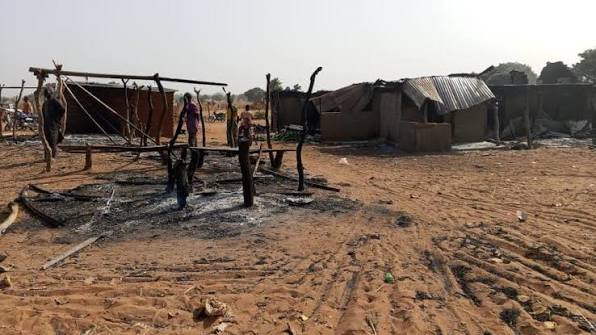
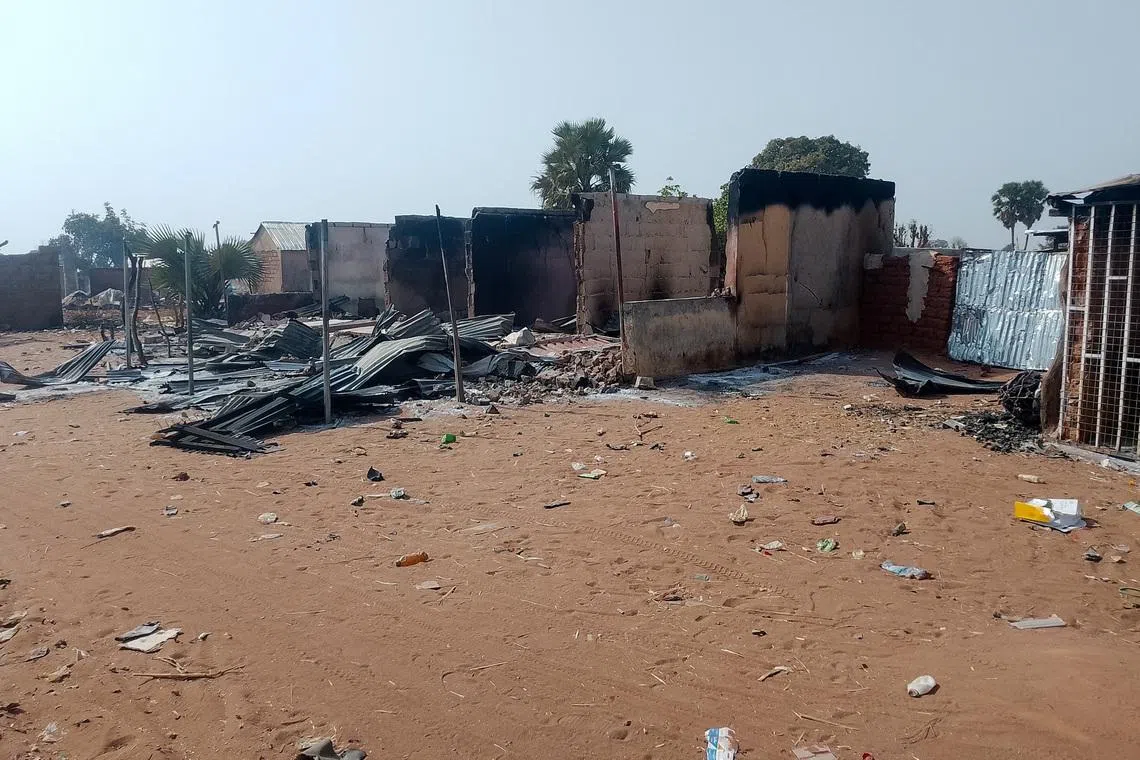
The latest atrocity came late Sunday night into Monday, July 27, when gunmen stormed Naridon village, in Kamaru Ward of Kauru Local Government Area in southern Kaduna State, near the border with Ganawuri in Riyom Local Government Area of neighboring Plateau State. According to residents and multiple Nigerian outlets, the attackers arrived close to midnight, opened indiscriminate gunfire on residents and set houses ablaze as people slept. At least 30 people were killed in the assault, among them eight children; one report specified that five siblings from a single family were among the dead, alongside 25 other victims. Four additional people were reported injured. As of the most recent reporting, no group had claimed responsibility for the attack, consistent with a broader pattern in the region in which perpetrators are rarely identified or publicly named even when their operational patterns are well known to local security agencies.
Local civil society figures noted that Naridon had been the target of a similar attack around the same time the previous year, a detail that residents and community leaders point to as evidence that recurring warnings about vulnerable border communities along the Kaduna-Plateau frontier have gone unheeded. The area where the attack occurred sits along a documented corridor of intercommunal and criminal violence that has affected southern Kaduna for several years, compounding the pressures already generated by the broader banditry crisis across the wider Northwest.
Reactions
Kaduna State Governor Uba Sani issued a public condemnation of the killings, stating that "the Kaduna State Government condemns the killing of several persons in Naridon Village, Kamaru Ward of Kauru Local Government Area," and calling the attack, which also destroyed property, "unacceptable." Sani directed security agencies to intensify operations aimed at arresting those responsible and to take steps to prevent further violence in the area. He also instructed the Kaduna State Emergency Management Agency to provide immediate relief and humanitarian assistance to families affected by the raid.
The state government further pledged to deepen security cooperation with the neighboring Plateau State government, given that the attack occurred along the shared border between the two states, along with traditional institutions and other local stakeholders, in an effort described as aimed at restoring lasting peace and protecting lives and property in the corridor. The response echoed a now-familiar sequence in Nigeria's response to bandit violence: swift condemnation and an order for a manhunt, followed by longer-term commitments to interagency security cooperation, even as critics point out that similar pledges after past attacks in the same communities have not prevented recurrence.
National commentary on the attack has increasingly folded into a broader debate over the Tinubu administration's overall security record, roughly two years into his presidency. Some security analysts and government-aligned commentators point to expanded troop deployments and recruitment drives as evidence of measurable gains, while independent monitors and opposition voices argue that headline statistics on kidnappings and village raids have shown limited sustained improvement, particularly in the Northwest, and that the political calendar is beginning to color the government's messaging. Regional commentators have also noted that Tinubu's political operation has continued to build grassroots campaign structures across all 36 states even as the security emergency he declared remains in effect, feeding criticism that the government's crisis-response rhetoric has not been matched by a proportional reduction in casualties.
What's Next
In the immediate term, Kaduna State security agencies are conducting a manhunt for the attackers, though the region's track record suggests such operations frequently fail to produce arrests before public attention moves elsewhere. The state's stated commitment to a joint security framework with Plateau State will be tested by whether concrete steps, such as coordinated patrols or shared intelligence along the Kauru-Riyom corridor, follow the current round of pledges, and by whether any of the deployment reflects lasting change rather than a temporary response to public outcry.
More broadly, the attack is likely to intensify pressure on the National Assembly to act on Tinubu's push for state policing legislation, a reform that proponents argue would let state governments respond more nimbly to local threats but that raises longstanding concerns among critics about the potential for abuse or uneven capacity across Nigeria's 36 states. With banditry-related kidnappings and killings continuing at a pace that has not meaningfully slowed since the emergency declaration, further attacks in Kaduna, Zamfara, Katsina or Sokoto in the weeks ahead appear likely absent a substantive shift in strategy, resourcing or the political will to prosecute known perpetrators. The Naridon killings are also likely to feature in the broader 2026 conversation about insecurity as a defining issue heading toward Nigeria's next general election cycle, adding a political dimension to what remains, first and foremost, a humanitarian emergency for the communities directly affected.
Published By | News Editor