Written By | Fashion and Design Desk
The American Institute of Architects honors seven projects proving that architectural ambition doesn't require a massive budget or a massive footprint
KNOXVILLE, Tenn.
For decades, the biggest prizes in American architecture have tended to go to the biggest buildings — soaring museums, sprawling campuses, city-defining towers. The American Institute of Architects' Small Project Award exists specifically to push back against that gravitational pull, and this year's seven winners, announced this week, make an unusually compelling case that some of the most inventive design thinking in the country is happening at a scale most awards juries overlook entirely.
The headline winner is Augusta Quarry at Fort Dickerson Park, a project by Knoxville-based Sanders Pace Architecture working alongside landscape architecture studio Port, that transforms an abandoned, flooded marble quarry in Tennessee's Urban Wilderness into a public swimming destination. It's the kind of project — modest in square footage, enormous in civic impact — that the Small Project Award was created to celebrate.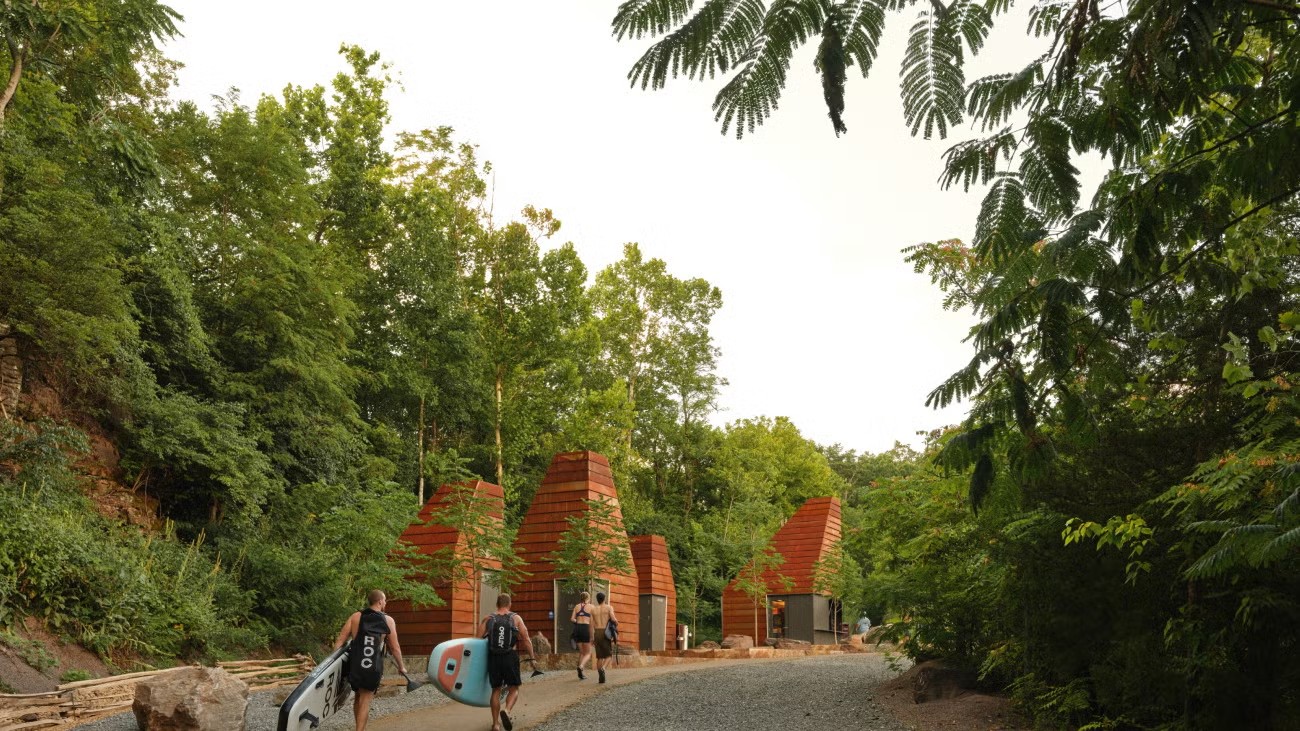
From industrial scar to civic staple
The Augusta Quarry site has a complicated history typical of former extraction sites across Appalachia: decades of marble quarrying left behind a deep, water-filled pit that had, over time, become both a scenic natural feature and an unofficial, unsafe swimming spot for locals willing to trespass past inadequate barriers. Rather than fence the quarry off further, the city of Knoxville and its design team took the opposite approach, spending a multiyear effort — completed in July of last year and now recognized nationally — to formalize and civilize the site into a sanctioned public amenity.
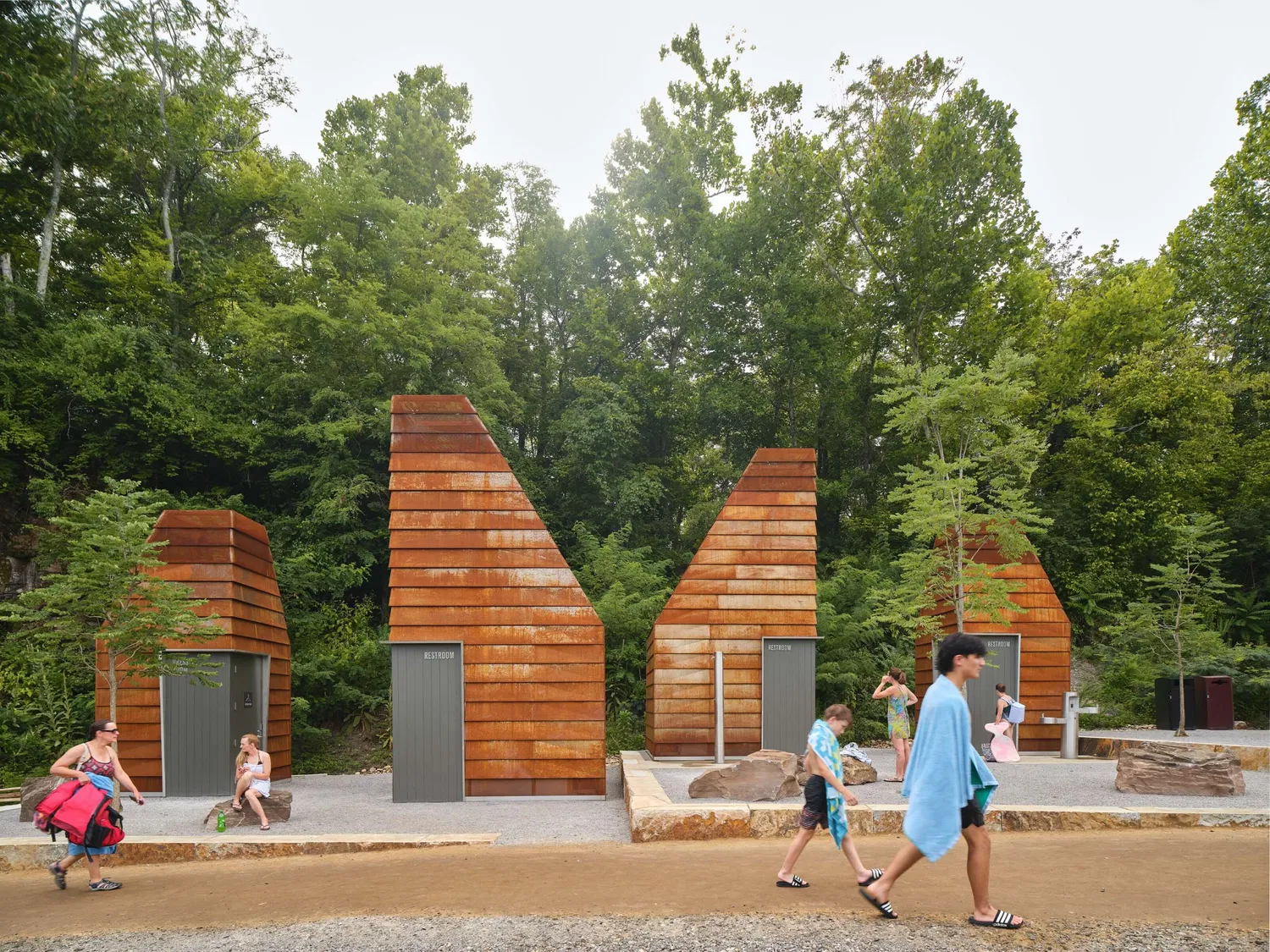
The design introduces a vendor kiosk, restrooms and a changing room clustered near the quarry's entry, built from weathering steel that will continue to darken and patina over time, echoing the site's industrial history rather than erasing it. New paths connect these small amenity structures to overlooks and floating docks that now host swimmers, sunbathers and casual gatherers throughout Knoxville's hot summer months. Architectural Record, in its coverage of the project, described the intervention as grounded in "sustainable strategies that engage the site and visitors through a light touch," deliberately keeping the built footprint minimal so the quarry's dramatic natural beauty — sheer rock walls dropping into blue-green water — remains the primary draw rather than competing architectural statement-making.
The project was also shortlisted for a 2026 Landezine International Landscape Award, underscoring that its impact reads as much through landscape and public-space thinking as through traditional architecture.
The other six: a shed, a pavilion, a cabin, and more
The Augusta Quarry may be the most photogenic of this year's winners, but the AIA's full slate of Small Project Award recipients spans a deliberately eclectic range of typologies and budgets. Among the other honored projects is a sinuous, sculptural pavilion at the northern edge of Downtown Cary Park in Cary, North Carolina, designed to gather both people and their pets beneath a single sweeping roof — a small-scale piece of public infrastructure built explicitly around everyday, informal use rather than monumental civic messaging.
Also honored is Camp Meeker, a project by Renée del Gaudio Architecture built in Allenspark, Colorado, that reflects the award's recurring interest in small residential and retreat-scale structures that respond precisely to remote, environmentally sensitive mountain sites. Taken together, this year's seven winners — spanning public recreation, park infrastructure, and small-scale residential design across wildly different American landscapes, from Appalachian quarry country to the Rocky Mountain foothills — reinforce a consistent argument the AIA has made through this award program for years: architectural excellence is not a function of budget size, and some of the most consequential design decisions in American public life happen at the scale of a kiosk, a dock, or a single-room cabin rather than a landmark tower.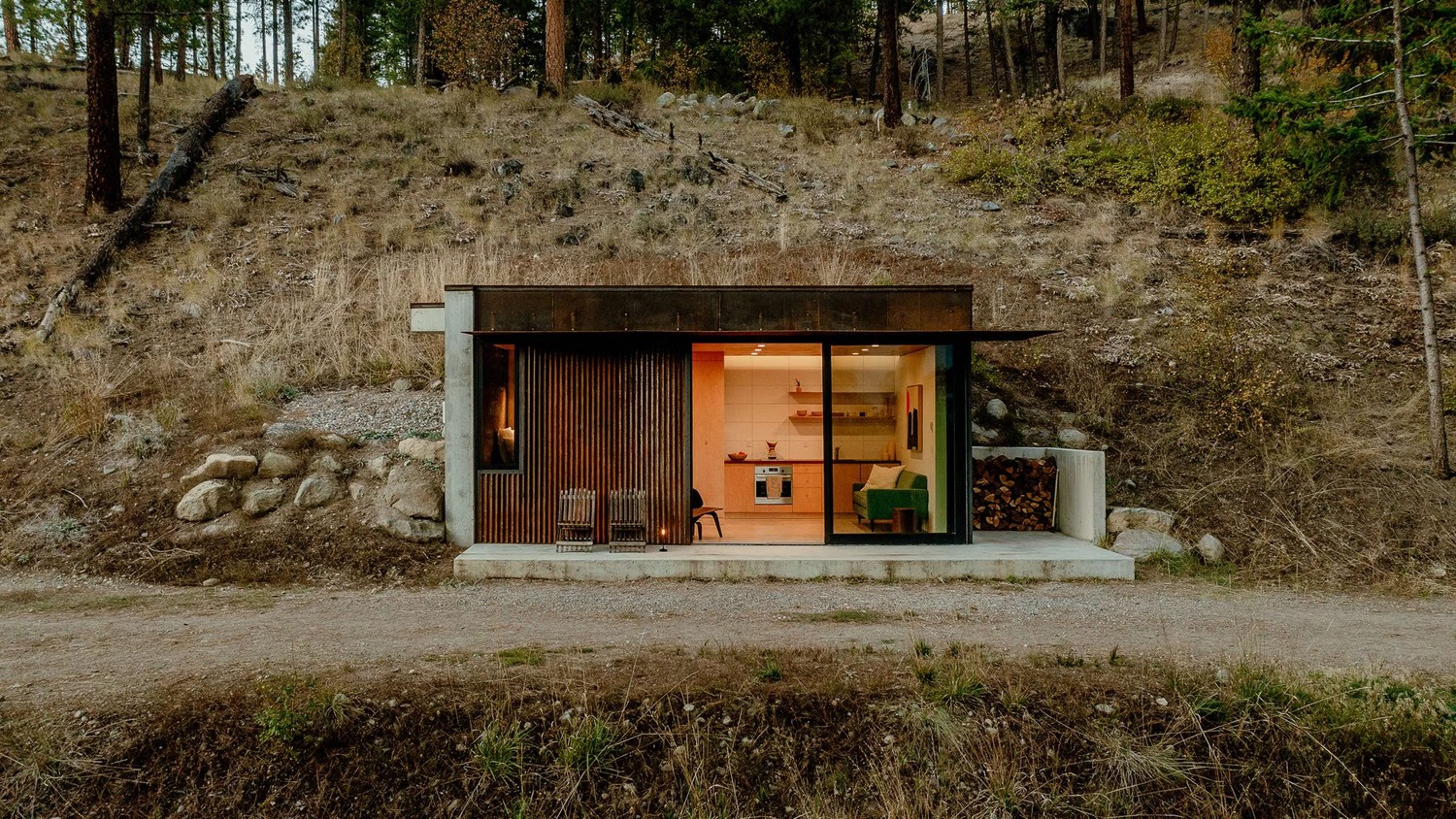
Why small projects matter more than their budgets suggest
The AIA has been explicit about the award's mission: to raise public awareness of the value and design excellence that architects provide "regardless of the limits of size and scope." That framing matters in an industry where media coverage, awards attention and public imagination overwhelmingly gravitate toward record-breaking skyscrapers and nine-figure cultural institutions, even though the vast majority of practicing architects spend their careers working on precisely this scale of project — a community pool house, a park pavilion, a small addition.
Small-scale civic projects like Augusta Quarry also tend to carry outsized impact relative to their cost specifically because they address immediate, tangible community needs — safe public swimming access, in this case — rather than aspirational cultural programming aimed at tourists or donors. For a city like Knoxville, converting a hazardous, informally used industrial site into a sanctioned, architecturally considered public amenity likely does more for day-to-day quality of life for local residents than a far larger institutional building would.
What this means for communities and homeowners
For readers outside the architecture world, this year's Small Project Award slate is a useful reminder that ambitious, thoughtful design isn't reserved for cities with billion-dollar cultural budgets. Municipalities sitting on their own underused industrial remnants — quarries, rail yards, waterfront infrastructure — increasingly have a growing body of precedent, including Augusta Quarry, to point to when making the case for modest, weathering-material interventions rather than either expensive redevelopment or continued neglect.
For homeowners and smaller-scale clients, the recognition of projects like Camp Meeker signals that architects are increasingly willing, and increasingly rewarded, for applying the same rigor to a single cabin that they'd bring to a museum commission — good news for anyone assuming that hiring an architect only makes sense at a certain project size.
The bigger picture
The Small Project Award arrives alongside the AIA's broader 2026 award slate, which also recognized housing projects ranging from a Palm Springs homeless navigation center to a 1.4-million-square-foot student housing development at UC San Diego — a reminder of just how wide the discipline's range runs in a single awards cycle. But it's the modest, weathering-steel kiosks at a reclaimed Tennessee quarry that offer this year's clearest argument for why small, well-considered design deserves just as much attention as its biggest, most expensive counterparts.



