Written By | Fashion and Design Desk
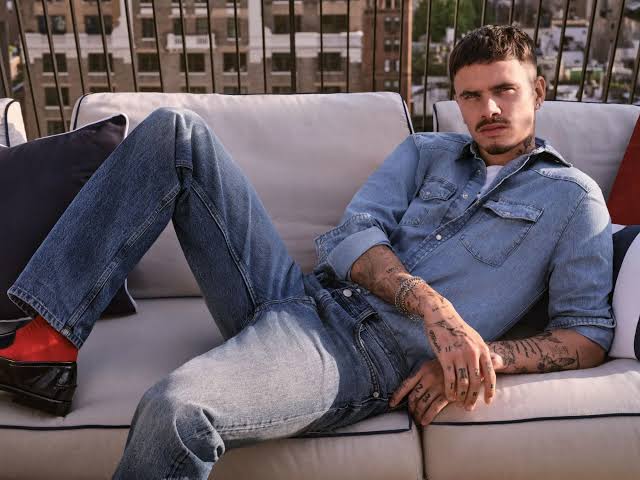
The brand's Fall 2026 "Always Denim" campaign taps the youngest Beckham son and Dutch model Yasmin Wijnaldum to sell a return to easy, rooted-in-heritage style
NEW YORK
Denim never really goes out of fashion, but every few years a brand tries to convince you it's having a moment again anyway. This fall, that brand is Tommy Hilfiger, and the face of the pitch is Romeo Beckham — the 23-year-old son of David and Victoria Beckham — fronting a campaign called "Always Denim" that was shot on the rooftops and in the townhouses around Manhattan's Mark Hotel, one of New York's most photographed addresses for exactly this kind of glossy, aspirational fashion imagery.
The campaign, which began rolling out across Tommy Hilfiger's channels this week, pairs Beckham with Dutch model Yasmin Wijnaldum across a series of images built around what the brand describes as "Classic American Cool" — a phrase that has functioned as Tommy Hilfiger's north star since its founding in the 1980s, and one the company is leaning on hard as it tries to reassert denim as a category cornerstone rather than a commodity product.
What's actually in the collection
Beckham is shown in two signature silhouettes anchoring the men's range: the Theo, a baggy, '90s-cut jean that nods unmistakably to the era's oversized, skater-adjacent proportions, paired in the campaign with a cable-knit sweater for a preppy-meets-streetwear contrast; and the Dover, a straighter, more classic-cut jean styled with a tucked-in shirt for a cleaner, buttoned-up look. Wijnaldum, meanwhile, models the women's side of the collection, including the high-rise Sarah jean and the low-rise Daisy silhouette — a deliberate hedge across two of the most contested rise heights in contemporary denim, where brands have spent the past several seasons trying to read exactly where the pendulum between low-rise Y2K nostalgia and higher-rise, more tailored silhouettes will land next.
The imagery leans into a loose narrative: Romeo hosting a rotating cast of "fashion insiders" through rooftop gatherings, downtown outings and unposed-looking everyday moments, all threaded together by denim as the connective wardrobe piece. It's a familiar campaign architecture — cast a recognizable, culturally connected young face, surround them with an aspirational social world, let the clothes read as incidental rather than sold — but it's one that has proven durable precisely because it works.
Why Romeo Beckham, and why now
The Beckham family's fashion pedigree is, at this point, essentially self-explanatory: Victoria Beckham's namesake label has become a genuine critical and commercial success story over the past decade, Brooklyn Beckham has built a public-facing lifestyle brand of his own, and Romeo has increasingly stepped into modeling and brand ambassador roles that trade on both his family name and his own distinct, understated public persona. Tapping him for a "Classic American Cool" campaign is a calculated bet that his specific brand of low-key, English-inflected cool translates well against Tommy Hilfiger's decidedly American, prep-flag-and-stripes visual identity — an Anglo-American mashup that mirrors the brand's own history of using British and European faces to sell an idealized version of American style back to global audiences.
It also continues a pattern of major heritage denim and sportswear brands leaning on second-generation celebrity offspring — rather than traditional supermodels or pop stars — to reach younger consumers who increasingly discover fashion through the lens of family dynasties and reality-adjacent social media narratives rather than editorial pages.
Denim's ongoing identity crisis, and why brands keep chasing it
The bigger story behind the Romeo Beckham campaign is denim's stubborn refusal to settle into a single defining silhouette this decade. Where the 2010s were dominated by skinny jeans and the early 2020s saw a hard pivot to baggy, wide-leg and Y2K-revival cuts, the current moment — reflected explicitly in Tommy Hilfiger's decision to campaign both the baggy Theo and the straighter Dover simultaneously — suggests the industry has essentially given up trying to dictate a single silhouette and is instead offering multiple entry points at once, letting consumers self-select rather than chase a single trend.
Fashion industry watchers have noted that this multi-silhouette hedging strategy has become increasingly common across the category over the past two seasons, with brands from Levi's to Ralph Lauren similarly running parallel baggy and slim-tailored denim lines rather than picking a lane. It reflects both genuine consumer fragmentation — different age cohorts and style tribes gravitating toward genuinely different cuts — and a degree of institutional caution after several brands misjudged the speed of the skinny-to-baggy pivot earlier in the decade and were left with excess inventory in the "wrong" silhouette.
What this means for shoppers
If you've been holding off on new denim because you weren't sure which way the trend pendulum was swinging, the practical takeaway from campaigns like this one is: there isn't a single right answer this season, and that's by design. The Theo-style baggy cut works for anyone chasing the continued '90s and early-2000s revival that has dominated youth fashion for several years running; the Dover's straighter leg is the safer, more work-appropriate option that flatters a broader range of body types and pairs more easily with existing wardrobes. On the women's side, the Sarah and Daisy silhouettes represent a similar high-rise/low-rise hedge, meaning shoppers can expect both options to remain widely available and heavily marketed through the fall season rather than one supplanting the other.
Price points for the Always Denim collection sit within Tommy Hilfiger's typical accessible-premium range, positioning it as a mid-tier alternative to designer denim labels for shoppers who want the campaign's aspirational gloss without luxury pricing.
The bigger picture
Denim campaigns rarely make front-page fashion news on their own merits, but the Romeo Beckham tie-up is a useful snapshot of where mainstream fashion marketing sits in 2026: heritage brands leaning on famous surnames and multi-generational celebrity, hedging aggressively across competing silhouette trends rather than picking winners, and continuing to use New York's most photogenic hotel rooftops as the default backdrop for aspirational American style — even when, as in this case, the face selling it is unmistakably British.



